SOCCER FOOTWEAR GUIDE
What Are Soccer Cleats? Types, Studs, and Playing Surfaces
Soccer cleats are not one universal shoe type. They are soccer footwear with a surface-specific outsole or stud pattern designed to provide traction and stability for soccer movement. Firm grass, artificial grass, wet natural ground, short turf, and indoor courts call for different starting points. Choose the field or court first, then review the outsole, fit, upper, and product details before playing.
Quick Reference
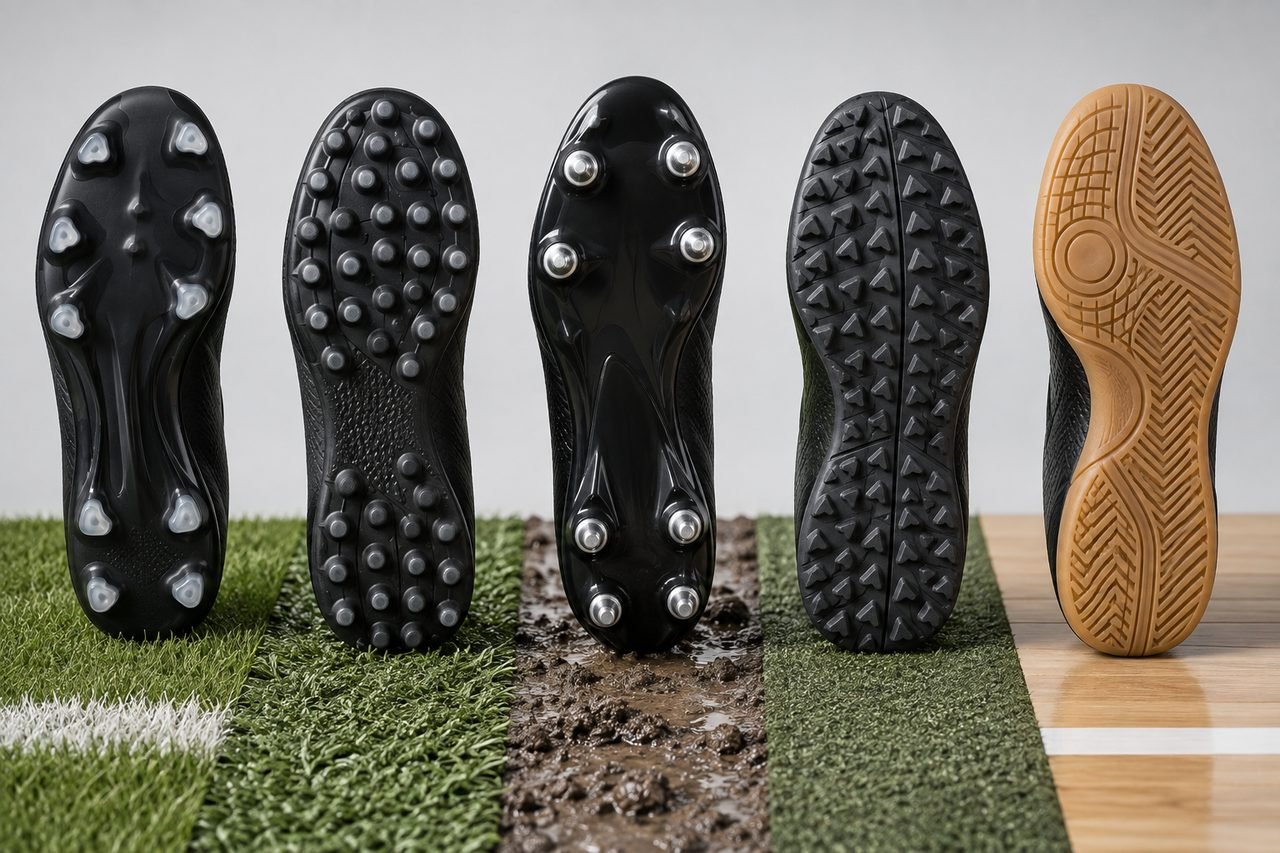
- FG: firm natural grass
- AG: artificial grass
- SG: wet or soft natural grass
- TF: short, hard turf
- IC or IN: indoor courts
- Choose the surface before the upper or color
- Confirm field and league rules
- Confirm the fit before playing
OVERVIEW
What Are Soccer Cleats?
Soccer cleats are shoes made for soccer movement. They usually have a close-fitting upper and an outsole designed for grip, turning, acceleration, stopping, and ball control on a specific playing surface.
The word “cleats” commonly points to footwear with studs, but types of soccer shoes also include turf and indoor options with lower-profile or flatter rubber outsoles. The useful question is not simply whether a shoe looks like a cleat. It is whether its outsole matches the field or court where the player will use it.
Every design also needs a sensible fit. A suitable stud pattern cannot compensate for a shoe that is too short, too narrow, loose at the heel, or painful across the forefoot. Think of the surface category as the first filter and personal fit as the next one.
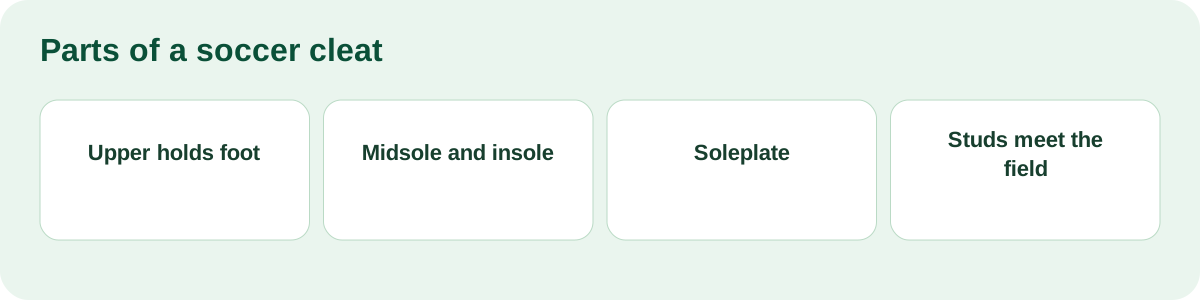
| Part of the Shoe | Main Purpose | Why It Matters |
|---|---|---|
| Upper | Wraps the foot | Influences comfort and ball feel |
| Laces or closure | Adjusts midfoot hold | Changes pressure and security |
| Insole | Lines the inside of the shoe | Contributes to the in-shoe feel |
| Midsole or cushioning | Adds structure or cushioning | Varies by shoe category |
| Outsole | Contacts the playing surface | Starts the surface decision |
| Studs or traction pattern | Interacts with ground or turf | Varies by field type |
| Heel structure | Supports heel position | Part of a secure fit review |
MAIN CONTENT
Soccer Cleats vs Regular Athletic Shoes
Soccer cleats differ from regular athletic shoes because their outsoles are built around a soccer surface and soccer movements. A running shoe is designed for repeated forward motion on hard ground. A casual sneaker is made for daily wear. Turf and indoor shoes are soccer options too, but they use traction patterns that are different from studded firm-ground or artificial-grass cleats.
Do not use football, baseball, or other sport cleats as substitutes simply because they have studs. Their construction, rules, and intended movements can differ. The correct soccer shoe category begins with the actual field and the footwear rules that apply there.
| Footwear Type | Outsole | Typical Surface | Main Use | Main Limitation |
|---|---|---|---|---|
| Firm ground soccer cleats | Molded studs | Firm natural grass | Outdoor soccer | Not automatically right for every artificial field |
| Artificial grass soccer cleats | Synthetic-field traction pattern | Artificial grass | Outdoor soccer | Field and facility rules still matter |
| Soft ground soccer shoes | Longer or detachable-style studs | Wet or soft grass | Outdoor soccer | Check league and field rules |
| Turf soccer shoes | Dense rubber lugs | Short, hard turf | Training and small-sided play | Not a flat court shoe |
| Indoor soccer shoes | Flat rubber sole | Indoor court | Indoor soccer or futsal settings | Not intended as turf studs |
| Running shoes | Foam and rubber tread | Road or track | Running | Not surface-specific soccer footwear |
| Casual sneakers | General rubber sole | Everyday surfaces | Daily wear | Not designed around soccer field selection |
Types of Soccer Shoes
Types of soccer shoes are usually organized around the playing surface. Labels help narrow the choice, but they are not a replacement for reading the exact product information and the field rules. The same player may need a different starting category for a wet grass match, an artificial grass training field, a short turf facility, and an indoor court.
Firm Ground Soccer Cleats
FG designs are commonly reviewed for firm natural grass. They often use molded studs that are fixed to the outsole.
Artificial Grass Soccer Cleats
AG designs are made for artificial grass conditions and generally use a traction pattern intended for synthetic fields.
Soft Ground Soccer Shoes
SG footwear is generally considered for wet, soft, or muddy natural grass, subject to product and venue guidance.
Turf Soccer Shoes
TF shoes usually have many short rubber grip points for short or hard turf and some small-sided settings.
Indoor Soccer Shoes
Indoor shoes generally use a flat rubber outsole for courts rather than a stud pattern.
Multi-Ground Soccer Shoes
Multi-ground labels may cover more than one surface category, but the exact product guidance and facility rules still decide whether the shoe is suitable.
| Shoe Type | Common Label | Best Surface | Outsole or Stud Style | Main Caution |
|---|---|---|---|---|
| Firm ground | FG | Firm natural grass | Molded studs | Check actual grass condition |
| Artificial grass | AG | Artificial grass | Distributed synthetic-field traction | Not every artificial field is the same |
| Soft ground | SG | Wet or soft natural grass | Longer or detachable-style studs | Check rules before use |
| Turf | TF | Short, hard turf | Many small rubber lugs | Confirm the facility surface |
| Indoor | IC or IN | Indoor court | Flat rubber sole | Different from turf traction |
| Multi-ground | MG | Specified mixed use | Varies by product | Read the exact label |
Firm Ground Soccer Cleats
Firm ground soccer cleats are commonly used on firm natural grass. Their molded studs are permanently formed as part of the outsole and can vary in number, length, shape, and placement. That variation is why an FG label is a starting point rather than a guarantee about every grass condition.
- Best for firm natural grass
- Suitable when the field allows the outsole
- Check grass condition before use
- Not automatically the best choice for every artificial field
Review our Firm Ground Soccer Cleats page for the product category. Check local guidance if the same facility also has synthetic grass or a short-turf training area.
Artificial Grass Soccer Cleats
Artificial grass soccer cleats are designed around artificial grass conditions. They may use a traction pattern intended for synthetic fields, yet artificial fields differ in fiber length, infill, firmness, maintenance, and venue policy. A player should not assume that one outsole is suitable for every artificial field.
Before You Play on Artificial Grass
- Confirm whether the field is short turf or longer artificial grass
- Check facility footwear rules
- Avoid assuming all artificial surfaces need the same outsole
- Check whether the field allows FG, AG, or turf shoes
- Choose comfort and controlled traction over appearance
See the Artificial Grass Soccer Cleats category for product discussion. For a deeper surface question, read Can You Wear Soccer Cleats on Artificial Turf?.
Soft Ground Soccer Shoes
Soft ground soccer shoes are generally intended for wet, soft, or muddy natural grass. Some designs use longer or removable studs, which makes field rules and league rules especially important. The goal is to match the shoe to the natural-grass condition, not to use a more aggressive-looking outsole where it is not permitted or suitable.
| Surface | First Review | Practical Reminder |
|---|---|---|
| Firm natural grass | FG label | Check ground firmness |
| Wet natural grass | SG category and venue rules | Confirm permitted studs |
| Muddy or soft grass | Surface condition and league rules | Do not assume all studs are accepted |
| Artificial grass | AG or approved alternative | Use field-specific guidance |
| Short turf | TF category | Check facility policy |
Explore the Soft Ground Soccer Shoes category when wet natural grass is the main use case.
Turf Soccer Shoes
Turf soccer shoes usually use many small rubber traction points rather than long studs. Their lower-profile outsole can be relevant for short, hard turf and some small-sided facilities. They are not the same as a flat indoor shoe, even though both may be used away from natural grass.
Turf Shoe Checklist
- Many small rubber grip points
- Lower-profile outsole
- Often useful on short or hard synthetic turf
- Not the same as a flat indoor shoe
- Confirm the facility surface before play
Review Turf Soccer Shoes and compare them with the guide to What Are Turf Shoes? before choosing.
Indoor Soccer Shoes
Indoor soccer shoes normally have a flat rubber outsole for indoor courts. The sole is intended to meet a smooth court differently from a turf outsole or a studded artificial-grass cleat. Indoor shoes and turf shoes are different categories, even when both are used away from natural grass.
| Shoe Type | Outsole Shape | Typical Surface | Main Reason to Choose It |
|---|---|---|---|
| Indoor soccer shoes | Flat rubber sole | Indoor court | Court-focused outsole |
| Turf soccer shoes | Dense short rubber lugs | Short or hard turf | Low-profile turf traction |
| Artificial grass soccer cleats | Synthetic-field stud pattern | Artificial grass | Field-specific outsole category |
Read Indoor Soccer Shoes vs Turf Shoes for the fuller comparison.
Soccer Cleat Stud Types
Soccer cleat stud types describe the shape, length, number, and placement of the traction elements beneath the outsole. These details affect how the shoe meets the ground, but they must be read with the overall shoe category, the field, and the rules. Availability, league rules, local safety rules, and facility policies vary.
Molded Studs
Molded studs are fixed to the outsole. They are common in several soccer footwear designs and are not a complete surface answer by themselves.
Conical Studs
Conical studs have a rounded profile. Their use still depends on the full outsole pattern and intended surface.
Bladed Studs
Bladed studs have a more elongated shape. Check the product label and field guidance rather than selecting only by stud appearance.
Short Rubber Turf Lugs
Short rubber lugs are dense, low-profile traction points found on many turf shoes.
Detachable or Replaceable Studs
Some soft-ground designs use removable or replaceable components. Confirm every applicable rule before use.
Metal-Tipped Studs Where Permitted
Metal-tipped designs are permitted only in some settings. Always check league and local safety requirements.
| Stud Type | Typical Design | Common Use | Important Check Before Use |
|---|---|---|---|
| Molded | Fixed to outsole | Various soccer categories | Read surface label |
| Conical | Rounded profile | Studded outsoles | Check full outsole design |
| Bladed | Elongated profile | Studded outsoles | Check field rules |
| Short rubber turf lugs | Dense small nubs | Turf shoes | Confirm turf type |
| Detachable | Replaceable components | Some SG designs | Check league rules |
| Metal-tipped | Metal at stud tip | Where permitted | Confirm local safety rules |
What Are Molded Soccer Cleats?
Molded soccer cleats have studs permanently attached to the outsole. This is a common soccer footwear construction, especially among firm-ground designs. It does not mean every molded cleat is intended for the same surface, because stud shape, distribution, length, and the product label can still differ.
- Studs are fixed to the outsole
- Common in firm ground designs
- Stud shape and pattern still vary
- The surface label matters more than the word molded alone
- Check the outsole label before buying
Choose Soccer Cleats by Playing Surface
The playing surface should be the first selection factor. Start with where the player will use the shoe most often, then check the field rules, outsole category, and fit. This approach keeps the decision practical when a player sees many colors, upper materials, and marketing names.
| Where You Play Most Often | First Shoe Type to Consider | Questions to Ask |
|---|---|---|
| Firm natural grass | FG | Is the grass firm and is the outsole permitted? |
| Wet or soft natural grass | SG | What do the league and field rules allow? |
| Longer artificial grass | AG or approved option | What does the facility require? |
| Short, hard turf | TF | Is the area true turf or a different synthetic field? |
| Indoor court | IC or IN | Does the court require a non-marking flat sole? |
| Mixed playing surfaces | Product-specific mixed-ground option | Which surface is used most and what rules apply? |
- Identify the main field or court.
- Check field and league footwear rules.
- Select the surface category.
- Confirm fit with soccer socks.
- Review upper, cushioning, and size needs.
- Test gradually before a full match.
Choose the Right Fit
The correct outsole does not compensate for a poor fit. Soccer cleats should feel secure and close, but they should not create hard toe contact, sharp side pressure, or persistent numbness. Test a pair with normal soccer socks and take time to walk, bend, and change direction before full play.
- Heel feels secure
- Toes do not press hard into the front
- Forefoot is not painfully compressed
- Laces can be adjusted comfortably
- Player can walk, bend, and change direction naturally
- Fit is tested with normal soccer socks
Use How Should Soccer Cleats Fit? for a fuller fit review and How to Break In Soccer Cleats before putting a new pair into a full match.
Confirm Product Details Before Ordering
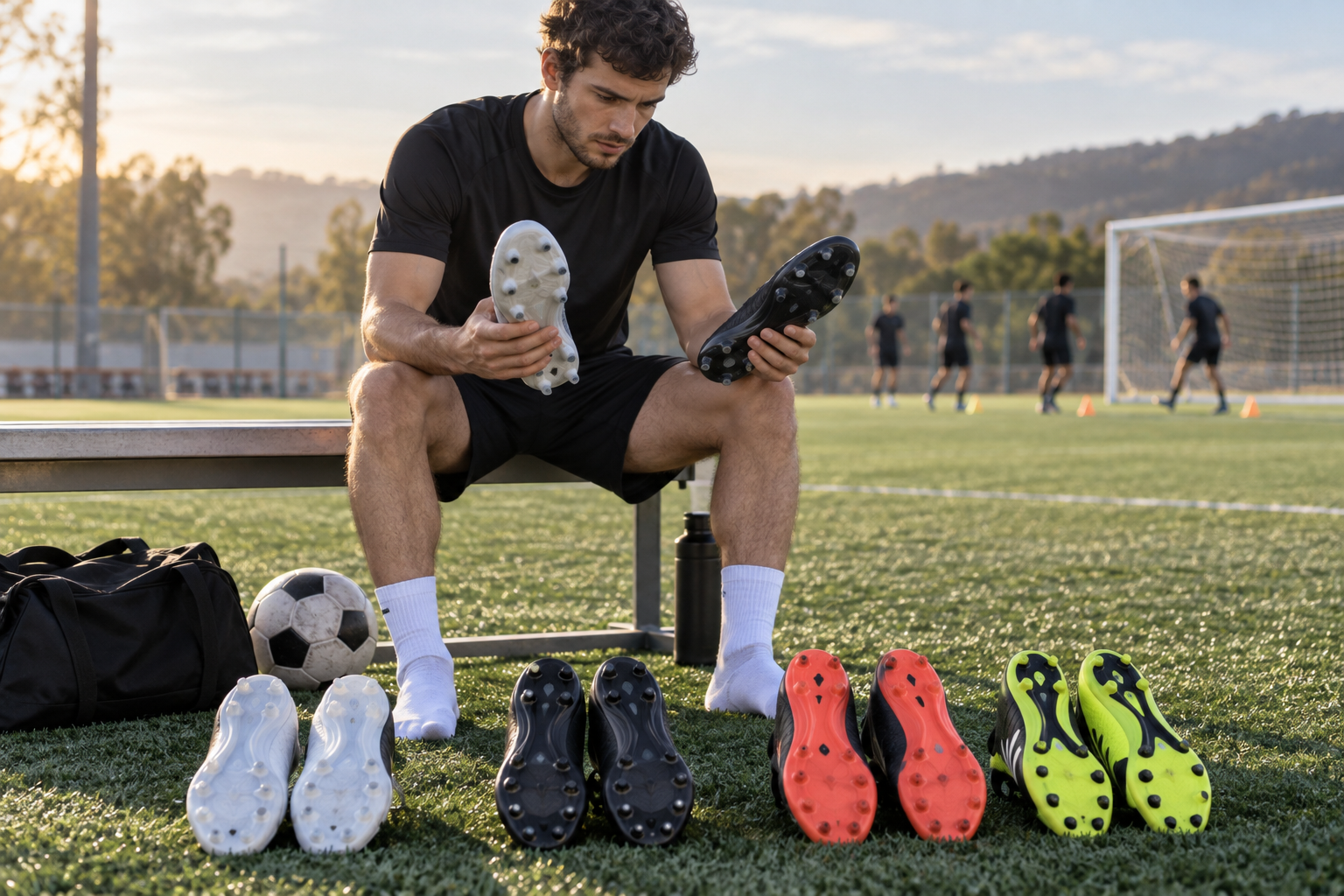
Once the surface category is clear, read the product details line by line. A product page should tell the buyer which outsole category is being offered, how the upper is constructed, what closure is used, and which sizes are available. This removes guesswork before a player or team places an order.
Look at the outsole image as well as the category name. A label such as firm ground, artificial grass, turf, or indoor describes the intended use, while the product photograph helps a buyer verify the traction pattern. If the field manager gives a specific rule, that rule takes priority over a general shopping preference.
- Confirm the main playing surface and any venue restrictions
- Read the stated outsole category rather than selecting by color
- Review the upper, closure, and available size range
- Check whether the product page describes a specific fit or width
- Use product photos to review the outsole pattern
- Ask for clarification before ordering when field use is uncertain
For buyers comparing several surface categories, our Soccer Shoes collection provides a practical starting point. It is still useful to open the individual product category page, compare the intended surface, and then match that choice to the player or team’s actual schedule.
Plan Footwear for Teams and Clubs
A team may train and compete on more than one surface during the same season. That does not mean every player needs to choose an outsole at random. Start by identifying the surface used for the most important or most frequent sessions. Then list secondary venues, such as a short-turf training center or an indoor winter court.
For a club, academy, distributor, or retailer, organizing footwear by surface is clearer than grouping every item under a broad “cleats” heading. It helps staff explain why an FG pair may be relevant for firm natural grass, why an AG pair needs artificial-field guidance, and why a TF or indoor pair serves a different setting.
| Purchase Situation | First Question | Useful Next Step |
|---|---|---|
| Single player purchase | Where will the shoe be used most? | Choose the surface category, then check fit |
| School or academy order | Which fields are used across the program? | List venues and footwear rules before selecting styles |
| Club training plan | Are match and training surfaces different? | Separate the primary and secondary surface needs |
| Retail assortment | Which local surfaces are most common? | Organize choices by outsole category and use case |
| Custom product inquiry | What market and surface use are intended? | Share the requirements through the inquiry form |
Clear requirements improve the conversation: include the field type, expected use, size range, quantity, and any upper or color direction. Those details are more useful than requesting a generic soccer cleat without a surface plan.
Test a New Pair Before Match Day
Even a correctly selected soccer shoe should be introduced gradually. Wear it with the same socks used for training, secure the laces in a comfortable position, and begin with walking, light ball work, and short changes of direction. This gives the player a chance to notice heel movement, pressure across the forefoot, or toe contact before a long session.
Stop and reassess if there is sharp pain, rubbing that continues after adjustment, numbness, or a loose heel. A new shoe can feel different from an older pair, but persistent discomfort is not a reason to force a full game. Review the fit and lacing first, and use the soccer cleat break-in guide for a gradual approach.
- Wear the pair with normal soccer socks
- Check toe room while standing and moving
- Walk and turn before increasing intensity
- Try short passes and controlled changes of direction
- Recheck laces after the first short session
- Do not rely on a full match as the first fit test
Common Soccer Cleat Mistakes
| Common Mistake | Better Approach |
|---|---|
| Choosing by color before surface | Identify the main playing surface first |
| Wearing the wrong outsole on a field | Read the surface label and venue rules |
| Assuming all artificial grass is the same | Check fiber length, field type, and facility guidance |
| Ignoring facility rules | Confirm rules before play |
| Buying the wrong fit and hoping it will stretch enough | Check fit with soccer socks before use |
| Using soccer cleats from a different sport | Use soccer footwear intended for the sport and surface |
| Wearing new cleats for a full match without testing them | Break them in through short sessions first |
A good choice is usually less about finding one “best” stud type and more about matching the product category, field conditions, rules, and player fit.
FAQ
Frequently Asked Questions About Soccer Cleats
What are soccer cleats?
Soccer cleats are soccer footwear with an outsole or stud pattern chosen for a particular playing surface. The surface label, field rules, fit, and product guidance all matter.
What is the difference between soccer cleats and soccer shoes?
Soccer shoes is a broad term. It can include studded cleats, turf shoes, and flat indoor shoes. The right category depends on the field or court.
What do FG, AG, SG, TF, and IC mean?
They are common labels for firm ground, artificial grass, soft ground, turf, and indoor-court footwear. Read the exact product information because designs vary.
What are molded soccer cleats?
They have studs fixed to the outsole. Molded construction is common, but it does not identify one universal surface category on its own.
Are firm ground cleats good for artificial grass?
Not automatically. Artificial fields differ, so check the facility rules, the actual field type, and the product label before deciding.
What soccer shoes should I wear on turf?
Turf soccer shoes with many short rubber lugs are a common starting point for short or hard turf, subject to the venue guidance.
Are turf shoes the same as indoor soccer shoes?
No. Turf shoes normally have small rubber traction points, while indoor shoes usually have a flatter court outsole.
Can I wear soft ground soccer shoes on artificial turf?
Do not assume so. Soft-ground designs are generally considered for wet natural grass; check artificial-field and league rules first.
How should soccer cleats fit?
They should feel secure without hard toe contact, painful forefoot compression, or ongoing numbness. Test them with normal soccer socks.
How do I choose soccer cleats for a child?
Start with the child’s main playing surface, current foot measurement, normal socks, field rules, and a real fit check rather than age alone.
Can I use football or baseball cleats for soccer?
No. Use soccer footwear intended for soccer. Other sport cleats can differ in construction and may not meet soccer or facility rules.
Which soccer cleat type is best for mixed surfaces?
There is no automatic answer. Identify the surface used most often, review any mixed-ground product guidance, and check the venue rules.
SUMMARY
Choose Soccer Cleats for the Surface First
Soccer cleats are a category of surface-specific footwear, not a one-size-fits-all answer. Start with the field or court, learn what the outsole label describes, and then verify facility rules and fit. This keeps the choice focused on how and where the player will actually use the shoe.
- Identify the main playing surface
- Learn the outsole label
- Check field rules
- Choose the appropriate stud pattern
- Confirm a secure and comfortable fit
- Test new shoes before full play
Explore our Soccer Shoes collection to compare Firm Ground, Artificial Grass, Soft Ground, and Turf Soccer Shoes. If you need help selecting the right product for your field, fit, or purchase needs, use the WhatsApp button in the lower-right corner to speak with us.
PROJECT INQUIRY
Discuss Your Soccer Shoes Project
Share your field, product, sizing, or purchase requirements with bootswave.
OTHER ARTICLES
More Soccer Cleat Guides
How to Choose Soccer Cleats
Choose soccer cleats by surface, fit, and outsole category.
Read guide →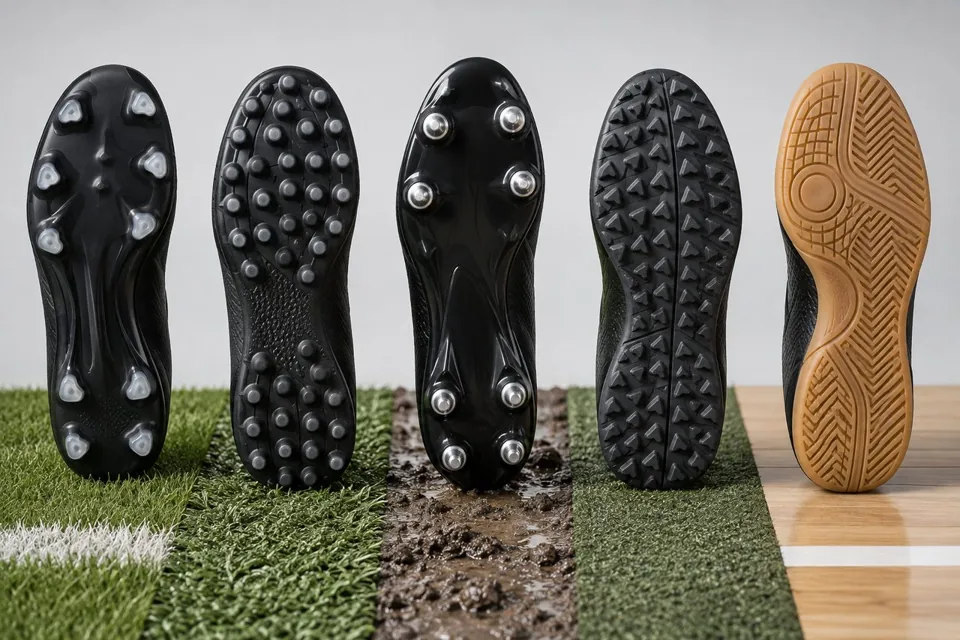
How Should Soccer Cleats Fit?
Review heel hold, toe room, and comfortable width.
Read guide →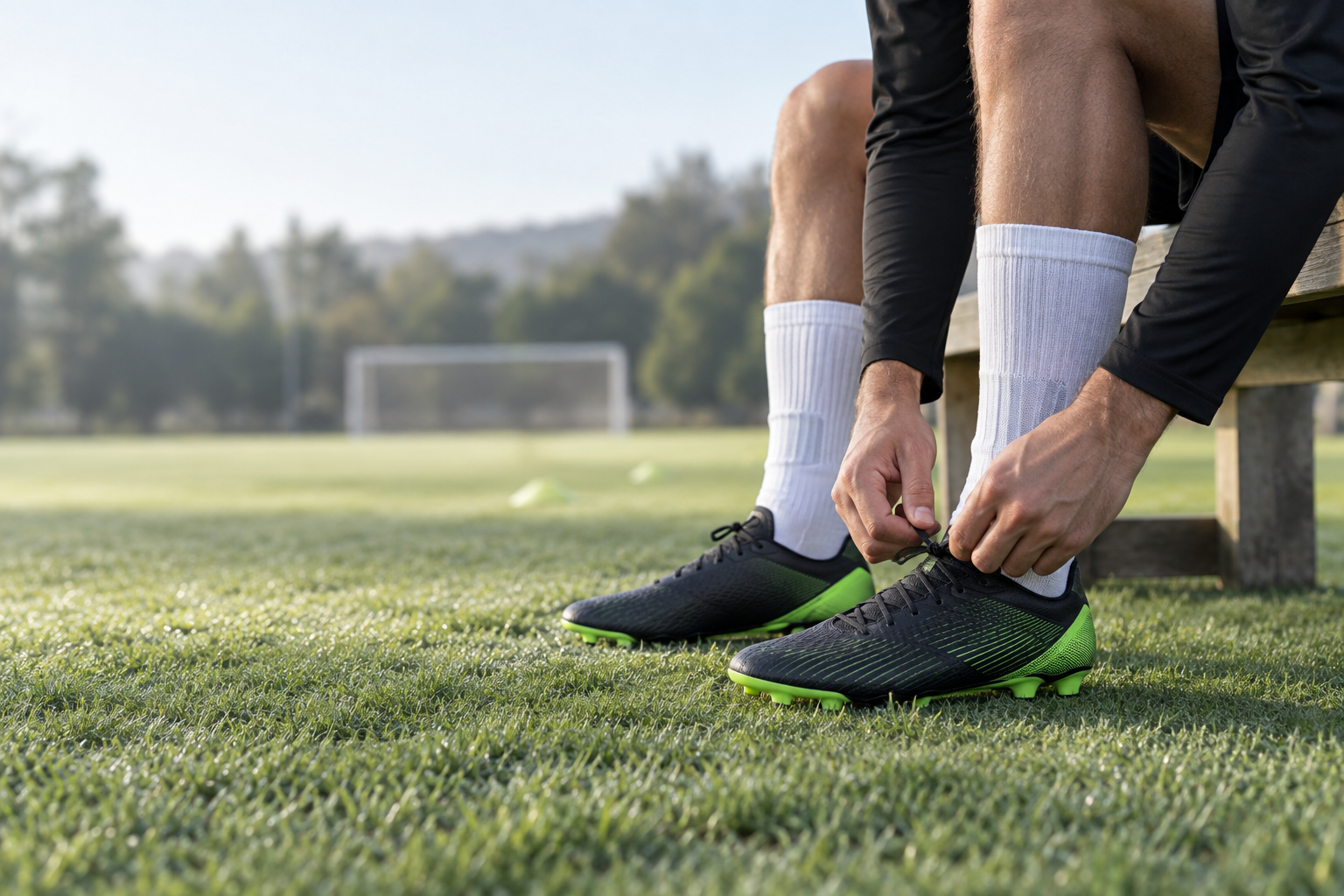
How to Break In Soccer Cleats
Prepare new cleats with gradual sessions and fit checks.
Read guide →Turf Shoes vs Cleats
Compare turf traction and studded soccer footwear.
Read guide →Firm Ground vs Soft Ground Cleats
Understand natural-grass footwear categories.
Read guide →Best Soccer Cleats for Artificial Grass
Review artificial-field footwear choices.
Read guide →Indoor Soccer Shoes vs Turf Shoes
Compare court and turf outsole patterns.
Read guide →