WHAT TF SHOES ARE
What Are Turf Shoes? TF Soccer Shoes Explained
Turf shoes are soccer shoes with many short rubber lugs across the outsole, commonly labeled TF. They are generally intended for short, firm synthetic turf, where longer cleat studs may sit on top of the surface. The outsole and the maker’s stated field use define the shoe more reliably than the shape of its upper.
Published: September 21, 2026 · Updated: November 1, 2026
Quick Reference
- TF is the common turf label
- Look for many low rubber lugs
- Short, firm turf is the usual starting field
- Longer artificial grass may need AG
- Smooth indoor courts call for indoor guidance
- Confirm the exact model and venue
THE DEFINITION
Identify the low-lug sole, not a shoe silhouette
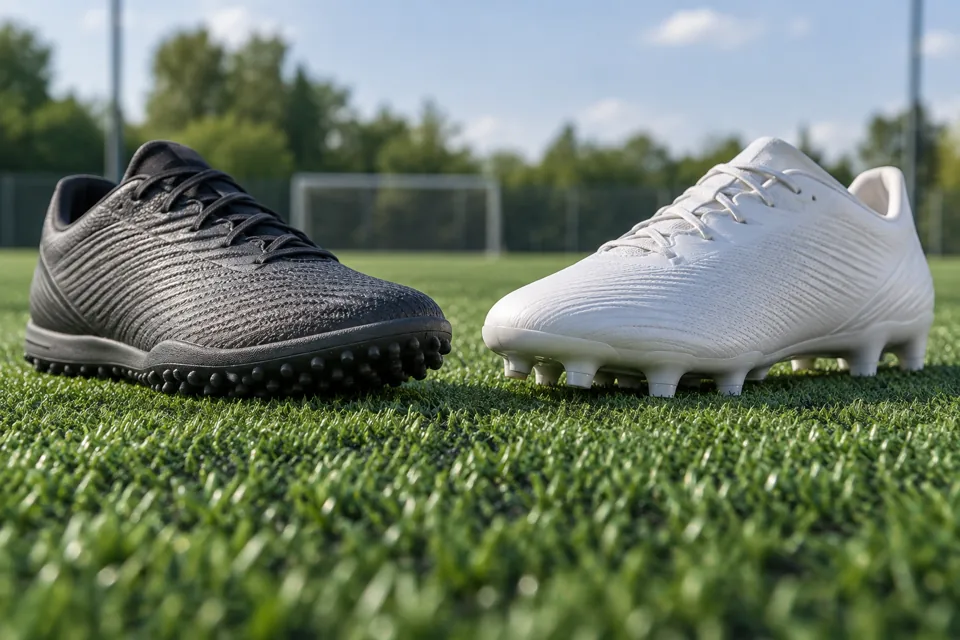
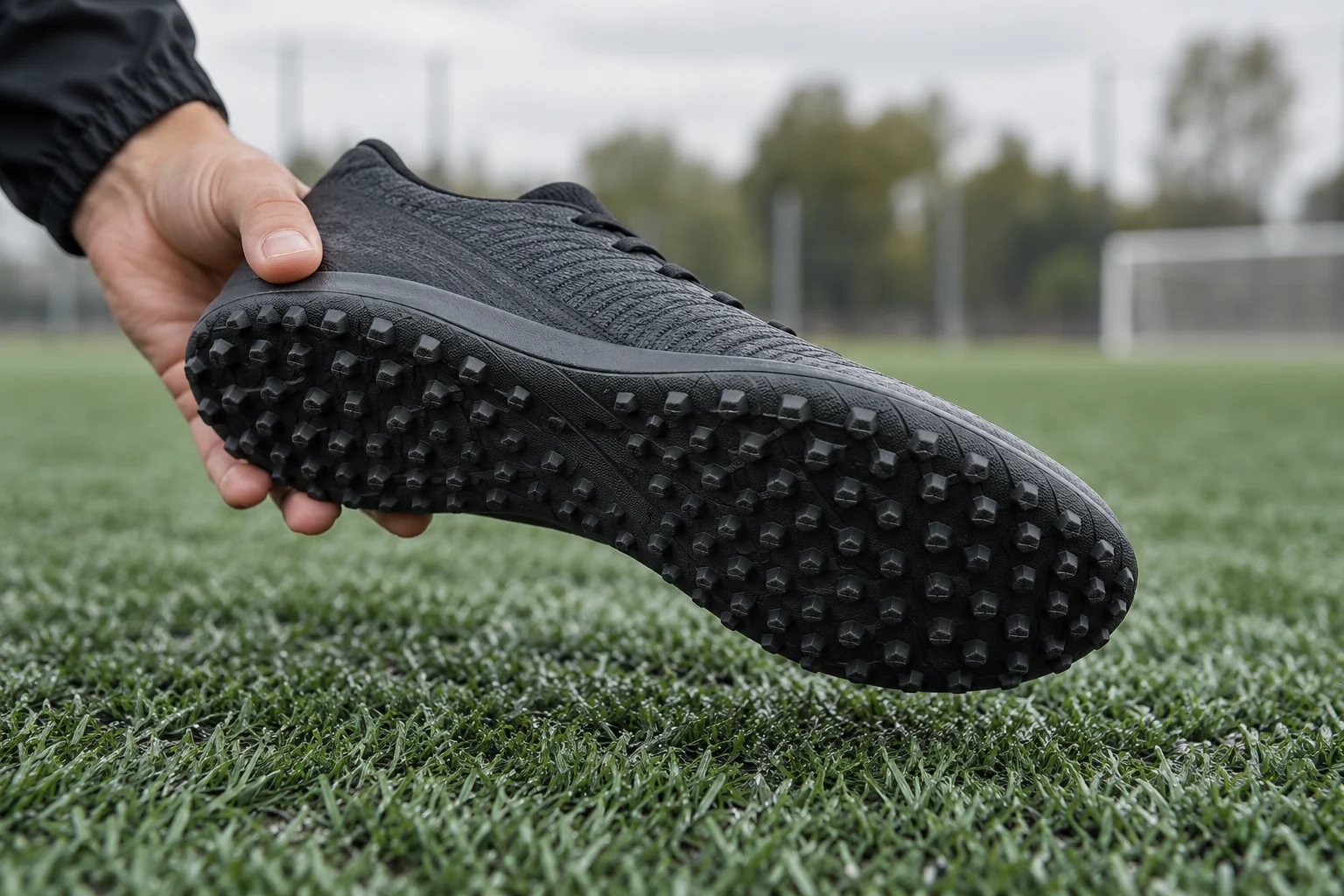
Turn the shoe over. A typical TF sole has small rubber projections distributed across much of the forefoot and heel. They are lower and more numerous than the studs on many firm-ground or artificial-grass cleats. The lugs are meant to make contact with a firm, shallow synthetic surface rather than dig into natural soil. adidas’s turf-shoe category describes this distinction from grass cleats; its surface guide separately describes FG, AG, turf and indoor options.
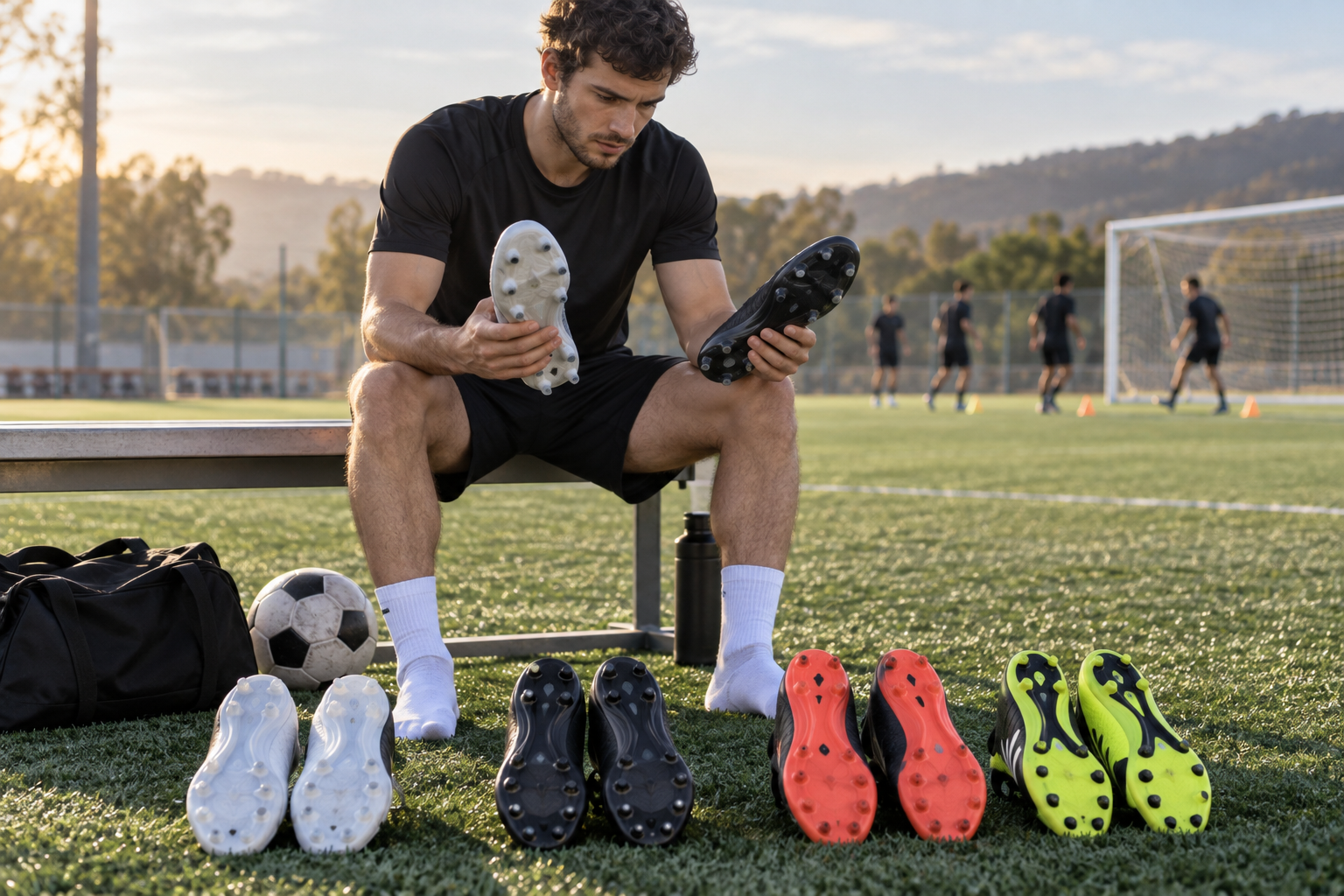
The upper can look almost identical to a studded model, and a brand may sell the same family in TF and FG versions. So a side photograph or a product name without its outsole suffix is not enough. Find the bottom-view image, the TF or “turf” designation, and the exact product description. Marketing names such as “all ground” or “training” require the same check; they are not an automatic substitute for a stated turf outsole.
The hero photograph above is an editorial illustration of sole geometry, not a listed bootswave model or proof of stock. Real lug number, shape, rubber compound and cushioning vary from shoe to shoe. Use the manufacturer’s current listing for the actual pair you are considering.
WHERE TF FITS
Short, firm synthetic turf is the clearest match
TF shoes are most useful when the surface is shallow, dense and fairly hard underfoot. On a carpet-like synthetic field, the low lugs can meet more of the surface without the perched feeling that a taller studded plate may create. The maker and field operator still decide the actual use. Skechers’s soccer surface guide distinguishes older short carpet turf from more grass-like artificial fields and places TF in the former category.
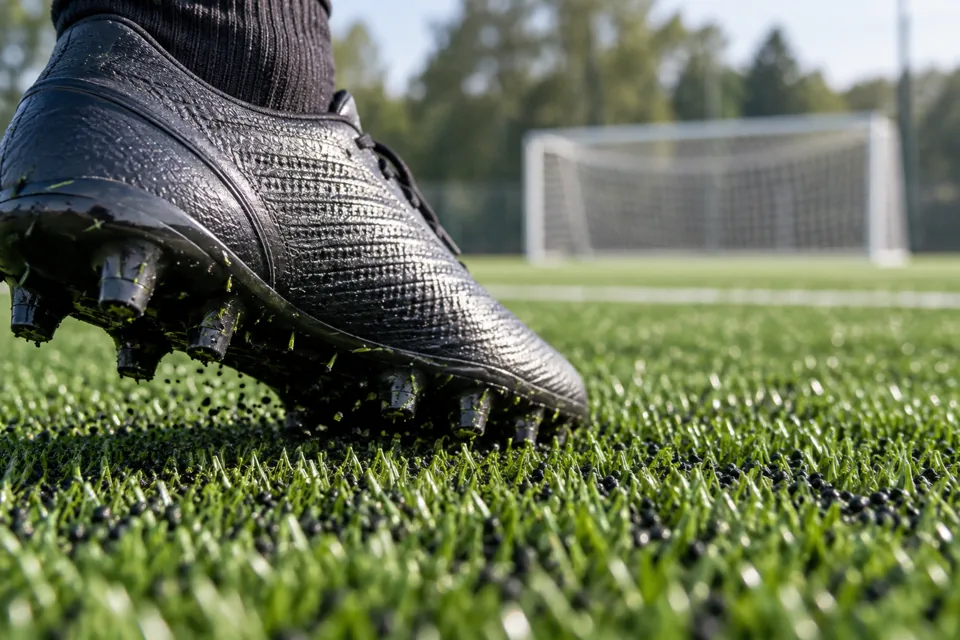
“Artificial turf” is ambiguous. A modern longer-pile field may have visible infill and more depth for an AG stud. TF can feel less secure there, especially when the surface is wet or heavily worn, though specific venue policies differ. On natural grass, low TF lugs usually offer less ground penetration than a suitable FG sole; wet or soft grass increases that limitation. On a smooth indoor court, a flat, non-marking indoor outsole is the normal category to check, and the facility can prohibit turf lugs.
| Surface | Starting choice | What to verify |
|---|---|---|
| Short, hard carpet-like turf | TF | Facility rule and maker label |
| Longer artificial grass with infill | AG or listed MG | Exact field depth and model approval |
| Firm natural grass | FG | Current soil firmness |
| Smooth indoor court | IC or IN flat sole | Non-marking rule |
This table is a first pass, not a universal safety rating. Two sites both called “turf” may have different depths and footwear policies.
WHAT TF IS NOT
AG cleats and indoor shoes solve different contact problems
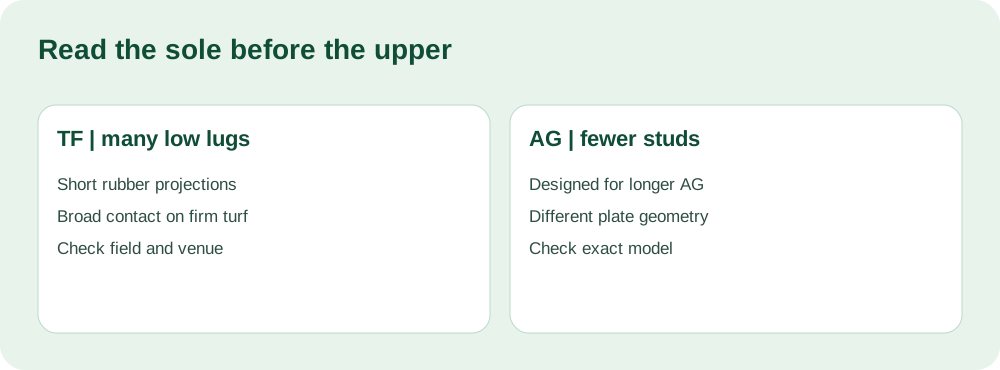
An AG cleat has a studded plate intended for compatible longer artificial grass; a TF shoe has a dense field of low lugs for shallower turf. Stud length and plate feel differ, but there is no universal lug-count cutoff that decides every model. The model’s stated surface is the better evidence. Read our Turf Shoes vs Cleats comparison if you are choosing between two pairs for one field.
Indoor soccer shoes are another separate category. Their outsole is comparatively flat and is often specified as non-marking for a hard court. A turf shoe’s lugs may be inappropriate on that smooth floor even if the upper looks court-ready. See Indoor Soccer Shoes vs Turf Shoes for the court decision. Conversely, flat indoor soles may not grip short artificial fibers as intended for a turf match.
Nor is a turf shoe a generic casual sneaker. It is soccer footwear with a surface-specific outsole and a fit meant to handle quick starts, stops and ball contact. A running shoe can have rubber underneath too, but its tread and upper are built for a different movement pattern. Look at the product’s intended use rather than classifying it by material alone.
TRY-ON AND WEAR
Check fit and the lugs before a full match
Try both shoes with match socks. The toes should have comfortable space without the foot sliding forward; the heel should stay seated during short side steps. There should be no growing pressure at the little-toe joint or across the instep. Nike’s soccer size guide shows a foot-length measuring method, but its chart is a starting point for a Nike model, not a substitute for trying the exact shoe. Follow the size guide for the product you buy.
Look at the underside of an existing pair. If the lugs are worn smooth in one zone, debris is packed between them, or the outsole is separating, inspect or replace the shoe before relying on its grip. After play, brush away loose dirt and dry the pair according to the maker’s care instructions. Do not assume a new TF shoe will solve slipping caused by a slick, wet or poorly maintained field.
If the footwear is for a child, use the same surface and fit checks at the child’s current size. Do not buy enough extra length to make a short-lived pair last another season if the heel then slips. For a broader purchase sequence, use How to Choose Soccer Cleats.
PRACTICAL DECISION
Recognize a turf shoe in a mixed catalog
A true TF version is identified by its outsole description and many shallow rubber lugs, not merely by a sneaker-like upper. Some catalogs show the same boot family in FG, AG, TF and indoor versions; the product photograph from above may look almost identical. Read the full name, turn to the sole photograph and check the maker's intended surface before ordering. “Turf” in a retailer title can be imprecise, so verify the exact model.
Match the shoe to the actual venue. A compact, short synthetic pitch is the clearest TF use case. A deeper infilled artificial-grass field may call for an AG or approved MG plate, while a smooth indoor court may require a flat non-marking sole. If the venue description gives only “turf,” ask for its footwear rules and an image of the surface. That small step prevents treating every synthetic field as one category.
Check the lugs for uneven wear and the upper for heel hold before each session. If the surface feels unexpectedly slippery or the pair causes isolated pressure, stop and compare another permitted option. A TF shoe can be a useful everyday choice for the right field, but no outsole label overrides the venue's rules, the maker's guidance or the fit of the exact pair.
ORDERING
Ask for the actual TF version and price
To buy one pair from bootswave, send a screenshot or model name, your size, delivery country and a photo or description of the field through the form below or WhatsApp. We can confirm which TF options are available and give the price and order steps. A pictured outsole is an explanation, not a promise that this exact shoe is in stock. You can also browse the Turf Soccer Shoes page for the relevant category.
FAQ
Frequently Asked Questions
What does TF mean on soccer shoes?
TF is a common turf-footwear label. Confirm the exact model’s stated surface rather than relying on the letters alone.
Are turf shoes considered cleats?
They are soccer shoes with many low rubber lugs. In casual speech people may call all soccer footwear cleats, but TF differs from longer-studded FG and AG soles.
Can TF shoes be used on long artificial grass?
Check the exact product and venue. Longer artificial grass more often leads to AG or an approved MG model; TF may not give the same purchase.
Can I wear TF shoes on an indoor court?
Only if that court permits the outsole. A flat non-marking indoor shoe is usually the category to inspect first.
SUMMARY
TF means a low-lug soccer outsole
Look for many short rubber lugs and check that the exact shoe is intended for the short, firm synthetic surface where you play.
If you already know the sole but are deciding between TF and a studded pair, read Turf Shoes vs Cleats.
ONE-PAIR QUESTION
Ask About Availability and Price
OTHER ARTICLES