SOCCER FOOTWEAR GUIDE
Indoor Soccer Shoes vs Turf Shoes
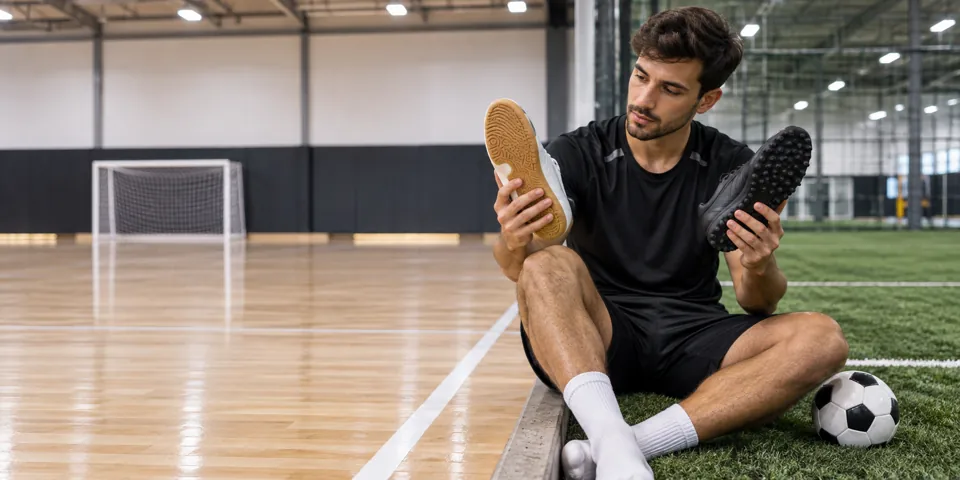
Indoor court shoes are made for smooth, hard courts, while turf shoes are made for short synthetic turf. The word indoor can describe a futsal court, a gym floor, sport tile, concrete, carpet turf, or an enclosed turf field. Confirm the actual venue surface before buying, then check the outsole label, the facility rule, and fit.
Quick Reference
| Playing Surface | Best Shoe Type | Outsole Clue | Check Before Playing |
|---|---|---|---|
| Futsal court, gym floor, sport court, or smooth concrete | IC/IN indoor shoe | Flat non-marking rubber | Venue rules and floor condition |
| Short indoor synthetic turf | TF turf shoe | Many small rubber nubs | Turf pile, firmness, and venue policy |
| Outdoor artificial grass | AG shoe where appropriate | Artificial-grass outsole | Manufacturer surface label |
| Natural grass | FG shoe | Molded cleats | Grass firmness and weather |
OVERVIEW
The Quick Answer
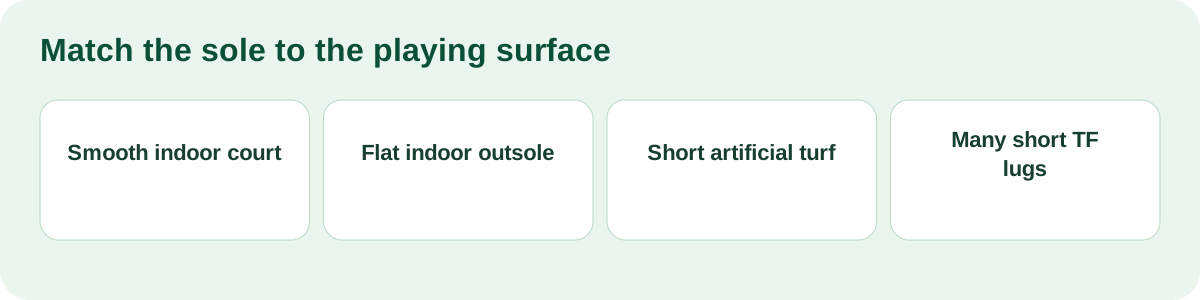
Choose IC or IN shoes for a flat indoor court. Choose TF turf shoes for short, firm artificial turf. Those categories begin with the outsole under the shoe, not the marketing word used for the venue.
Indoor leagues do not all use the same surface. One club may play on hardwood or sport tile, while another plays on carpet turf or a short synthetic field inside a building. A hard court and a turf field need different outsole patterns.
Check These Before You Buy
- Surface type
- League footwear rule
- Shoe outsole label
- Fit and return policy
Ask the facility whether play is on hardwood, sport tile, concrete, carpet turf, short turf, or artificial grass. Then read the shoe’s stated surface guidance before treating an indoor soccer shoe or turf shoe as suitable.
MAIN CONTENT
Indoor Soccer Shoes vs Turf Shoes
The Sole Is the Main Difference
The main difference is underfoot. Indoor court shoes use a flat, non-marking rubber outsole that makes broad contact with a smooth floor. Turf shoes use many small raised rubber nubs that spread contact across short synthetic turf.
Both styles can look low-profile from the side, but their bottoms are not interchangeable categories. Read labels such as IC, IN, Indoor, Court, Futsal, TF, or Turf as useful starting points. The actual product page and facility rules make the final decision.
Indoor Court Shoes
- Flat outsole
- Full contact with hard court surfaces
- Built for pivots on smooth flooring
- Common labels: IC, IN, Indoor, Court, Futsal
Turf Shoes
- Multiple small rubber nubs
- Built for short synthetic turf
- Grip pattern for firmer turf
- Common labels: TF or Turf
Indoor Soccer Can Mean Different Surfaces
The phrase indoor soccer causes many buying mistakes because it describes the location, not always the floor. Futsal normally means a hard, flat court setting. Many indoor soccer facilities instead use enclosed synthetic turf, sometimes with short carpet-like pile and sometimes with a more grass-like field.
Look for practical clues before selecting a pair. Basketball-style lines, a polished floor, or sport tile point toward a court shoe. Visible fibers, a turf pile, and an enclosed mini field point toward a turf category. Longer artificial grass with infill needs a separate AG and facility-rule review.
| Venue Clue | Likely Surface | Starting Shoe Choice |
|---|---|---|
| Basketball-style lines and polished floor | Court | IC or IN |
| Smooth sport tile or gym surface | Court | IC or IN |
| Short carpet-like artificial field | Turf | TF |
| Longer synthetic grass with infill | Artificial grass | Check AG guidance and facility rules |
Indoor Court Shoes Explained
Indoor court shoes are commonly labeled IC or IN. Their defining feature is a flat rubber sole without raised turf lugs. Many facilities require a non-marking outsole, so the venue policy belongs beside fit and size in a buying decision.
Players often look for a secure heel, comfortable forefoot width, and cushioning that feels appropriate on a hard court. Upper material, lacing, and shoe shape can change the result, so no single indoor court shoe fits every foot the same way.
What to Look for in an Indoor Court Shoe
- Non-marking flat rubber outsole
- Secure heel hold
- Comfortable forefoot width
- Cushioning suitable for hard courts
- Upper material that supports ball feel
- Facility-approved outsole
Turf Shoes Explained
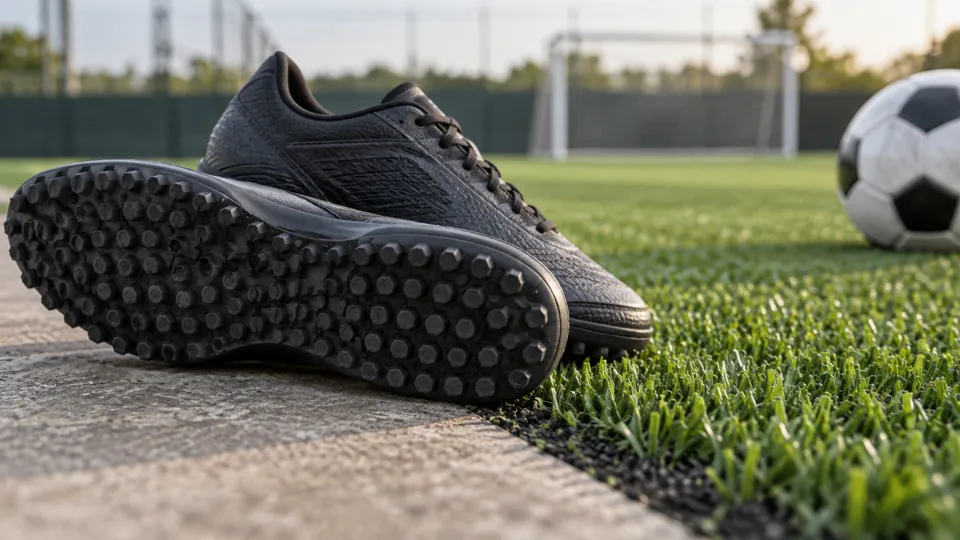
TF turf shoes use many small rubber nubs for short, firm synthetic turf. The pattern differs from an outdoor cleat because the nubs are shorter and more numerous. A TF shoe is not the same as a flat futsal shoe, an AG shoe, or an FG cleat.
Review the pile height, firmness, and facility policy before using TF footwear. Short enclosed turf and a grass-like outdoor artificial field may both be called turf in conversation, but their product guidance can differ.
| Feature | TF Turf Shoe | FG Cleat | AG Shoe |
|---|---|---|---|
| Outsole pattern | Dense small rubber nubs | Molded cleats | Artificial-grass stud pattern |
| Intended surface | Short, hard synthetic turf | Natural grass | Grass-like artificial fields |
| Review before use | Turf pile and policy | Grass firmness and weather | Manufacturer label and venue rules |
| Avoid treating it as | A flat court shoe | A default indoor shoe | The same as every turf surface |
Can You Wear Indoor Shoes on Turf?
Indoor shoes may work for a brief casual session on some very flat surfaces, but they are not the intended choice for short synthetic turf. Their flat sole does not provide the same turf grip pattern as distributed TF nubs.
When Indoor Shoes Are a Poor Match
They are a poor match when the turf has visible pile, a firmer base, or a facility expects turf footwear. A flat sole can feel different once the surface is uneven, dusty, damp, or more textured than a court.
What to Do If You Only Have One Pair
For a one-off session, ask the organizer rather than assuming the word indoor means a court. If turf becomes a regular part of the schedule, review a separate TF pair.
Ask the Facility First
- Hard futsal court: choose IC or IN
- Short indoor turf: choose TF
- Longer artificial grass: check for AG guidance
- Mixed weekly schedule: consider separate court and turf pairs
Can You Wear Turf Shoes on a Court?
Turf shoes are usually not the intended choice for a smooth indoor court. Many facilities require flat non-marking soles, so players should confirm the rule before arriving.
Raised nubs can feel different on hard flooring and may not meet local requirements. That does not mean every court will treat every turf shoe the same way; the responsible answer is to ask the venue and bring court shoes when hard flooring is listed.
Before Wearing Turf Shoes Indoors
- Confirm the playing surface
- Read the facility footwear rule
- Check whether non-marking flat soles are required
- Bring court shoes if the venue uses hard flooring
- Do not rely on the word indoor alone
How TF Differs From AG and FG
TF, AG, and FG are separate labels that help prevent confusion when a player uses multiple venues. TF is a turf category for short and firm synthetic turf. AG is a category to review for more grass-like artificial fields. FG is for firm natural grass and should not be treated as the default for indoor courts or short indoor turf.
| Label | Meaning | Best Starting Surface | Do Not Treat It As |
|---|---|---|---|
| TF | Turf | Short and firm synthetic turf | A flat court shoe |
| AG | Artificial Grass | More grass-like artificial fields | The same as every turf surface |
| FG | Firm Ground | Natural grass | A default indoor shoe |
Facility rules and the stated product surface guidance have priority over a broad label. A field can change with maintenance, moisture, pile condition, and local policy.
How to Choose in Three Questions
- What surface do you actually play on most often? Choose for the regular venue before choosing for a rare session. A player who uses a hard court three times a week and turf once a month usually starts with IC or IN.
- What outsole does the league or facility allow? Ask whether flat non-marking soles are required, whether TF shoes are expected, and whether AG guidance applies. A surface label is useful, but it does not override local rules.
- Does the shoe fit securely at the heel and forefoot? Use normal soccer socks, check heel movement, toe pressure, forefoot width, and lacing tension. Product-specific sizing information is more useful than a universal size-up rule.
When court and turf play are both regular, separate pairs can make the decision clearer. Prioritize the most frequent surface first, then add the second category when the schedule and budget allow. This approach keeps an occasional session from driving every purchase decision.
Fit, Care, and Shoe Life
Surface selection does not replace a fit check. Test heel hold, toe space, and forefoot comfort with the socks used for play. If a shoe feels sharply tight, loose at the heel, or unsuitable for the stated field, review the product guidance or return option before using it.
After a turf session, brush loose debris from TF nubs and allow the shoes to air dry away from direct heat. Court shoes also benefit from being dried before storage. Replace footwear when the outsole is visibly worn or the surface contact feels inconsistent.
Keep the Right Pair Ready
- Use court shoes for hard indoor courts
- Keep TF shoes for short synthetic turf
- Remove loose turf debris after use
- Air dry away from direct heat
- Replace footwear when the outsole is visibly worn or traction feels inconsistent
Read the Venue Description Carefully
A booking confirmation can say indoor soccer without identifying the floor. Read the facility description, team message, or event note for clues such as futsal, court, sport tile, gym, carpet turf, short turf, synthetic field, 3G, or 4G. If those words are missing, ask a direct question before the first session.
Players often assume that an enclosed building means a flat indoor court. That is not always true. Enclosed turf centers can have short, firm synthetic fibers, a padded base, boards, or different pile heights. A court shoe and a TF turf shoe can both be called indoor soccer shoes in casual conversation, which is why the outsole needs a separate check.
Use photos only as a starting clue. A close image may not reveal surface firmness, infill, maintenance condition, or the footwear rule. The facility operator, coach, or league organizer can usually give the most useful answer: the surface type and the outsole categories accepted for play.
| Question to Ask | Why It Helps | Practical Result |
|---|---|---|
| Is the floor smooth and hard? | Separates courts from turf | Start with IC or IN |
| Are artificial fibers visible? | Identifies a turf-style surface | Review TF or AG guidance |
| Is non-marking footwear required? | Confirms the venue policy | Bring a flat court sole |
| Does the field use infill? | Signals a more grass-like system | Read AG product guidance |
Choose for a Weekly Schedule
A regular schedule gives more useful buying information than a single upcoming game. If most training is futsal on a hard court, court shoes should normally be the first pair considered. If most training happens on a short enclosed field, TF soccer shoes become the more relevant starting category.
Players who rotate between two venues do not need to solve every session with one outsole. Separate pairs can make preparation simpler when court play and turf play are both frequent. This is a practical surface decision, not a claim that every player must own multiple pairs.
For occasional games on a second surface, ask whether the facility permits the pair already owned. For recurring matches, compare a second surface-specific option with the expected use, product guidance, and available budget. Keep the pair labeled or stored separately so the right shoe is easy to bring.
Fit With Playing Socks
Fit remains important after the surface category is clear. Try shoes with the socks used for training or matches, then check whether the heel stays secure, the forefoot has comfortable width, and the toes are free from hard contact. A shoe can have the right outsole label and still be unsuitable if it creates sharp pressure or noticeable heel movement.
There is no universal size conversion, toe-gap number, or size-up rule for every indoor soccer shoe or turf shoe. Product shape, upper material, lacing, foot width, and instep volume vary. Use the product-specific size chart and return policy as part of the purchase plan.
For a child, measure both feet and focus on current fit rather than age or casual-shoe size. For a team, ask representative players to try samples with normal socks and record common width or instep concerns before a larger order.
Care for Court and Turf Outsoles Differently
Indoor court shoes usually collect dust from hard floors, while TF shoes can hold loose fibers, rubber particles, and dirt between the nubs. A simple post-session check keeps the product ready for its next use. Brush debris away gently and let both shoe types air dry before they go into a closed bag.
Do not place footwear against a radiator or another direct heat source. Heat, moisture, and long storage in a sealed sports bag can affect adhesives, upper materials, and odor. Follow the product care guidance because material construction can differ between shoes.
Inspect the outsole before important sessions. A visibly worn flat sole, damaged nub pattern, loose component, or split upper is a reason to reassess the pair. This is a routine product check, not a guarantee about comfort, performance, or injury prevention.
Notes for Parents, Coaches, and Buyers
Parents can reduce confusion by asking one question before buying: what floor does the child actually use at the facility? Coaches can include the expected surface and footwear rule in the team message. Those small details help families arrive prepared and reduce last-minute substitutions.
Retailers, clubs, academies, and B2B buyers should separate indoor court, TF turf, AG, and FG products clearly in a range. A clear product label, outsole photo, size chart, and stated surface category make a comparison easier without promising that one product is right for every venue.
Before confirming a larger footwear order, review the target player group, common venue surfaces, local rules, size run, upper construction, outsole category, and physical samples. Document feedback so a future reorder can use the same field assumptions and product reference.
Practical Buying Checklist
- Identify the actual surface instead of relying on the word indoor
- Match smooth courts with IC or IN and short synthetic turf with TF
- Check AG guidance for longer, grass-like artificial fields
- Review the facility and league footwear rule
- Try shoes with playing socks and check heel and forefoot fit
- Read the product-specific size chart and return conditions
- Brush TF nubs after turf sessions and air dry both pairs
- Use separate pairs when court and turf play are both regular
When Rules and Labels Differ
A product label and a facility rule serve different purposes. The label describes the shoe category and intended surface guidance from the manufacturer. The facility rule controls what participants may wear at that particular venue. Follow the venue rule for play, then use the product label to decide whether the category is a sensible match for the surface.
If a league allows more than one outsole category, choose based on the field used most often and the product’s stated use. If the field condition or rule remains unclear, pause the purchase decision and ask the facility. A short confirmation is more useful than trying to infer the answer from the building name, a team photo, or another player’s footwear.
For buyers placing team or retail orders, keep a simple record of the approved surface categories. Include the venue type, outsole label, sample reference, date checked, and any league requirement. That record gives players and future buyers a clear reason for the selected IC, IN, TF, AG, or FG range.
FAQ
Frequently Asked Questions
Are indoor soccer shoes and turf shoes the same?
No. Indoor court shoes normally use a flat non-marking rubber sole for smooth hard courts, while turf shoes use small raised rubber nubs for short synthetic turf. Confirm the venue surface because indoor soccer can be played on either type of ground.
Can I wear turf shoes for futsal?
Usually, turf shoes are not the intended choice for futsal on a hard court. Futsal settings commonly require a flat non-marking sole. Read the facility rule and bring IC or IN shoes if the game is on sport tile, hardwood, concrete, or another smooth floor.
Can I wear indoor soccer shoes on artificial turf?
Indoor court shoes are not the intended choice for short synthetic turf because their flat outsole lacks a TF nub pattern. For a casual session, ask the organizer first. For regular turf play, review TF footwear and check whether the field instead calls for AG guidance.
What does TF mean on soccer shoes?
TF commonly means Turf. It usually identifies soccer shoes with many small rubber nubs for short, firm synthetic turf. It does not mean the shoe is automatically approved for every artificial field, hard court, natural-grass pitch, or indoor venue.
What do IC and IN mean on soccer shoes?
IC and IN commonly refer to indoor or court categories. These shoes typically use a flat rubber sole with no raised turf lugs. Check whether the venue requires non-marking footwear and whether the actual indoor surface is a court rather than turf.
Are turf shoes the same as AG soccer cleats?
No. TF turf shoes and AG soccer cleats are different categories. TF is a starting choice for short, harder synthetic turf; AG is a category to check for more grass-like artificial fields. The actual product label and facility policy should guide the final choice.
What shoes should kids wear for indoor soccer?
Kids should wear the category that matches the facility surface and league rule. Use IC or IN shoes for hard courts and review TF shoes for short indoor turf. Check current fit with soccer socks and use the product’s own size guidance rather than age alone.
Should I buy two pairs if I play on court and turf?
Two pairs can be practical when both surfaces are part of a regular schedule. Start with the surface used most often, then add the second category when needed. Separate court and turf pairs make it easier to follow the facility rule and use the intended outsole.
FAQ Reference
- Court = IC or IN
- Short indoor turf = TF
- Outdoor artificial grass = check AG guidance
- Natural grass = FG
SUMMARY
Choose by Surface
Use flat IC or IN shoes for hard courts and TF turf shoes for short synthetic turf. That rule is simple, but the word indoor is not specific enough by itself. Confirm whether the facility uses a polished court, sport tile, carpet turf, short synthetic turf, or a more grass-like artificial field before ordering.
Next, read the outsole label, venue rule, and manufacturer’s stated surface guidance. Check heel hold, forefoot comfort, and the product-specific size information. If a schedule includes both court and turf, prioritize the most frequent surface and consider a second pair when both are regular.
Explore our Soccer Shoes collection, review Turf Soccer Shoes and Artificial Grass Soccer Cleats product pages, or click the floating WhatsApp button in the lower-right corner to discuss sizing, playing surface, and purchase options with our team.
PROJECT INQUIRY
Ask About Soccer Shoes
Send your playing surface, usual shoe size, and purchasing question for a focused product discussion.
Article Details
Published: September 21, 2026
Updated: November 1, 2026
Category: Soccer Shoes Guide
Surface labels and facility rules should be checked before purchase.
CONTINUE READING
Related Soccer Shoe Guides
What Are Turf Shoes?
Learn what TF turf shoes are and how their rubber nubs match short synthetic surfaces.
Read guide →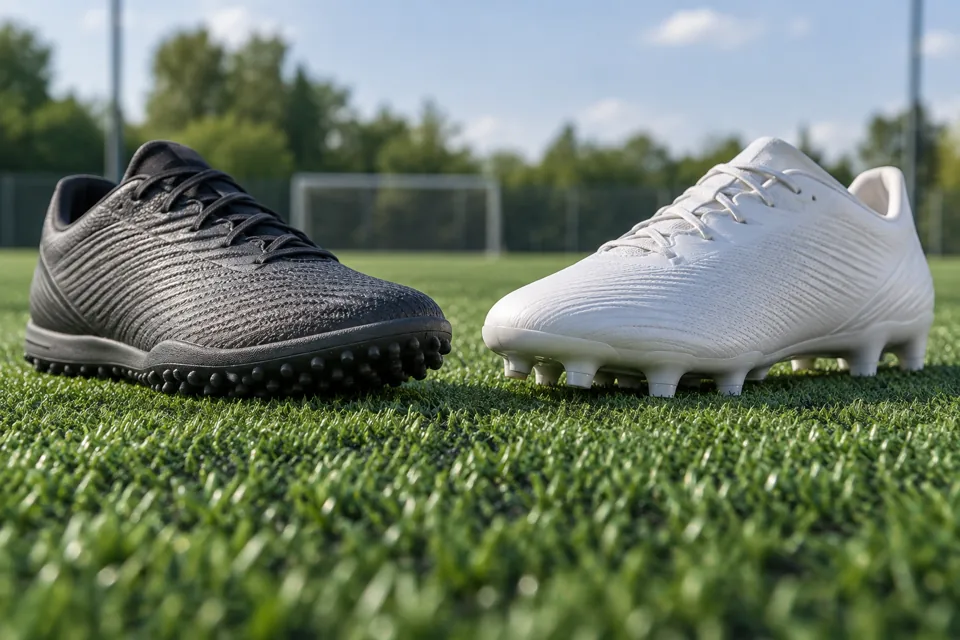
Turf Shoes vs Cleats
Compare turf shoes and cleats by outsole, traction, and playing surface.
Read guide →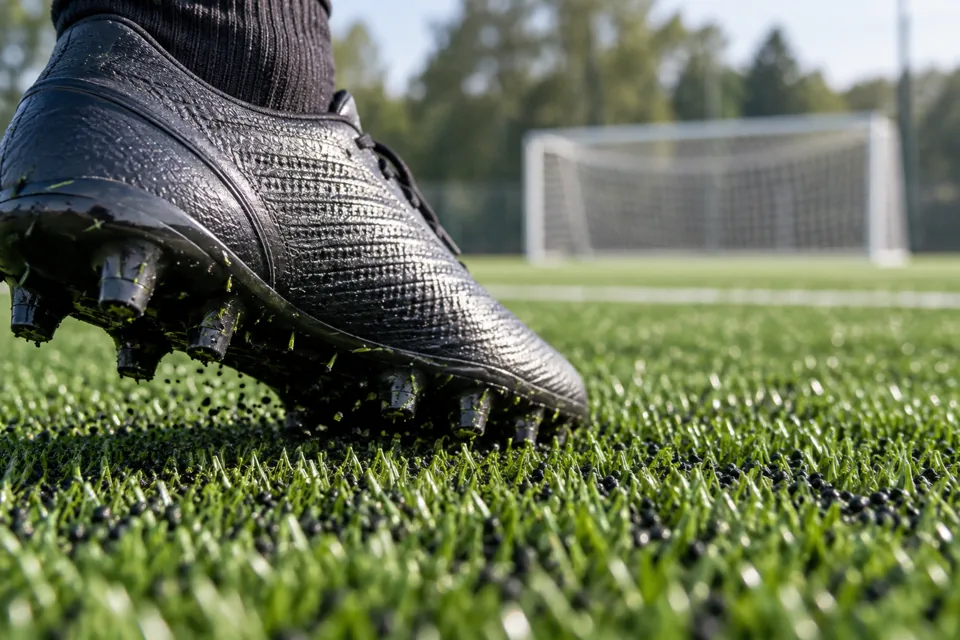
Can You Wear Soccer Cleats on Artificial Turf?
Understand how footwear choices change across artificial turf and grass-like fields.
Read guide →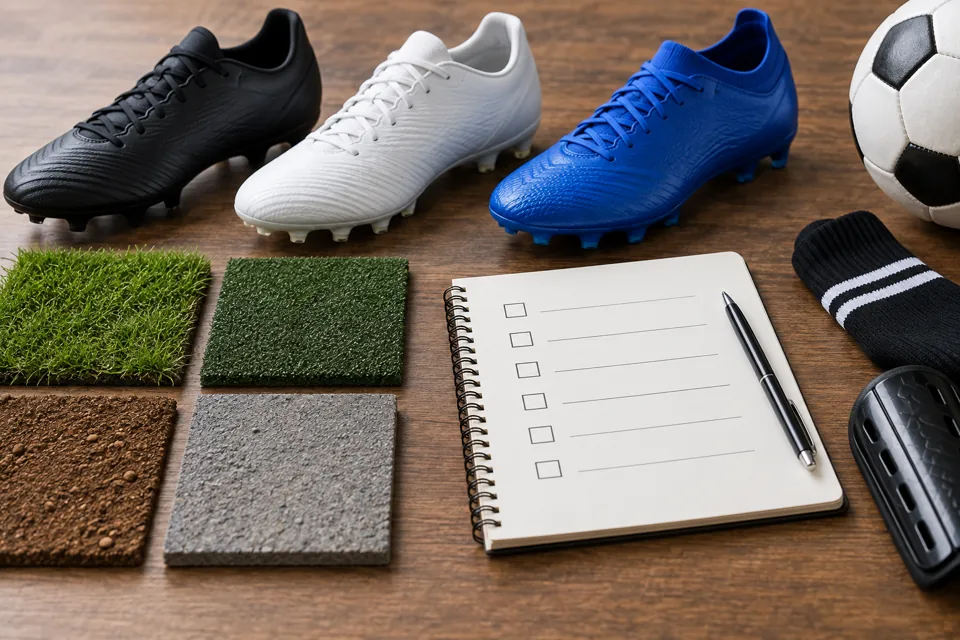
How to Choose Soccer Cleats
Use a simple surface, fit, and outsole checklist before choosing soccer footwear.
Read guide →SURFACE NOTE
Indoor vs Turf Soccer Shoes
Indoor vs turf soccer shoes is primarily a surface decision. Indoor court shoes usually use a flatter, non-marking sole for hard courts, while turf shoes use dense rubber nubs for specified turf systems. Neither category should be selected only by appearance; read the venue description and product outsole information first.
What is the difference between indoor vs turf soccer shoes?
The sole pattern and intended surface are the key differences. See what turf shoes are for TF outsole context, and use the Artificial Grass Soccer Cleats page when the field is a synthetic grass system rather than an indoor court.
