ARTIFICIAL GRASS BUYING GUIDE
Soccer Cleats for Artificial Grass: AG, MG or TF?
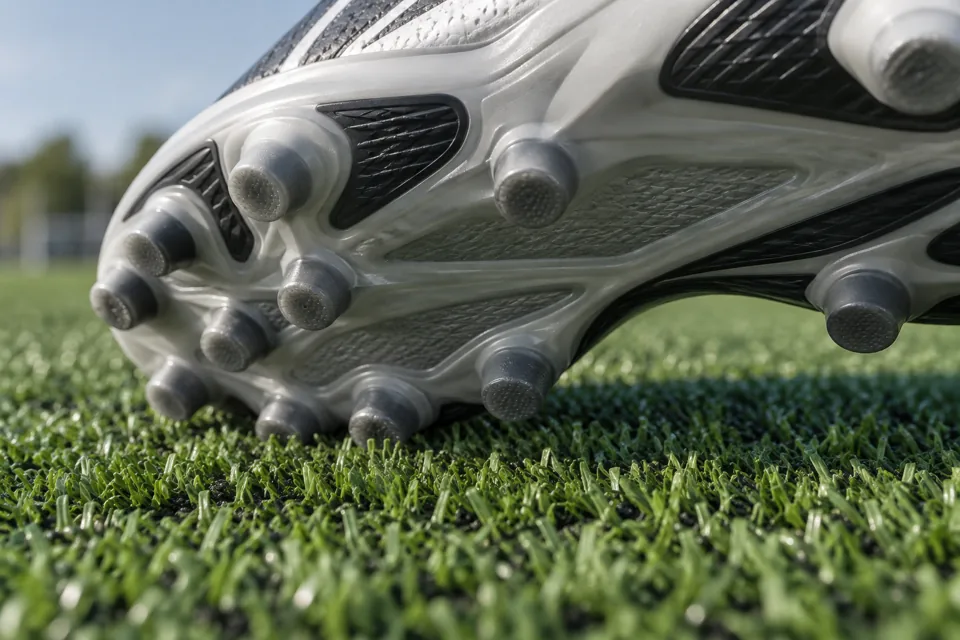
On a modern long-pile artificial-grass field, start with an AG outsole or a multi-ground model whose manufacturer explicitly lists that surface. On short, hard carpet-style turf, compare TF shoes instead. The best pair is the one approved for your actual field that also fits without concentrated stud pressure.
Published: September 19, 2026 · Updated: November 1, 2026
Quick Reference
- Identify long-pile grass or short turf
- Read the exact manufacturer surface label
- Check venue footwear rules
- Compare AG and approved MG for long pile
- Compare TF for short hard turf
- Test heel hold and stud pressure
FIELD FIRST
Identify the surface under your feet
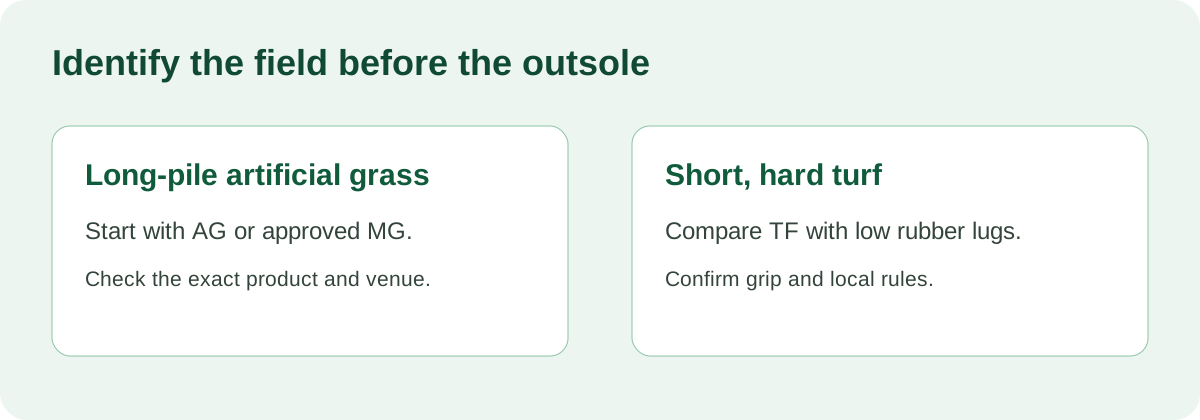
“Artificial turf” can refer to different pitches. A long-pile field has visibly taller fibers, often with infill, and is where AG or a properly approved MG boot is normally considered. An older, shallow carpet-style pitch feels flatter and harder; a TF shoe with many low rubber lugs may be more appropriate. A hard indoor court calls for a non-marking indoor sole rather than studs.
Ask the venue what footwear is permitted, especially when the surface is worn or has unusual infill. adidas’s cleat guide distinguishes FG for natural grass, AG for artificial grass, MG for multiple listed grounds, and turf/indoor shoes for their own surfaces. Those labels describe intended use, but the exact product page and venue rule decide whether a specific pair is suitable.
If you play on two surfaces, write both down before shopping. “MG” is useful only if the maker lists both actual surfaces. Do not infer approval from a photograph of short studs or from another model in the same family.
SOLE CHOICE
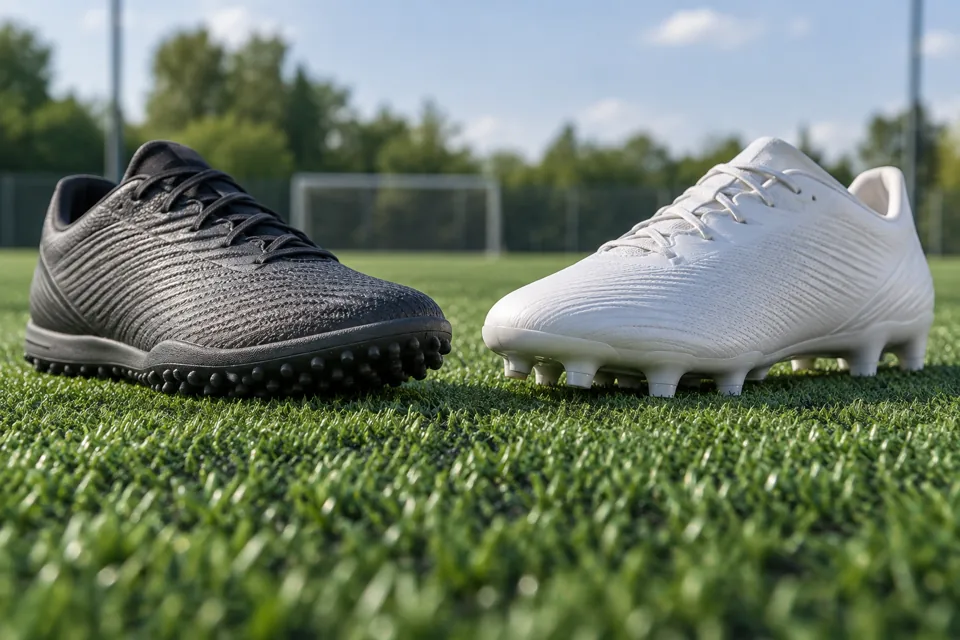
AG, MG and TF solve different contact problems
| Label | Starting point | Important limit |
|---|---|---|
| AG | Modern artificial-grass field named by the maker | Check the exact plate and venue rule; AG does not mean every synthetic surface. |
| MG or FG/AG | Several surfaces explicitly named on that product | Do not assume one MG label covers all artificial pitches. |
| TF | Short, compact, carpet-style turf | Low lugs differ from a studded AG plate; verify traction on the venue. |
| FG | Firm natural grass | Do not assume a natural-grass FG plate is suitable for artificial grass. |
AG designs commonly use a different stud arrangement from their FG counterparts. But stud shape alone is not a universal safety test: height, number, spacing, plate stiffness, field condition and the player all change the feel. Follow the maker’s declared surfaces rather than applying a blanket “round studs are safe” rule.
If your field is ambiguous, photograph the surface and ask the venue or manufacturer before buying. Our FG vs AG comparison explains the surface labels in more detail; this guide focuses on making the final purchase decision for artificial grass.
REAL MODEL EXAMPLES
Compare the correct outsole version of a real model
Use named listings to see how one model family can have distinct surface versions. When checked on October 31, 2026, Nike’s US site listed a Phantom 6 Low Pro AG and a Phantom 6 Low Pro FG as separate products, both shown at $160. It also listed a Phantom 6 Low Pro turf shoe. Nike’s broader cleat listing showed a Tiempo Maestro Elite AG at $260. These are examples of labeling and current US listings, not bootswave stock, test winners or prices.
The point is to inspect the complete name, outsole label and manufacturer description. If a retailer shows only “Phantom 6 Pro,” find out whether it is the AG, FG or turf version before ordering. A review of one outsole version cannot be transferred automatically to another. Confirm the exact model’s size guidance and return policy too.
For a lower budget, compare surface-approved models within the current Academy or equivalent range rather than choosing an unsuitable FG sale item. There is no single model we can call “best” without knowing your field, foot shape, available sizes and budget.
FIT ON THE FIELD
Check pressure, grip and release without assuming a lab result
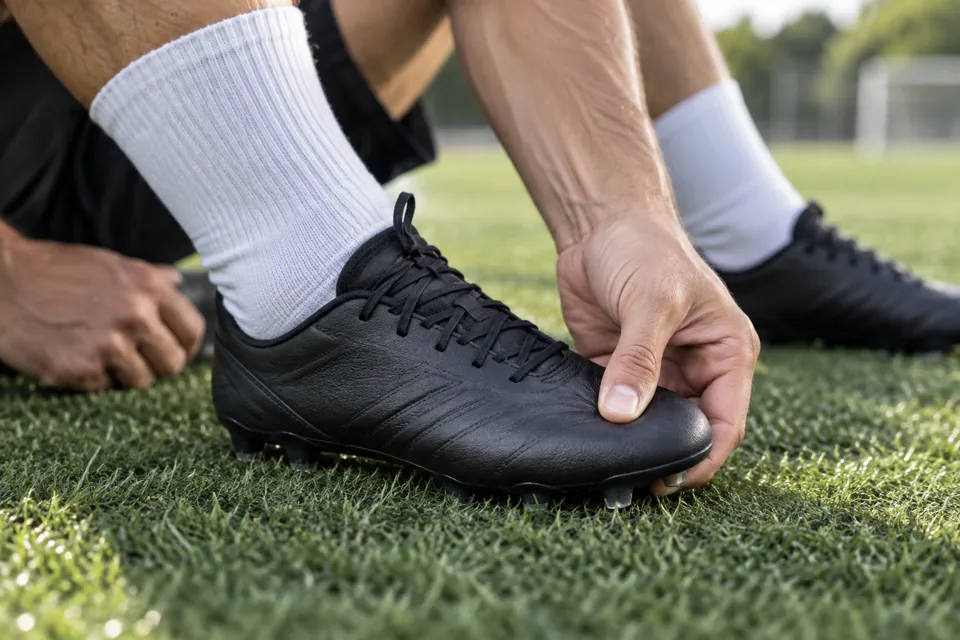
Try the pair in match socks. The heel should stay controlled, the midfoot should feel secure, and the toes should not be compressed. If the store permits a surface test, walk, make a modest turn and stop. Notice any isolated pressure under the forefoot or heel. That is a fit observation you can repeat; it is not a claim that a particular stud pattern prevents injury.
Do not test brand-new shoes with full-speed cuts merely to decide whether they fit. If the venue feels unusually hard or the studs feel harsh, pause and compare a different approved outsole. Conversely, a very low-lug TF shoe may feel less secure on a deeper infilled field; check the actual pitch rather than assuming one category is universally comfortable.
Assess wear on both the shoe and field. A cracked plate, loose stud, uneven wear or separation at the sole needs attention regardless of calendar age. Clean infill from the outsole so you can see the condition. The fit guide provides a fuller heel, width and toe checklist.
PRACTICAL DECISION
Apply the choice to the field on your weekly schedule
Start with your actual calendar, not a category photograph. Suppose a player trains on a modern infilled synthetic pitch twice a week and plays on firm natural grass on weekends. The training field is the dominant use, so an AG pair is the first comparison. An MG version becomes a candidate only if its product description names both surfaces. If that player also uses a very short, compact five-a-side pitch, the third surface needs its own check; “artificial” on a booking page does not establish that the same AG or MG plate is suitable.
For a player who rarely plays on artificial grass, borrowing or buying a second surface-approved pair may make more sense than choosing an all-purpose boot that feels worse for most matches. This is a practical tradeoff, not a claim that a certain outsole is inherently safer. Write down the venue names, obtain their footwear rules and compare them with the exact manufacturer's description before spending money.
At a shop, test both shoes after a few minutes of walking in match socks, then check whether the pressure is localized under one stud or spread evenly. Online, request a clear outsole photograph and the complete model name. Keep the product description and return terms until you have tried the shoe on the intended field. If either the surface claim or return policy is unclear, resolve that before ordering.
BUYING CHECKLIST
Make the purchase only after five checks
- Field: identify long-pile AG, short turf or another surface; ask the facility if unsure.
- Product label: confirm the manufacturer lists that field for the exact outsole version.
- Fit: try both shoes with match socks and reject growing pressure or heel slip.
- Terms: check available sizes, delivery, price and returns before paying.
- Use: if you regularly switch fields, confirm whether one approved MG pair covers both or whether separate pairs make more sense.
At bootswave, you can inquire about a single pair or a team order. Send the field type, preferred model or screenshot, size and delivery country through the form below or WhatsApp; we will confirm available choices and price. The soccer-shoe collection groups footwear by surface, but it is still worth confirming the exact model before ordering.
FAQ
Frequently Asked Questions
Are AG cleats always best on artificial grass?
AG is the first category to compare on modern long-pile artificial grass. Short hard turf may call for TF shoes, and the exact field and maker’s label decide suitability.
Can I use FG cleats on artificial grass?
Do not assume so. Check the exact product’s approved surfaces and the venue’s footwear rules. FG is generally labeled for firm natural grass.
What does MG mean for artificial grass?
Multi-ground indicates use across more than one named surface, but the approved surfaces depend on that exact model. Read the product description.
Do round studs guarantee a safer AG boot?
No. Shape is one design feature; stud length, spacing, plate and field conditions also matter. Use the maker’s guidance and your own fit check.
When should I replace an AG pair?
Inspect condition rather than using a fixed number of months. Cracked plates, loose studs, uneven wear or a shoe that no longer holds the foot warrant replacement.
SUMMARY
Match the exact outsole to the exact field
For long-pile artificial grass, compare AG and explicitly approved MG models; for short hard turf, compare TF. Buy only when the product label, venue rule and fit all agree.
For a quick eligibility answer, see Can You Wear Soccer Cleats on Artificial Turf?.
ONE-PAIR FIELD QUESTION
Ask About an Artificial-Grass Pair
OTHER ARTICLES