FG VS AG COMPARISON
FG vs AG Soccer Cleats: Compare Outsoles and Fields
FG means firm ground: the outsole is generally intended for firm natural grass. AG means artificial grass: the outsole is designed for compatible longer synthetic fields. Choose from the exact field and the exact shoe’s surface guidance, because a familiar model name can come with several different plates.
Published: September 28, 2026 · Updated: November 1, 2026
Quick Reference
- FG starts with firm natural grass
- AG starts with compatible long-pile artificial grass
- Compare the complete model and sole label
- Short hard turf may call for TF
- Check the venue’s permitted footwear
- An approved MG pair may cover both fields
SIDE-BY-SIDE
The main difference is the field the sole contacts
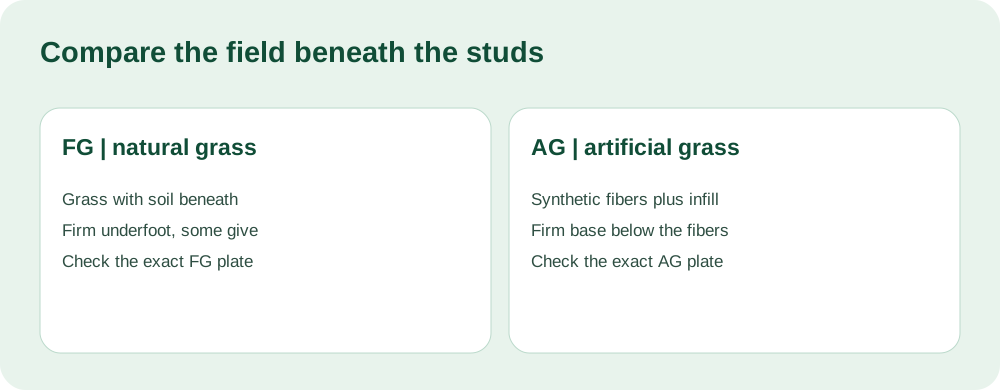
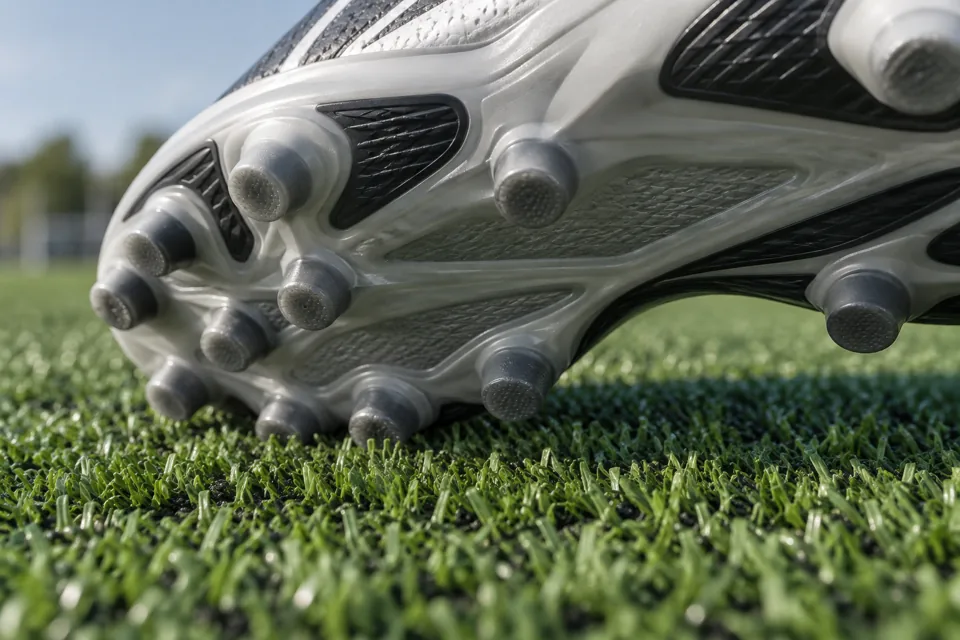
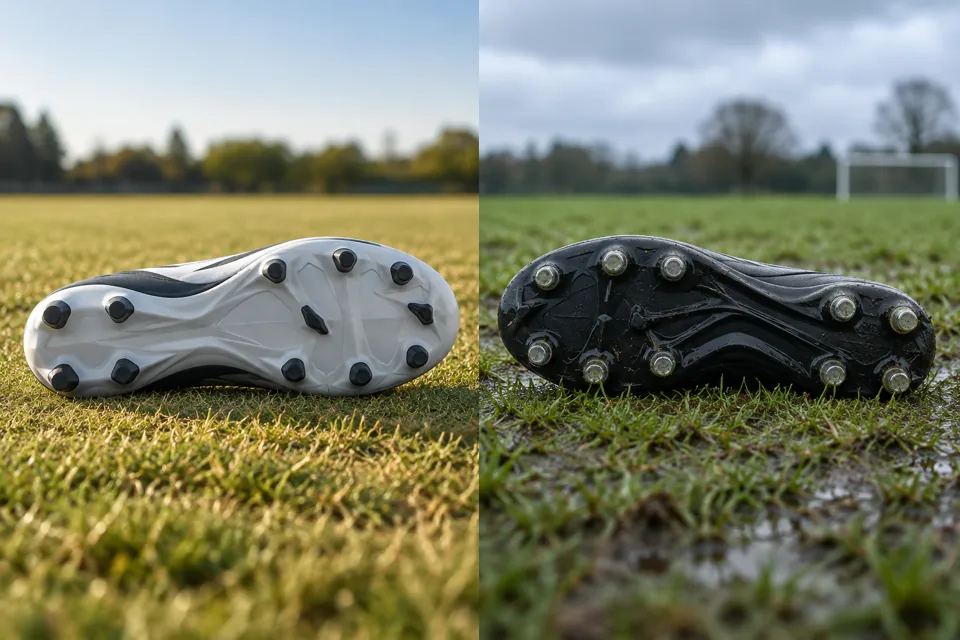
adidas’s footwear guide identifies FG with natural grass and AG with long-bladed artificial grass. It describes FG studs as pronounced for ground with some give, while its AG examples use shorter, more numerous contact points. These are design tendencies, not a stud-count rule for every brand.
| Decision | FG outsole | AG outsole |
|---|---|---|
| Primary surface | Firm natural grass with soil below the turf | Compatible longer artificial grass, often with infill |
| Common stud approach | More pronounced molded studs; shape varies by model | Often more numerous, shorter studs; shape varies by model |
| What to inspect | Whether studs enter the natural ground without bottoming out | Whether the plate feels supported without concentrated stud pressure |
| Do not assume | Every FG sole works on every artificial pitch | Every AG sole works on short carpet turf or wet natural grass |
Compare two versions of the same named boot, not simply two colors. A retailer may show the upper while omitting the sole label. Read the full listing, inspect the outsole photo, and look for the maker’s intended-surface statement. If the only label you can see is “soccer cleat,” ask for the exact outsole version before ordering.
FIELD TEST
First identify whether the synthetic field is AG or short turf
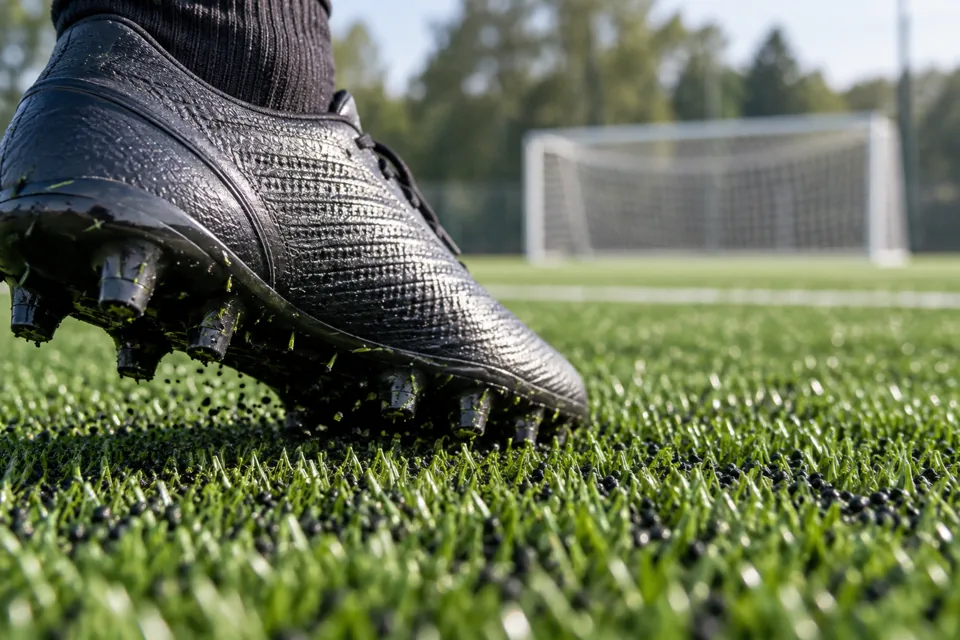
“Artificial turf” covers more than one construction. On a modern long-pile field, individual synthetic fibers stand above a usually visible infill layer; this is the sort of pitch for which many AG shoes are marketed. A short, dense carpet-style field can feel hard and shallow. A studded AG plate may be a poor match there even though both fields are artificial. A TF shoe with many low rubber lugs can be a better starting category for short turf.
Look at the field at ground level, ask the operator what shoes are accepted, and note whether the surface is dry, worn or unusually compacted. One venue’s rule cannot be applied to every synthetic field. For example, a Surrey FA 3G venue guide recommends AG and also allows some FG footwear, while excluding soft-ground studs and blades. That is a useful example of a local policy, not a universal permission for all FG models or fields.
If a ground sign says “molded cleats allowed,” check whether it distinguishes AG, FG and TF. The permission to enter the field and the manufacturer’s approval for a particular shoe are separate checks. Our artificial-turf eligibility guide gives the shorter yes-or-no decision.
FEEL AND LIMITS
Do not promise injury prevention from a stud pattern
AG outsoles can spread contact across more points on a firm synthetic base, while FG studs are built around soil penetration. That does not establish that a particular AG shoe will prevent an injury or that every FG shoe is unsafe on every artificial field. Footwear, field hardness, moisture, fit, athlete movement and venue rules interact. Treat broad safety claims in product descriptions as reasons to inspect the exact shoe, not as a medical guarantee.
During a gentle warm-up, note three things: pressure under individual studs, whether the shoe rocks or sits flat, and whether the foot can turn without a locked-in sensation. If you feel sharp pressure, repeated catching or instability, stop and change footwear. A warm-up is an observable comfort and grip check, not proof that a sole meets league rules. If the plate is cracked or studs are loose, do not play in that pair.
A wet natural-grass field is a different problem again. If the FG studs fail to enter the ground or you slip repeatedly, compare the manufacturer’s soft-ground guidance and the venue’s stud policy. AG is not a generic replacement for muddy soil. Our FG versus SG guide handles that natural-grass decision.
MIXED SCHEDULE
One pair is possible only when its stated surfaces cover both
If training is on artificial grass and matches are on natural grass, list the two actual field types before shopping. Some MG or FG/AG products name both in their approved use. adidas describes MG as an option across named natural and artificial outdoor surfaces, but “MG” is not a promise that every model works on every pitch. Read the exact product’s list and check the venue policy.
- Write down each regular field: firm natural grass, long-pile artificial grass or short turf.
- Check both against the specific model’s product page and box label.
- Confirm both facilities permit that outsole and stud material.
- Try the pair with match socks, checking heel hold and pressure while walking and turning.
- If either field is unsupported, plan a second suitable pair or choose another model.
A dedicated pair for each surface may be sensible when you play frequently on both, but there is no required number of pairs. Frequency, budget, comfort and current approval determine the choice. Do not infer that wearing AG on natural grass is always fine merely because the studs look short; wet ground may require different traction.
PRACTICAL DECISION
What to do when the same player uses both grounds
A player may alternate between firm natural grass and an artificial-grass pitch, but that does not make FG and AG interchangeable. Begin with the field used most often. Check whether the manufacturer sells separate FG and AG versions of the same upper, and read each version's stated surfaces. The upper may look identical while the outsole is different. If an MG or FG/AG version is available, compare its specific surface permissions with both actual venues rather than assuming the combined label covers all fields.
Next test the complete pair on foot. An approved plate can still feel wrong if the heel slips, the toes are compressed or pressure concentrates under a stud on a hard field. This observation helps choose between models; it does not prove one plate prevents injury. If the synthetic venue has a short, dense surface, check whether it calls for TF footwear instead of treating every artificial field as AG.
Finally consider how to handle exceptions. Rain can turn a firm natural pitch soft, and a tournament may use a different artificial surface from your usual training field. Keep the venue's footwear rules and the manufacturer's product description available before travel. Two surface-specific pairs may be more sensible for a frequent mixed schedule; one correctly approved MG pair may be sufficient for a casual player. Decide from actual frequency, cost, fit and allowed use.
BUYING DECISION
Compare the plate before paying for the upper
First decide the outsole, then compare fit, price, durability and return terms within that category. If two listings show the same upper with FG and AG suffixes, they are different surface versions. A review of the FG version cannot prove the AG plate feels identical underfoot. Check product photos and model codes when a marketplace title omits the suffix.
For an individual order from bootswave, send the model image or link, your shoe size, delivery country and field type through the form below or WhatsApp. We can confirm the currently available version and price for one pair. This article does not claim every example is in stock, and an inquiry is the purchase step rather than an instant checkout.
FAQ
Frequently Asked Questions
Can FG cleats be used on AG?
Only when that exact shoe’s maker and the venue permit the field. Some facilities allow molded FG shoes; that does not make every FG outsole suitable.
Can AG cleats be used on natural grass?
Check the exact model guidance and field condition. Shorter AG studs may not give enough purchase on softer or wet soil.
Is AG the same as TF?
No. AG is a studded category for compatible longer synthetic grass. TF generally has many low rubber lugs for short, firm turf.
Does FG/AG mean a universal outsole?
No. It names a dual-surface intention, but the manufacturer’s specific field list and venue rule still set its limits.
SUMMARY
Choose by field, then by fit
FG starts with firm natural grass; AG starts with compatible longer artificial grass. The exact sole label and field policy settle the choice.
If you play only on synthetic grass, use the AG buying guide. If your question is whether a current pair is permitted on one turf field, use the eligibility checklist.
FOOTWEAR QUESTION
Ask About One Pair or a Team Order
OTHER ARTICLES