
GOALKEEPER FOOTWEAR GUIDE
Soccer Goalkeeper Cleats: Choose Sole and Fit
A goalkeeper does not need a position-only outsole. Choose soccer cleats approved for the actual field, then check that the pair stays secure through side steps, a low set position, a short dive approach and kicking. The right answer depends on the surface and your foot, not a “goalkeeper” badge.
By bootswave Editorial ·
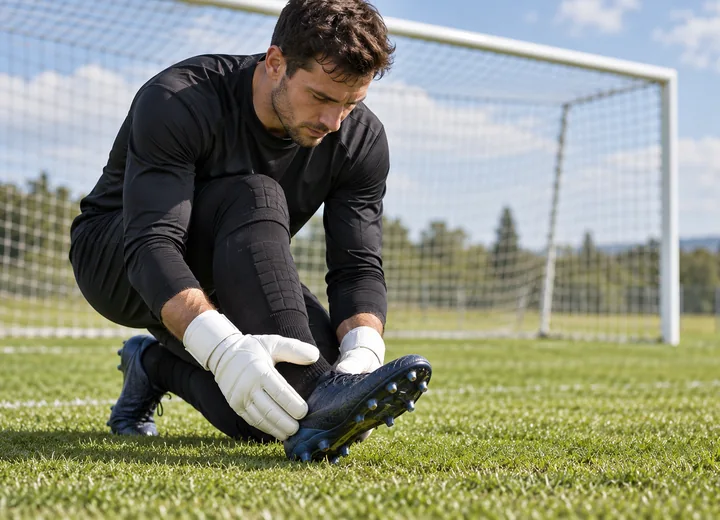
There is no universal goalkeeper sole
Goalkeepers use the same broad soccer-footwear categories as outfield players. FG generally points to firm natural grass. AG is designed for specified artificial-grass surfaces. TF uses many smaller rubber lugs for short, firm synthetic turf; indoor shoes are for suitable indoor courts. SG belongs only on appropriate soft natural grass where the competition and venue permit it. The exact model’s instructions can narrow these categories, and facility rules still apply. Compare FG and AG before choosing a studded pair.
Goal area conditions can differ from the rest of a field. Worn grass, damp patches or compacted soil may change how a sole feels. That observation is a reason to inspect the pitch, not permission to use any stud type on it. Rain by itself does not turn a firm field into a soft-ground venue. For a mixed-surface schedule, verify every surface listed by the manufacturer for the exact pair.
Nike’s soccer shoe guide separates shoes by ground type. adidas also describes FG, AG, MG, TF and indoor categories in its buying guide. Those guides establish the surface distinction; neither means one outsole is best for every goalkeeper.
Test the movements a keeper repeats
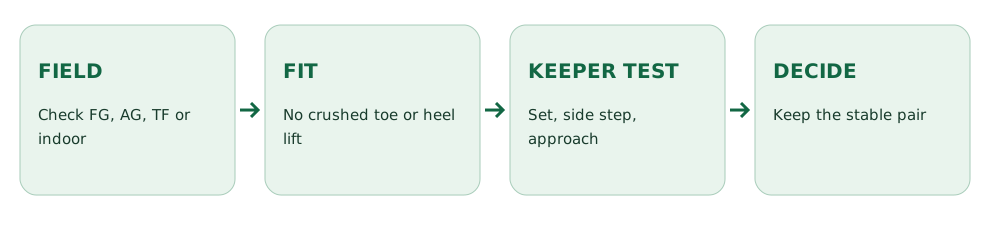
U.S. Soccer lists agility, power and quick reactions among goalkeeper traits. That is context for a practical try-on, not a claim that a shoe causes those traits. Wear match socks and lace both shoes normally. From a comfortable ready stance, take two controlled lateral steps each way, lower into your set position, take a short forward approach and plant for an imaginary clearance. If space allows, add a gentle hop and landing. Avoid a full dive in a store.
Your heel should not rise noticeably. The midfoot should feel secure without a tight ridge across the instep, and the forefoot should not be squeezed when you crouch. Watch for painful stud pressure under the heel or ball of the foot. If either side differs, test both directions. A single straight-line jog can miss the problem that appears when you shuffle across goal.
Where fit usually fails
| What you notice | What to check | Next step |
|---|---|---|
| Heel rises during a side step | Length, heel shape and lacing | Try another size or last; do not simply tighten until painful |
| Toes hit the front in a low stance | Toe clearance and forefoot volume | Compare a different length or shape in both shoes |
| Pressure over the instep | Lace tension, tongue and upper volume | Adjust one zone; reject persistent pressure |
| Studs feel harsh underfoot | Field, outsole and exact model guidance | Recheck whether that sole suits the venue |
Fit is a model-by-model issue. A keeper with a wide forefoot can have a secure heel in one shape and pressure in another. Sizing up for width may create a loose heel; our wide-foot fit guide explains how to distinguish those problems. If you wear orthoses or an ankle support, try them with the cleat before deciding.
Upper and laces: comfort before a position story
Goalkeepers pass, clear and receive the ball, so the upper needs to feel workable for those actions. That does not mean a textured upper automatically improves distribution or that an ultra-thin upper is necessary for every keeper. Check whether the toe box bends comfortably, whether the laces create pressure when you kneel, and whether the upper allows a secure foot hold during a quick set. Choose the feel you can verify.
Laced cleats offer adjustment over the instep; laceless pairs depend more on their built-in shape. A high collar changes the sensation around the ankle but is not, by itself, proof of injury protection. If a model’s marketing says “control” or “speed,” treat that as a design emphasis, then return to the actual field and fit checks. Read the laced versus laceless comparison if adjustment is a concern.
Do not assume added shoe weight equals protection when diving. A dive has technique, surface and body-contact factors beyond the footwear. Boots are selected for the ground and the foot; goalkeeper training and venue safety guidance cover the rest.
Choose for the field you play most
If your matches are on well-kept firm natural grass, shortlist FG models approved for those conditions. If training is on artificial grass and matches are on natural grass, ask whether one exact MG model is explicitly approved for both; otherwise you may need different soles. On short, hard turf, check the facility’s advice and TF options before considering longer studs. A wet soft-grass pitch may warrant SG only when the ground and rules justify it.
For a goalkeeper who often kicks from the back, do not neglect comfort on the plant foot. Test both feet, because your kicking and plant feet perform different tasks. If you notice the sole twisting uncomfortably or the heel lifting on the plant side, do not dismiss it because your strike felt fine. This is a fit observation you can repeat, not a measured comparison of brands.
Online buying checklist
- Identify the pitch by name and type. Ask the facility if its surface description is unclear.
- Request the exact model code, outsole photos and maker-listed surfaces. “Goalkeeper boot” is not enough information.
- Measure both feet and compare the manufacturer’s current chart, paying attention to width and instep if these have caused problems before.
- Check return conditions. A boot that fails the indoor try-on should be returnable before field use if the retailer’s terms allow it.
- After delivery, repeat the set, side-step and approach test in match socks. Start field use in a short, controlled session rather than an important game.
For parents buying youth footwear, avoid leaving large growth room that lets the heel slide. The child should be comfortable now, and the pair should suit the surface used this season. See the parents’ cleat guide for sizing and replacement checks.
What this guide can and cannot tell you
These checks help a keeper reject an unsuitable sole or poor fit and compare remaining pairs. They are not a hands-on bootswave product test, an injury-prevention promise or a ranking of goalkeeper brands. U.S. Soccer’s goalkeeper profile describes the movement demands of the position; the buying decision here is our editorial application of those demands alongside manufacturer surface and fit guidance.
When you cannot establish the outsole’s field compatibility, pause before buying. When the shoe causes pain, numbness, a slipping heel or pressure that remains after normal lacing, compare another model. A keeper can use a suitable standard soccer cleat; the word “goalkeeper” on a listing is not the deciding feature.
Common questions
Do goalkeepers wear different cleats from other players?
They can wear standard soccer cleats. The outsole should suit the field, and the fit should work through keeper-specific movement checks.
Are longer studs better for a goalkeeper?
Not as a general rule. Stud choice depends on ground conditions, the exact model and venue or competition rules. Longer studs on an unsuitable surface can feel uncomfortable or be prohibited.
Should a goalkeeper size up for comfort?
Not automatically. A longer boot may let the heel move. Try a different shape or width if forefoot pressure is the real issue.
Summary
Pick by field, then by secure and comfortable fit. A short keeper-specific movement test is more useful than a position label or a promise about grip that has not been tested on your surface.
Sources and scope
This guide uses published manufacturer, sporting-body or textile-care guidance and editorial decision steps. It is not a hands-on test of a particular bootswave product.
Ask about a product
You can ask about one pair or one jersey. Tell us the model or style, size, delivery country and your question; we can confirm options and price. Message bootswave on WhatsApp or use this form.
Published: · Updated:
