CLOSURE COMPARISON
Laceless vs Laced Soccer Cleats: A Practical Fit Comparison
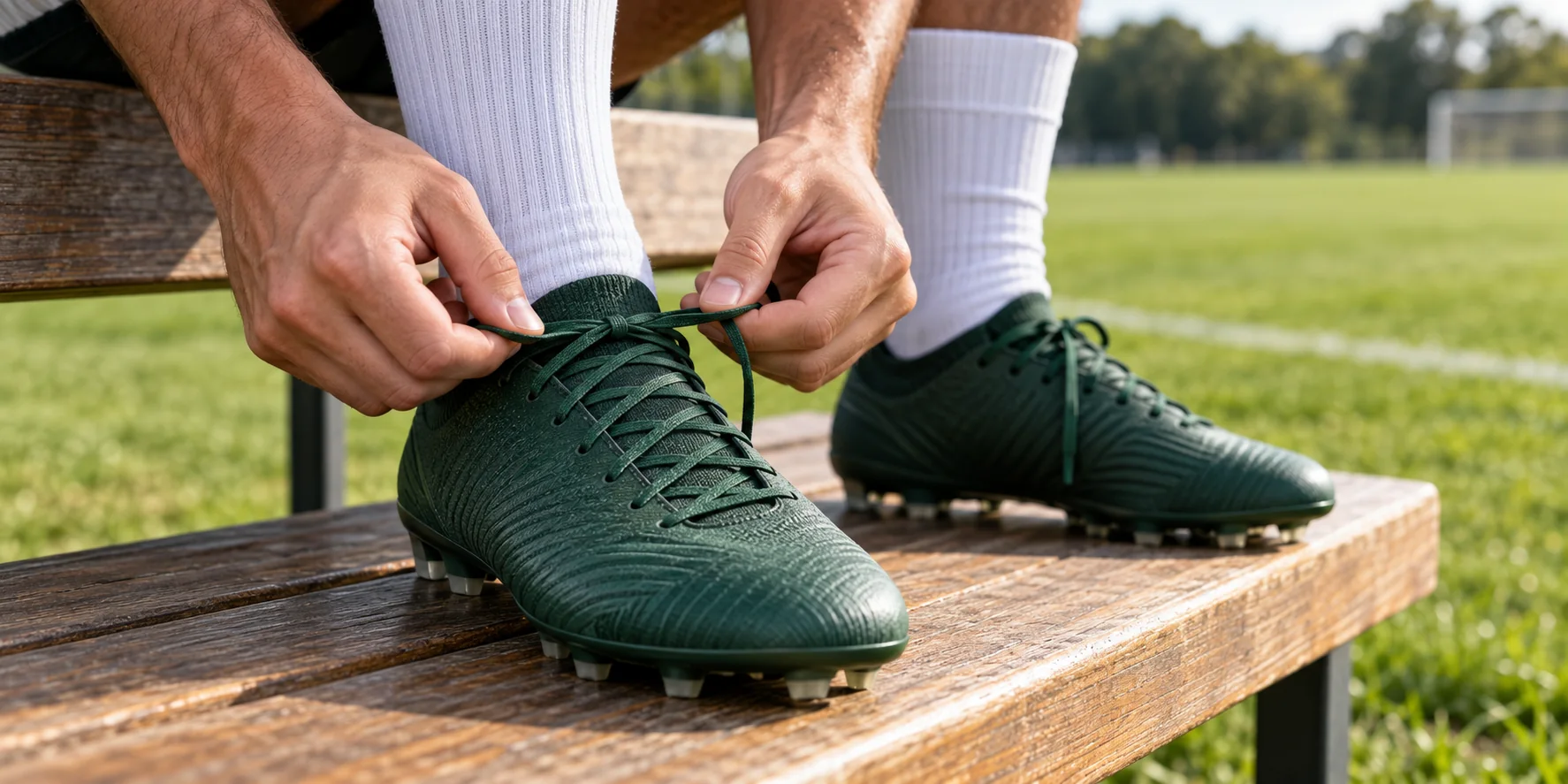
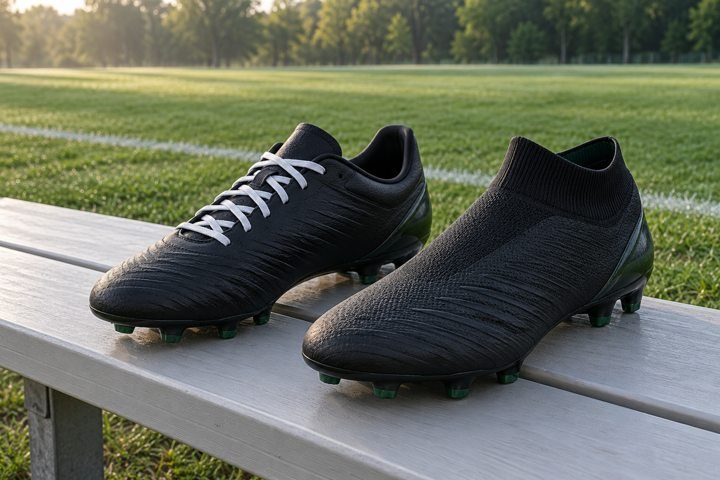
Laced soccer cleats let you change tension across the upper. Laceless cleats rely more on the shoe’s built-in shape and elastic structure. Choose the pair that holds your foot comfortably during movement; removing the laces does not automatically improve control, comfort or speed.
By bootswave Editorial ·
Quick Reference
- Laces allow local tension adjustments
- Laceless does not mean universally easy to put on
- Check heel hold and pressure over the instep
- Try both feet with your playing socks
- Choose the outsole separately from the closure
- A larger size is not a cure for every tight collar
Overview
What Changes When a Cleat Has No Laces?

A laced closure pulls parts of the upper together. You can loosen the lower rows, change tension near the instep or open the shoe more fully to get your foot inside. It offers adjustment, but it cannot turn an unsuitable shoe shape into the right one.
A laceless shoe uses its upper, collar and internal construction to hold the foot without a conventional knot. The fit you get when trying it on is therefore especially important: there is no lace row available to tighten a loose area or relieve a tight one.
adidas’ football-boot sizing guidance makes the same basic distinction between laced adjustment and laceless hold. Individual models still vary considerably.
For this comparison, “hold” means the shoe staying aligned with your foot when you move. It is not a promise of injury protection. A tall sock-like collar and a lace-free appearance tell you little about how a specific pair will fit you.
02 / Field guide
Laced vs Laceless: The Useful Trade-offs

| What matters | Laced cleats | Laceless cleats |
|---|---|---|
| Adjustment | You can alter lace tension in different areas | Little direct adjustment; the shoe shape must suit you |
| Getting them on | Loosening laces can enlarge the opening | A snug opening can take effort even without a knot |
| During play | Knots may need checking or retightening | No knot to retie; still check that the shoe stays secure |
| Instep pressure | May be relieved by a modest tension change | Depends on the upper and opening; no lace row to loosen |
| Surface choice | Depends on the outsole label | Also depends on the outsole label |
| Best reason to choose | You value adjustable hold and the pair fits well | The fixed fit suits you and you prefer the closure |
Price, weight and lifespan are model questions, not reliable closure rules. Compare the specifications of the two pairs you can actually buy. A low-cost laced cleat and a premium laceless cleat differ in more than their closure, so they do not isolate the effect of the laces.
Likewise, a smooth striking area is a design feature, not proof that your passing will improve. Comfort, secure fit and your own touch matter more than assuming the look guarantees a result.
03 / Field guide
A Five-Step Try-On Check for Either Closure

Use a clean, permitted try-on area and follow the seller’s return conditions. A shoe that feels acceptable while you sit can behave differently when you stand and move.
- Wear your normal playing socks. If you use an insole, check whether it is compatible with the shoe before testing it. Avoid changing several fit variables at once.
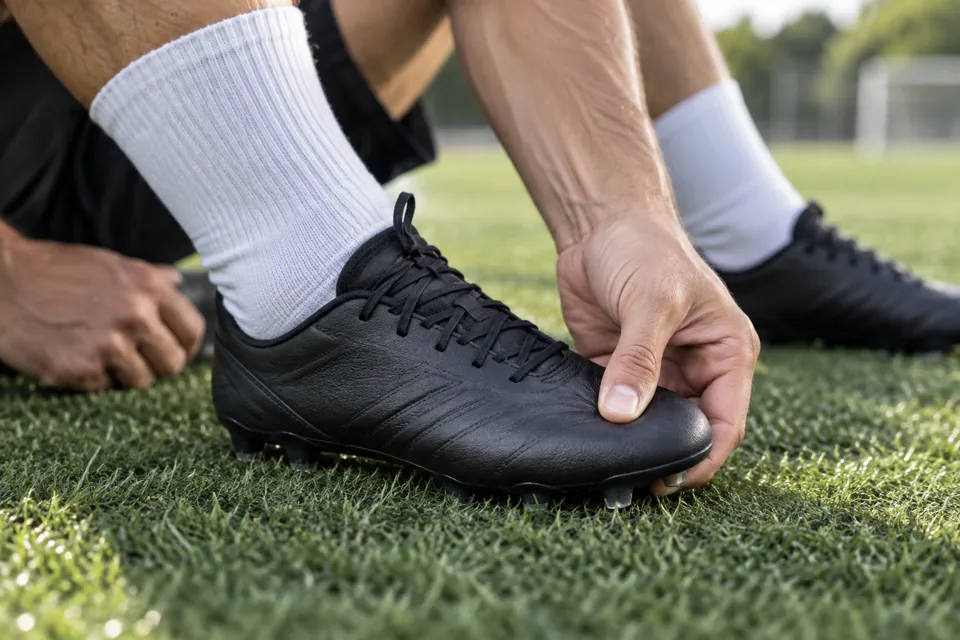
- Try both shoes. Seat the heel properly. On a laced pair, loosen first and then tighten progressively; do not judge a pair with the factory lacing pulled unevenly.
- Stand and move gently. Walk, lift your heels and make a few controlled changes of direction where allowed. Notice whether your heel rises inside the shoe or your forefoot slides sideways.
- Check pressure. Pay attention to the collar, top of the foot and outer forefoot. Stop if you feel pain, numbness or concentrated pressure.
- Recheck after a few minutes. For laces, try a small adjustment. For a laceless shoe, persistent looseness or pressure is a reason to compare another model.
Pass: your foot stays comfortably aligned with the shoe, with appropriate toe room and no sharp pressure. Reconsider: you need a painfully tight closure to stop sliding, or you must buy excessive length just to get through the collar.
For the wider sizing question, see how soccer cleats should fit. This check helps compare closures; it is not a new size chart.
04 / Field guide
Wide Feet, High Insteps and Kids: Different Questions

If your forefoot is wide
Compare the width and shape of the actual shoe. A laceless upper is not automatically stretchy enough, and laces do not make a narrow soleplate wider. If the sides feel restrictive while length is already correct, compare another shape rather than relying on the closure label. Our wide-feet guide covers that decision.
If pressure sits across the top of your foot
This may involve instep volume or the opening, even if the forefoot feels fine. Laces sometimes offer a useful adjustment. With a laceless design, check that putting it on and wearing it are both comfortable. Do not cut or modify the collar to make a new pair fit.
If the shoes are for a child
Removing the knot removes one task, but a tight opening may introduce another. Have the child put on both shoes, stand and remove them without an adult forcing the opening. If they cannot manage a laceless pair comfortably, it has not solved the practical problem.
Check fit now rather than buying a loose shoe solely for future growth. The parents’ buying guide helps with that separate size-and-growth decision.
05 / Field guide
Make the Final Choice Without Mixing Up the Outsole

“Laceless soccer shoes” covers more than one field type. A laceless turf shoe still has a turf outsole; an indoor shoe still needs to suit the court. Closure does not change the intended playing surface.
When comparing pairs, keep the surface requirement fixed. Then compare length, forefoot comfort, instep pressure, heel hold and how easily you can put the shoes on. This makes the decision more useful than comparing an indoor laced shoe with a grass laceless cleat.
- Choose laces when modest tension changes improve an otherwise suitable fit, or you prefer being able to retighten during use.
- Choose laceless when the unadjusted fit already holds comfortably and you can get the shoes on and off without difficulty.
- Choose another model when neither pair passes the try-on check. There is no need to force a winner.
If your current problem is an uneven knot or lace pressure, try the lacing guide before assuming you need new shoes. If the shape itself is wrong, changing the lacing cannot solve everything.
For a new pair, browse soccer footwear by playing surface, then ask about the closure, current sizes and fit of an available model. bootswave accepts single-pair inquiries through the site or WhatsApp; confirm the exact pair and price before ordering.
FAQ
Frequently Asked Questions

Are laceless soccer cleats better than laced cleats?
Neither closure is universally better. Laces offer adjustment; a laceless pair can work well when its built-in fit already suits your foot. Compare comfort and hold during a permitted try-on.
Can laceless cleats feel too tight over the top of the foot?
Yes. The opening or upper may not suit your instep even when the length is right. Persistent pressure is a reason to try another design, not to force the collar or automatically add length.
Do laceless cleats make ball control better?
The absence of laces changes the upper surface, but it does not guarantee better control. Do not choose an uncomfortable pair on the assumption that a smooth upper will improve your game.
Are laceless shoes easier for children?
Sometimes, but the opening may still be hard to manage. Let the child try putting on and removing both shoes, and check secure fit while standing.
Can I wear laceless cleats on an indoor court?
Only if the actual shoe is designed for that court and meets the facility’s rules. A laceless grass cleat does not become an indoor shoe because of its closure.
Summary
Choose the Closure That Passes the Fit Check

Use laces for helpful adjustment, or choose laceless when the fixed fit already works. Keep the correct outsole, comfortable pressure and secure heel hold ahead of appearance.
Sources and Further Reading
Product details vary by model. Check the current listing, care label and applicable competition instructions for your situation.
Product question
Ask About Soccer Gear

You can contact bootswave about an individual purchase or a team order. Ask about the product, size, current price and delivery destination through this form or WhatsApp. We will confirm the available options before you order.
Keep reading