CLEAT FIT AND LACING
How to Lace Soccer Cleats for a Secure Fit
Start with an even crisscross from the lowest eyelets, tighten the midfoot in small steps and tie a secure double knot. Your toes should move naturally, the top of the foot should not ache and the heel should stay seated when you walk and turn. Change one lace zone at a time; lacing cannot turn an oversized or painful boot into the right shape.
Published: September 28, 2026 · Updated: November 1, 2026
Quick Reference
- Start with equal lace lengths
- Tighten from toe toward ankle
- Keep pressure even across the instep
- Use a top-eyelet lock only if the boot has the needed eyelets
- Retest after a few movements
- Change size or shape if pressure persists
STANDARD METHOD
Build an even crisscross before trying a special pattern
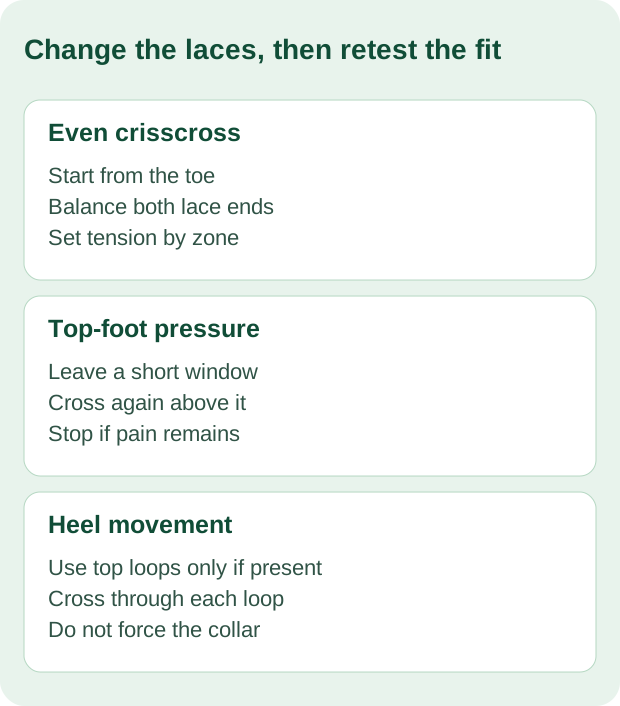
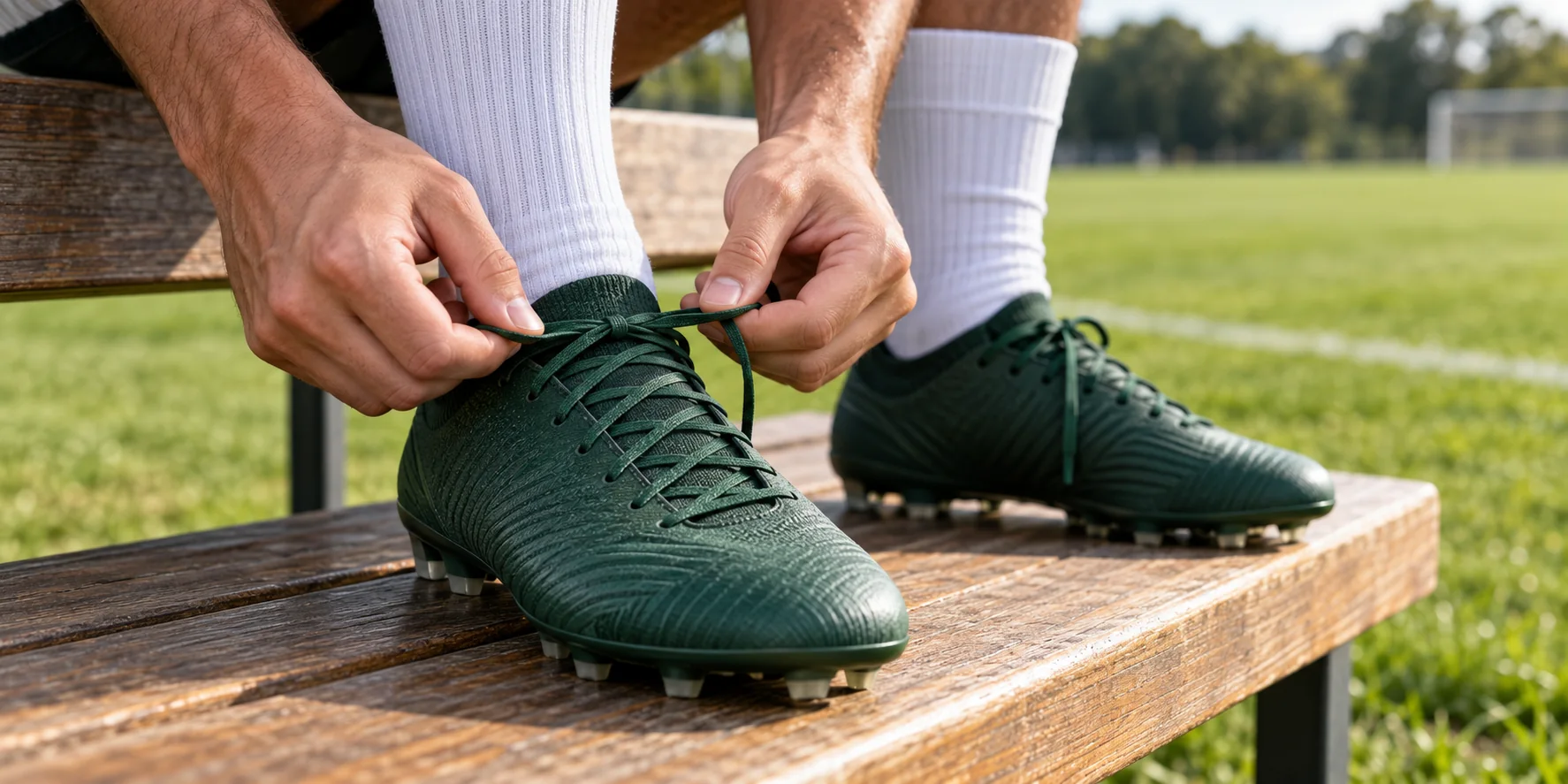
Put on your match socks and loosen the entire lace run before sliding into the boots. Seat the heel at the back. At the lowest eyelet pair, feed the lace through so both free ends are about the same length. Cross the ends over the tongue to the next pair, and repeat up the boot. Keep the crosses flat rather than twisted. If the upper has offset or asymmetrical eyelets, follow its actual path; do not force a perfectly centered pattern onto an asymmetrical design.
- Toe end: draw the first two crosses snug enough to remove obvious slack without squeezing the forefoot.
- Midfoot: take up slack one pair at a time. Do not pull only the top lace ends and expect tension to spread evenly through all eyelets.
- Collar: close it so the heel stays seated, then tie a firm bow and a second knot. Tuck loose ends where they cannot catch a stud or another player.
- Retest: walk, stop, turn gently and make a few controlled ball touches on a permitted surface. Readjust the zone that moved or pressed.
adidas's football boot fit guide tells buyers to spread laces evenly over the instep and check for pressure points and excess space. That supports a fit check, not an ideal tension number. Your foot and model determine the final adjustment. The four-zone cleat fit guide helps identify whether a problem is at the toe, width, instep or heel.
PRESSURE RELIEF
Make a short window over one painful instep spot
If one crossover presses the top of your foot, first back off the whole lace run slightly. If the rest of the shoe fits, a short pressure window may help: lace normally up to the sore area, then run each lace end straight upward on its own side for one eyelet pair. Cross the ends again above that gap and tie as usual. This removes one crossover directly over the spot while preserving crosses elsewhere. Check that the laces have enough length and that the boot still closes securely.
This is an adaptation of ASICS's window-lacing method for running shoes, applied cautiously to soccer cleats. The original guidance is for a different sport and shoe construction. It does not prove improved soccer performance. Use the pattern only if your cleat's eyelet layout permits it and a short field test feels better. Skip a window that lets the midfoot slide sideways.
If a seam, hard eyelet, tongue edge or upper shape presses the same place even with loose laces, the shoe may be wrong for your instep. If you have numbness, persistent pain or swelling, stop using that setup and seek appropriate professional advice. Do not keep tightening above and below the painful spot to compensate.
HEEL HOLD
Use a top-eyelet lock only where the design allows it
Some soccer cleats have two closely spaced top eyelets on each side. If yours does, you can test a heel-lock pattern: thread each lace upward through the adjacent top eyelet on the same side to leave a small loop, cross each free end through the opposite loop, draw the loops snug and tie. Start gently; a football boot collar can be lower and less padded than a running shoe's. A tight loop should not dig into the ankle or bunch the tongue.
ASICS illustrates this loop method for running shoes. The mechanics are transferable where matching eyelets exist, but its outcome is not a tested promise for soccer boots. Many cleats have only one final eyelet pair, so the technique simply does not apply. In that case, try redistributing tension through the existing pairs and retest. Do not punch new holes or thread through decorative upper details.
If the heel still lifts after a normal lace adjustment, check whether the entire shoe is too long, too wide at the heel or shaped differently from your foot. A stiffer sock or tighter top knot may mask motion for a minute without fixing the size. Conversely, heel hold is not worth pain across the top of the foot. The laced versus laceless comparison explains why adjustability matters when choosing a future pair.
PRACTICAL DECISION
Troubleshoot one problem at a time
Before changing the lace pattern, put the shoe on with match socks and center the tongue. Tighten from the toe upward in small increments rather than pulling only at the top. Walk and make a controlled stop. If the heel rises, first check that the shoe is the correct length and volume; a lock pattern cannot rescue a boot that is too large. If the top of the foot hurts, identify the exact eyelet row causing pressure before opening a window there.
After any adjustment, repeat the same movement test. The forefoot should not slide forward when stopping, and the laces should not create numbness or a hard ridge across the instep. Change only one area at a time so you can tell what helped. A short skip over a pressure point should not leave the whole midfoot unstable. If it does, return to even crisscrossing and compare a different fit.
Check the knot and loose lace ends before play; tuck them where they will not snag or interfere with the ball. Replace frayed laces that will not hold tension. The useful result is a secure shoe that can be comfortably retied during a match, not an elaborate pattern shown in a photograph.
MATCH CHECK
Inspect the knot and fit before play
After warm-up, pause to check whether one area has become loose as the upper flexed. Retie while your heel is seated; pull slack from the area that moved rather than cinching every cross. Make sure both boots feel comparable, while allowing for small differences between your feet. Never assume the same number of crosses means the same pressure on two different feet.
Replace fraying or unusually slippery laces before they fail during a game. Check that eyelets are not cutting the lace and that the bow is short enough not to drag. IFAB Law 4 requires equipment not to be dangerous; local competition or facility rules may add details. A secure knot is a practical safety check, not evidence that the boot's studs are appropriate for your field. Choose the outsole separately.
If you are shopping for a laced pair, ask bootswave through the form below or WhatsApp. Send the model or product video, size, where you feel pressure and your delivery country. We can check available options and price for one pair. A photo or message cannot guarantee the fit without trying the actual boot.
FAQ
Frequently Asked Questions
How tight should soccer cleat laces be?
Snug enough that the midfoot and heel do not slide during controlled movement, but not so tight that you feel pain, numbness or concentrated top-foot pressure.
Can a heel-lock pattern fix a loose cleat?
Only certain cleats have the extra top eyelets needed to try it. If the whole boot is too big or the heel shape is wrong, change fit rather than relying on laces.
What is window lacing?
It replaces one crossover over a pressure spot with short straight runs on each side, then resumes crisscrossing above. Retest whether the cleat still holds the foot.
Should I skip eyelets to make cleats wider?
A short skip can reduce one pressure point, but it cannot add real width or repair a hard seam. Persistent pressure calls for a different size or shape.
SUMMARY
Start even, then change one zone
Crisscross from the lowest eyelets, adjust pressure gradually, tie securely and retest the boot in motion.
If pressure or heel slip remains, use the cleat fit checklist before trying another knot.
PRODUCT QUESTION
Ask About One Pair or a Team Order
OTHER ARTICLES