
POSITION AND FIT GUIDE
Soccer Cleats for Midfielders: Choose by Field and Fit
Midfielders should choose cleats for their usual field and a secure, comfortable fit first. Then test the short accelerations, turns, stops and passes they repeat in a match. No position label can replace checking the actual outsole and how the shoe holds your foot.
By bootswave Editorial ·
Start with the surface, not your midfield role
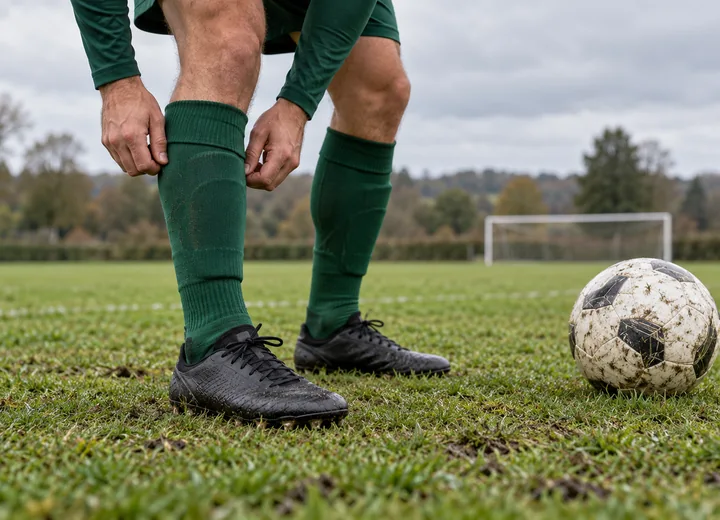
A midfielder may cover many parts of the pitch, but an outsole still needs to suit the ground underfoot. On firm natural grass, inspect a firm-ground (FG) model. On an artificial-grass field, inspect an artificial-grass (AG) model or a multi-ground (MG) model whose maker explicitly lists that surface. Short, hard synthetic turf commonly calls for turf shoes (TF), while an indoor court calls for a non-marking indoor sole. The category name is a starting point; the exact product guidance and facility rules decide what is acceptable. Our FG vs AG guide compares the two common outdoor categories.
Ask the venue what kind of field it has. “Turf” can refer to a long-pile artificial-grass pitch or a short, firm carpet. These are different surfaces, and a generic recommendation for “turf” can send you to the wrong outsole. If the pitch changes through the season, check the actual conditions and your competition’s stud rules before using a different pair.
Translate midfield play into a fit test
The job varies by player. A holding midfielder may receive under pressure, turn away from a challenger and play a short pass. A wide midfielder may sprint into space and decelerate near the line. An attacking midfielder may make repeated changes of direction around the box. This is a useful way to choose what to test, not a claim that any one shoe makes those actions faster or more accurate.
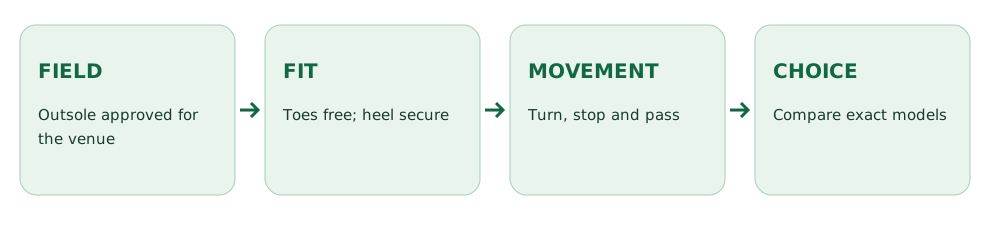
Wear the socks you use for matches and lace both shoes as you would before a game. Stand, walk, jog a few steps, stop, turn both ways and make a controlled side step. Your heel should stay seated and your foot should not slide across the insole. You should be able to move your toes slightly without curling them or feeling the upper press hard on the longest toe. If a short test already creates numbness, sharp pressure or rubbing, try another size or shape. A long break-in period is not a sound plan for correcting a painful fit. See the full cleat-fit checklist when you need to separate length, width and instep issues.
Compare two pairs in the same order
| Check | What to do | Reason to reconsider |
|---|---|---|
| Field match | Read the exact outsole label and maker’s listed surfaces | The maker does not list your usual field or the venue prohibits the studs |
| Length and width | Try both feet in game socks while standing and moving | Crushed toes, side pressure, or loose space created by sizing up |
| Heel and midfoot | Stop, pivot and take a controlled side step | Heel lift or the foot sliding inside the upper |
| Upper feel | Pass and receive a ball if a store or trial allows it | A seam, lace ridge or stiff patch distracts you or presses the foot |
Use the same socks, lacing tension and test movements for each pair. Changing all three between pairs makes the comparison less useful. adidas’s soccer-cleat buying guide separates field type and fit from marketing features; its model examples are adidas-specific, so use them as explanations rather than universal performance rankings.
Upper, laces and collar are fit choices
A thin upper may give one player a closer feel on the ball, while another prefers more material between foot and ball. Neither preference proves better passing accuracy. Compare the actual shoe: bend your forefoot, check the material above the toes, and note whether the upper wrinkles or presses when you crouch. A textured striking zone may be a product feature, but its presence alone does not establish an improvement in your own match play.
Laces let you adjust tension across the instep. A laceless upper removes that adjustment, so a secure heel and midfoot fit matter even more. A higher collar can change the feeling around the ankle but is not evidence by itself that a shoe prevents ankle injury. If you use an ankle brace, try the brace with the shoe. Compare laceless and laced cleats for the trade-offs you can actually check.
Width is a separate question from length. A shoe that pinches the outside of the forefoot may need a different last or width option, not simply a longer size. A longer boot can create sliding during turns. If your feet differ, fit the larger or more difficult foot and test the other one for heel slip.
What about “speed” and “control” boots?
Those words describe how a maker positions a range; they are not positions on the field. A lightweight pair can feel pleasant over a match, but weight alone cannot tell you whether it fits, whether its studs suit your ground or whether you will pass better in it. A textured upper may feel different in a store; it cannot substitute for a comfortable fit and the right outsole. Use such features to compare pairs only after the first checks pass.
For example, imagine two boots that both list FG for the same natural-grass venue. One feels light but your heel lifts during a stop; the other is slightly heavier but stays secure and gives your toes enough room. The second is the more defensible choice for that player. It is a conditional example, not a tested ranking of specific models. Another player’s foot could reverse the outcome.
Buying online without a try-on
- Measure both feet and consult the exact manufacturer’s current size chart. Do not assume your everyday sneaker size transfers directly.
- Request the model code and a clear outsole photo. Confirm the maker’s listed surface rather than guessing from stud appearance alone.
- Check the return policy before use, especially if you are between sizes or have a wide forefoot.
- Compare the shape and dimensions with a pair you already wear comfortably, while recognizing that a new upper may feel different.
- When the pair arrives, try both shoes indoors with match socks. Repeat the short movement test before taking them onto a field.
If a model is painful, do not try to solve that by playing a full session in it. If the issue is only a new, mildly stiff feel in an otherwise correct fit, ease into the pair in short sessions and recheck for pressure or rubbing. Field and fit still take precedence over a player-position label.
A one-minute shortlist for midfielders
Write down the venue, surface, foot length and width, and one fit issue from your current pair. Keep only models listed for that surface and available in your size. Compare two or three on the same foot with the same socks. After eliminating those with pain or heel slip, choose the upper feel you prefer. This process gives you a reason for the decision that you can repeat at your next purchase.
If you play both central and wide midfield, you do not automatically need different boots. You need a pair that works on the same field and passes both your comfort and movement checks. If your venues differ materially, the outsole question may require a separate pair or a maker-approved multi-surface model, subject to venue rules.
Common questions
Do midfielders need special soccer cleats?
No dedicated position category is required. Choose the outsole for your field and the fit for your foot, then compare feel during the movements you repeat.
Should a midfielder buy a lighter cleat?
Only if the lighter model also passes the field and fit checks. Weight alone is not proof of better speed, passing or comfort.
Can one pair cover grass and artificial grass?
Sometimes, if the exact maker-approved model covers both surfaces and both venues permit it. Check the model and local rules rather than relying on “MG” as a blanket promise.
Summary
The best choice for a midfielder is the pair that is approved for the usual field, fits securely without pressure and feels comfortable through a short, repeatable movement test. Position can shape the test. It should not override surface and foot shape.
Sources and scope
This guide uses published manufacturer, sporting-body or textile-care guidance and editorial decision steps. It is not a hands-on test of a particular bootswave product.
Ask about a product
You can ask about one pair or one jersey. Tell us the model or style, size, delivery country and your question; we can confirm options and price. Message bootswave on WhatsApp or use this form.
Published: · Updated:
