
POSITION AND FIT GUIDE
Soccer Cleats for Defenders: How to Choose a Pair
Choose defender cleats by field, fit and the movements you actually make. A “defender” label does not make one boot right for every center back or fullback. The outsole must suit your surface, while the heel and midfoot should stay secure when you turn, backpedal and accelerate.
By bootswave Editorial ·
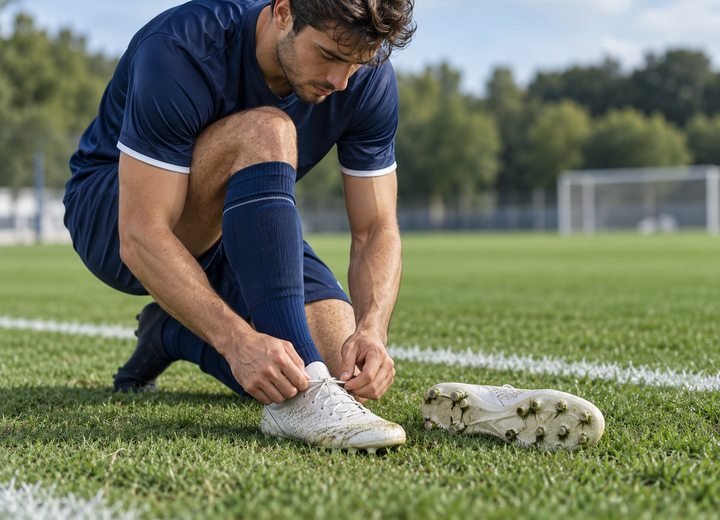
Start with your usual field
Before looking at a boot marketed for speed, control or protection, identify where you play most. Firm-ground outsoles are generally intended for natural grass; artificial-grass, turf and indoor shoes are different categories. Maker guidance and your facility’s rules take priority over a position label. Compare FG and AG if you rotate between those fields.
If you play on several surfaces, check whether a particular model is approved for each one. “Multi-ground” on a box is not a universal permission for every venue.
Fit matters in defensive movement
Try both shoes with match socks. Lace them normally, then take controlled sideways steps, a short backpedal and a stop. Your heel should remain seated; your toes should not be crushed against the front. A cleat that slips on the first change of direction will not become more secure because a product page calls it a defender’s boot.
Fullbacks may value a lighter feel during repeated runs, while central defenders may favor a different upper or touch. Those are preferences, not measured performance rankings. Compare exact models on your own foot.

Compare upper and construction honestly
Leather-like and synthetic uppers can vary widely in thickness, flexibility and break-in feel. Try the shoe and inspect construction rather than assuming that one material is automatically more protective. Look for pressure at the little toe, arch and heel; those areas become more noticeable during a full session.
If you need more room across the forefoot, use our width checklist. If the shoe has a raised collar, remember that collar height alone does not prove ankle-injury prevention.
Make the final choice in this order
- Confirm the exact playing surface and field rules.
- Shortlist shoes in your actual foot size and width.
- Test heel hold and side-to-side comfort.
- Compare upper feel and weight only after the first three checks.
- Wear the chosen pair in a short training session before match day.
The result is a shoe that works for your field and foot, not an unverified claim that one model is “best for defenders.”
Translate your role into movements, not a boot ranking
A center back may spend a game backpedaling, opening the hips, stepping into challenges and passing from a planted position. A fullback may repeat longer sprints, recover quickly and turn down the touchline. Those are useful movements to test, but they do not create a universal “center-back boot” or “fullback boot.” Players in the same position can have different feet, fields and preferences.
Start with the surface and a secure, comfortable fit. Then test the actions you actually repeat. If a boot feels stable in a straight run but your heel lifts when you reverse direction, do not overlook that because a product page calls it a defensive model. Likewise, a heavier or stiffer-feeling upper does not automatically make a player more protected or better in tackles.
Choose a sole for the venue first
| Usual place to play | First category to inspect | Confirm before purchase |
|---|---|---|
| Firm natural grass | FG | Exact model approval, stud pressure and condition of the pitch |
| Artificial grass | AG or maker-approved MG | Turf system, facility policy and stud shape |
| Short synthetic turf | TF | Grip on the actual turf and allowed outsole |
| Wet soft natural grass | SG where permitted | Field and competition rules for studs |
The label is only the first filter. A defender who plants hard on the wrong sole can slip or feel the studs jam into a surface. Do not pick a traction pattern based on position alone. For a closer comparison, see FG vs AG soccer cleats.
Run a fit test that matches defending
- Wear the socks and any permitted ankle support you use in a match.
- Check toe room while standing; your toes should not be curled or pressed hard into the front.
- Jog, stop and take three controlled backward steps.
- Open your hips, turn both ways and accelerate for a few strides.
- Notice heel lift, side-to-side foot slide, rubbing and concentrated stud pressure.
A secure heel matters when you decelerate, and a forefoot that is not crushed matters when you push off. Neither should require numbness or pain. If width is the problem, compare another shape or model before automatically going up a full size; a longer shoe may let your foot move inside it. Nike's boot-fit guidance and adidas's buying guide both emphasize fit as an individual choice, not a positional rule.
Upper, laces and collar: choose what you can verify
Different uppers can change how close the boot feels to the foot, how it flexes and how much adjustment the laces provide. A structured upper may feel reassuring to one player, while another prefers a softer, lower-volume feel. Put both on if possible. Check whether you can lace the midfoot securely without creating a pressure ridge and whether the material bunches when you crouch or cut.
A high collar is mainly a fit and feel choice; do not treat it as proven ankle-injury prevention. A laceless design removes one adjustment point, so heel and midfoot hold need extra attention. If you wear an ankle brace, test it with the boot rather than assuming the collar will make it fit. Ignore claims that a specific upper guarantees better tackling, passing or protection unless a test of that model and use actually supports them.
If you cannot try the pair before paying
Measure both feet and use the exact maker's size chart, then ask for the model code, outsole photo, return conditions and available width information. Compare the pair with a boot you already know fits, using the same match socks. A reviewer saying “true to size” cannot substitute for your foot shape. If you buy for a younger player, allow for a secure fit today rather than excessive growth room that lets the heel slide.
The final choice is a pair approved for your surface, comfortable through defensive movements, and obtainable in a size you can verify. Position can guide the test; it should not decide the purchase for you.
Common questions
Do defenders need high-top cleats?
No. Collar height is a fit preference; surface match and secure fit come first.
Do center backs and fullbacks need different boots?
Not necessarily. They may prefer different feel, but either position can choose a suitable model after checking surface and fit.
Sources and scope
The checks are editorial guidance, not a hands-on test of a specific bootswave model. Confirm the exact product and local field rules before play.
Ask about a product
You can ask about one pair. Tell us the model, size, playing surface and delivery country; we can confirm available options and price. Message bootswave on WhatsApp or use this form.
Published: · Updated:
