CLEAT FIT COMPARISON
High-Top vs Low-Top Soccer Cleats: Which Should You Choose?
Choose high-top cleats if you like a soft collar around the ankle; choose low-top cleats if you prefer an open entry. First make sure the shoe fits your foot and the outsole suits your field. Collar height alone does not prove ankle injury protection.
By bootswave Editorial ·
What changes when the collar rises?
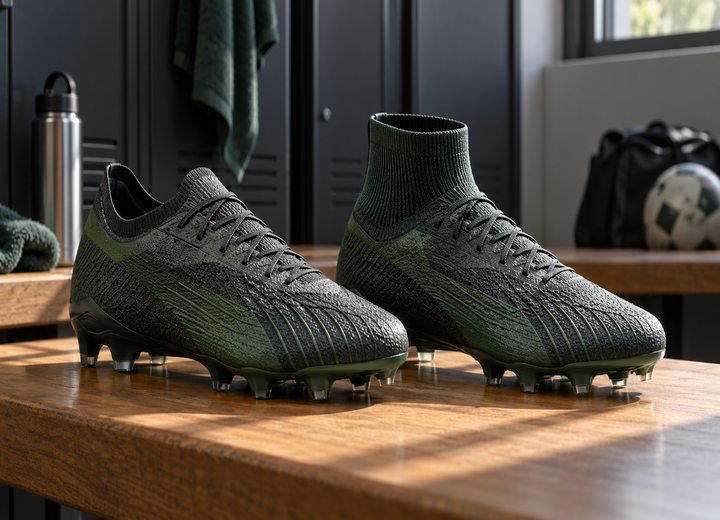
A high-top soccer cleat commonly adds a soft, sock-like cuff around the ankle. A low-top ends below the ankle bone. Nike’s cleat fit guide describes its low and high options in those terms and calls its high Dynamic Fit collar soft and stretchy. That is a description of Nike’s products, not a measurement of every brand’s collar stiffness or support.
The extra fabric can change entry, the feeling around the ankle and how the shoe meets your socks. A high collar may feel more enclosed; a low opening may be easier to put on. But model shape, lacing, heel construction and upper volume also change the fit. Comparing two unrelated models cannot isolate the collar’s effect. If possible, compare high and low versions of the same line in the same outsole and foot length.
Fit and field come before the silhouette

- Pick the field and outsole. If you play on artificial grass, short turf or natural grass, verify the exact shoe is intended and permitted there. A preferred collar does not make the wrong stud pattern suitable.
- Start with measured foot length. Use the exact model chart rather than changing size because one entry feels tight. A sock-like collar can be snug to pull on while the footbed length is still correct.
- Test heel and forefoot hold. With match socks on, walk, rise onto the toes and make controlled side steps. Reject toe curl, hard side pressure or repeated heel lift.
- Flex the ankle. Raise the heel, crouch and turn. Note rubbing at the Achilles, pressure on the ankle bones, or a cuff that folds into the shoe. An enclosed feeling is not useful if it causes pain.
The soccer cleat fit guide covers the full try-on. If you need a brace, wear that exact brace during fitting; ask a qualified clinician about your ankle needs instead of assuming a collar replaces treatment.
Does a high collar prevent ankle sprains?
Do not equate a knit cuff with proven protection. A 2020 review of shoe collar height and ankle-sprain mechanics found mixed results and inconsistent study designs across footwear and sports. It did not establish that a particular soccer cleat’s high collar prevents ankle injury. Studies of movement mechanics also do not automatically predict real-match injury rates for a different shoe.
Some high collars may alter how the ankle moves, while others are primarily flexible fabric. The material, stiffness, lacing and outsole matter. If you have recurrent sprains or are returning from injury, discuss prevention and return to play with a clinician. A specific brace or rehabilitation plan is a separate decision from choosing a high or low soccer-boot opening.
Compare the tradeoffs without assuming a winner
| Question | High-top option | Low-top option |
|---|---|---|
| Entry | Sock-like opening may be snug to pull over the foot | Open collar may be easier to enter |
| Ankle feel | Fabric wraps above the ankle bone | Ankle area stays more open |
| Adjustability | Depends on the model’s laces and upper, not collar alone | Also depends on laces and upper |
| Weight | Check the complete shoe’s listed weight | Do not assume every low version is lighter |
| Protection claim | Cuff feel does not prove injury prevention | Open collar does not prove increased injury risk |
The useful decision is personal but verifiable: wear each option with the same socks, compare the same fit zones and reject pain or instability. If one pair has a different outsole, upper or heel shape, note those differences before attributing the result to collar height.
Suppose the high version is hard to put on but feels comfortable once on foot, while the low version goes on easily but slips at the heel. Check whether they are actually the same last and length before crediting the collar for the difference. The low model may simply have a roomier heel. Conversely, if both shoes hold the foot equally and use the same outsole, collar pressure or entry difficulty becomes a more meaningful reason to choose the low version. Record what you feel at each zone rather than selecting from the product photograph.
What to ask when shopping online
Request the exact model and outsole suffix, an image showing the collar and heel opening, the size chart and the return terms. Ask whether the upper has adjustable laces; a raised collar does not mean the foot is locked down if the heel shape is wrong. Our laced versus laceless comparison treats closure as a separate fit question.
For an individual order, confirm price and available size for the exact pair before purchase. If a seller claims the high collar “prevents sprains,” ask for product-specific outcome evidence; a general footwear review cannot substantiate that promise. The safer purchase is the pair that fits comfortably, suits your pitch and matches the ankle feel you prefer.
Common questions
Are high-top soccer cleats better for ankle support?
A soft cuff may feel more enclosed, but collar height alone does not establish injury protection. Evaluate the shoe’s fit and consult a clinician for an ankle problem.
Are low-top soccer cleats lighter?
Not necessarily. Compare the published weights of the exact models in the same size; the rest of the shoe can outweigh a collar difference.
Should I size up if the high collar is hard to pull on?
Not by default. Check footbed length after entry. If the opening remains painful or impractical, compare another model rather than distorting the fit with the wrong length.
Sources and limits
- Nike: low and high cleat collar descriptions
- Lai et al. (2020): review of shoe collar height and ankle-sprain mechanics
Nike describes its own products; the review spans footwear and sports and cannot certify one bootswave model. No shoe has been wear-tested for this guide.
Ask about one pair
Send your foot length, preferred collar style, size and playing surface. We can confirm the available model details and price for one pair. Message bootswave on WhatsApp.
Published: · Updated:
