FIRST-PAIR BUYING GUIDE
Soccer Cleats for Beginners: Choose Your First Pair by Field and Fit
For your first pair, identify where you actually play before choosing a brand or color. Select an outsole permitted on that field, try on both shoes with your playing socks, and buy the lowest-cost model that passes a comfortable fit and movement check. You do not need a premium “speed” boot to begin playing.
By bootswave Editorial ·
Start with the venue, not a shoe advertisement
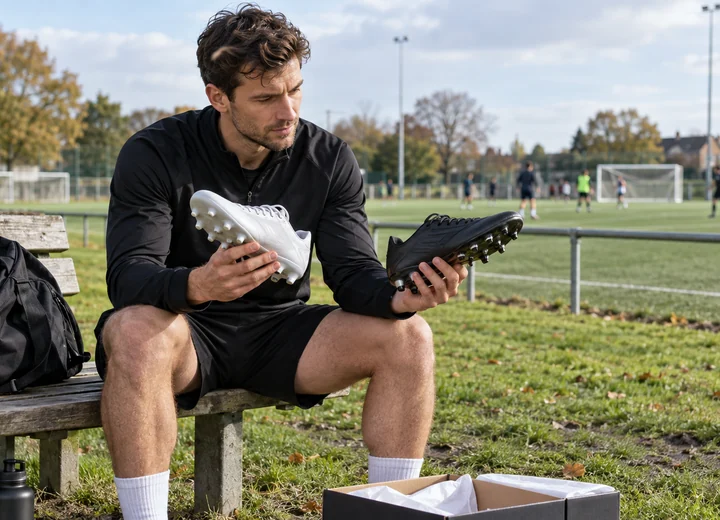
Ask the coach or facility what surface your first practices and games will use. “Turf” is too vague: it can mean a short, carpet-like surface or a longer-pile artificial-grass pitch. Firm natural grass, soft muddy natural grass, artificial grass, turf and indoor courts can call for different sole patterns. The venue may also restrict metal or long studs. Confirm the exact field and any local rule before comparing shoes.
Nike's official soccer shoe guide organizes shoes by surface and describes an entry-level range for new or recreational players. Its product tiers illustrate a useful point: the most expensive model is not a prerequisite for learning the game. You still need the outsole and fit that work for you, regardless of brand.
| Where you play | First category to examine | Check before buying |
|---|---|---|
| Firm natural grass | FG models listed for firm ground | Whether the pitch stays firm after rain |
| Longer artificial-grass pitch | AG or maker-approved MG | Facility and model approval |
| Short, dense synthetic turf | TF turf shoes | Whether the venue means turf or AG |
| Indoor hard court | Flat non-marking indoor shoes | Court footwear policy |
This is a starting map, not permission for every model on every field. If you practice on one surface and compete on another, ask whether a specific multi-ground model is approved for both. If it is not, two appropriate pairs may be more sensible than one unsuitable “universal” shoe. See FG versus AG for a closer comparison.
Fit is more important than your position on the pitch
A beginner does not yet need to predict whether they will be a winger, defender or striker. Start with a secure, comfortable shoe. Measure both feet late enough in the day that they reflect your normal playing size, then use the chart for the exact model. Wear the socks you will wear for practice. Lace each pair normally and stand with your weight on both feet.
Your toes should not be curled or pressed hard against the front. The forefoot should not feel squeezed sharply from the sides. The midfoot should hold you without numbness, while the heel should not lift as you walk or make a gentle change of direction. A tiny amount of movement is normal; visible sliding is not. Try the larger or more difficult foot first, but test both. Nike's fit guidance also recommends trying on boots with playing socks.
Do not buy an obviously painful pair because someone says it will “break in.” Materials can change feel with use, but break-in cannot reliably add missing width or correct an overly long heel. Conversely, do not buy a size far too large “to grow into,” especially for children. Our fit guide gives a more detailed four-zone check, and the parent guide covers children's growth separately.
Use a simple, repeatable try-on test
- Stand and lace. Check toe shape and side pressure on both feet. Laces should hold the midfoot without needing excessive tightening.
- Walk and jog gently. Notice heel movement and whether the upper rubs near the ankle or big toe.
- Stop and turn in a controlled way. Your foot should not slide across the footbed or jam into the toe box. Do not sprint in a shop.
- Compare the same movements in the other pair. Keep your socks, lacing style and test similar so the comparison is meaningful.
- Try a ball touch if the store permits. Check whether a seam or lace area feels distracting, without claiming a brief touch predicts match performance.
If you order online, do the indoor version of this test before taking the shoes onto a field. Check the seller's return policy and keep the packaging. A shoe that only looks good in photos but fails the basic movement check is a poor first purchase.
Compare entry-level models without paying for claims
Once two pairs both suit the field and fit well, compare the price you will actually pay, return terms, available sizes and basic durability details. Look at stitching or bonding around the sole, how the upper joins the outsole and whether the insole sits flat. These are useful inspection points; a quick visual check cannot prove how long a shoe will last. Ask for a model code so you can verify the manufacturer's intended surface.
Premium models may have lighter materials, specialized uppers or different closures. None of those automatically makes a new player faster or better. A laced beginner model often gives a clear way to adjust tension, but a well-fitting laceless model can also work. Decide by your fit test rather than the label. Do not confuse a “speed” collection name with a guarantee about running speed.
If your budget is tight, prioritize a permitted outsole, comfortable fit and a seller who accepts an indoor try-on. Buying a discounted shoe in the wrong soleplate can cost more once you need to replace it. A used pair is an option only if the upper, insole and studs remain sound and you can verify fit; worn studs or a compressed footbed may make the apparent bargain poor value.
What to bring and ask for at the store
Bring the socks you will use. If you already wear an approved ankle brace or orthotic, bring it too and check that the cleat can accommodate it. Record the field type, facility rules and your measurements before you go. Ask staff to show the outsole and the maker's stated surfaces for each model, not merely a shelf label.
- What exact surface is this soleplate intended for?
- Does my venue allow this stud type?
- Can I try another shape if this pair pinches the forefoot?
- Can I return the shoes after an indoor try-on?
- If ordering remotely, can you confirm the model, size, price and delivery country?
These questions are especially useful if your first game is soon. Do not assume the same size number fits across brands or even across model families. If you are choosing between two comfortable models, it is reasonable to choose the lower-cost pair. The better first shoe is one you can wear confidently on your real field.
First practice and basic care
Wear the new pair for a short training session before a full match if possible. Check for developing hot spots, heel lift and pressure after movement. A correct fit may still feel different from your everyday sneakers, but sharp pain, numbness or rubbing that quickly worsens is a reason to stop and reassess. Do not use an important match to discover that a shoe is too narrow.
After play, remove loose dirt as the maker directs, open the shoes and let them dry away from direct high heat. Keep them out of a closed damp bag. Inspect studs and the sole joint periodically. This routine is simple and helps you notice damage before the next game; it does not guarantee a fixed service life. Our cleaning guide gives the full procedure.
If your schedule later expands to a second surface, revisit the outsole decision then. You need not buy a specialized collection for every position on day one. Playing regularly will tell you more about your preferences than a product category can.
Common questions
Do beginners need expensive soccer cleats?
No. A suitable surface, secure fit and reasonable return option matter more than a premium tier. Compare models that pass those checks first.
Can one pair cover indoor and outdoor soccer?
Usually not when indoor means a hard court and outdoor means grass. The required soles differ. Confirm with both venues.
Should my first cleats feel very tight?
They should feel secure, not painful or numb. Toes need room to lie naturally, and the heel should stay seated during controlled movement.
The practical answer
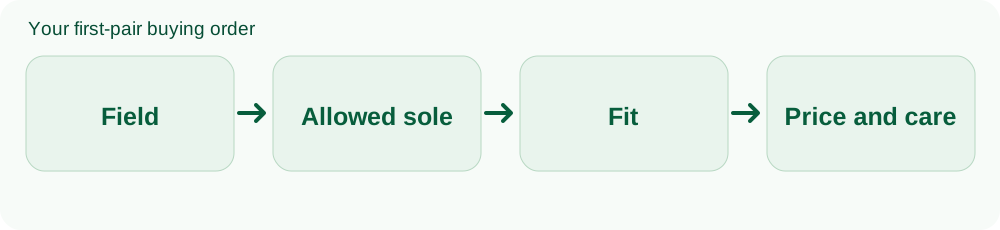
Ask where you will play, choose a permitted outsole, fit both feet in match socks and compare the remaining pairs by comfort, price and return terms. That sequence is enough to choose a useful first pair without chasing position-specific marketing.
Sources and scope
This guide combines published manufacturer guidance and editorial decision steps. It is not a hands-on test of a particular bootswave product. Product instructions and venue rules for your exact model take priority.
Ask about a product
You can ask about one pair or one jersey. Tell us the style, size, delivery country and your question; we can confirm options and price. Message bootswave on WhatsApp or use this form.
Published: · Updated:
