SOCCER SHOE CARE
How to Clean Soccer Cleats Without Damaging Them
Brush off loose mud, gently clean the outsole and upper by hand with a little mild soapy water, then air-dry the cleats away from direct heat. Check the exact shoe’s care label first, especially for leather, knit, coatings or removable parts.
Published: September 23, 2026 · Updated: November 1, 2026
Quick Reference
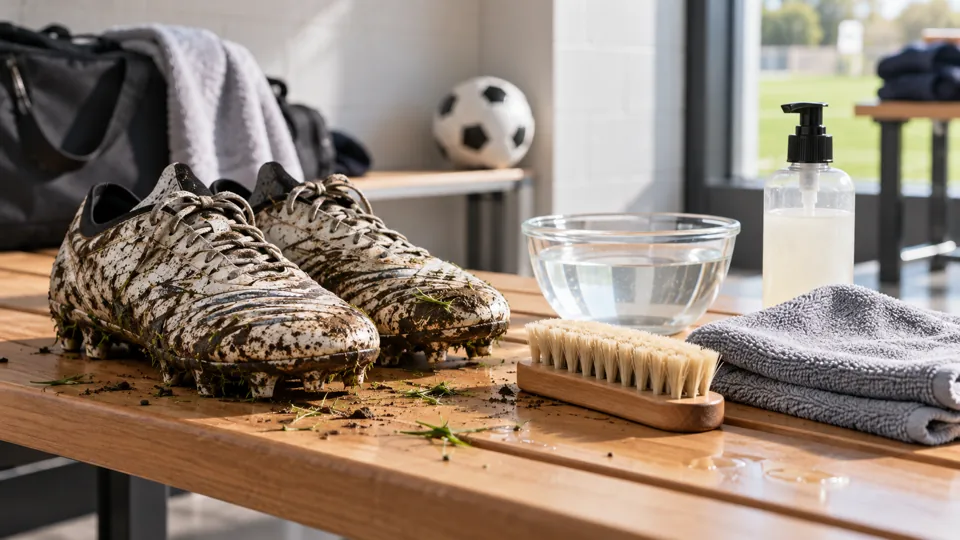
- Check the maker’s care instructions
- Remove loose dirt first
- Use a soft brush on the sole
- Wipe the upper gently
- Air-dry away from heat
- Store only when fully dry
BEFORE WATER
Remove loose mud while protecting the upper
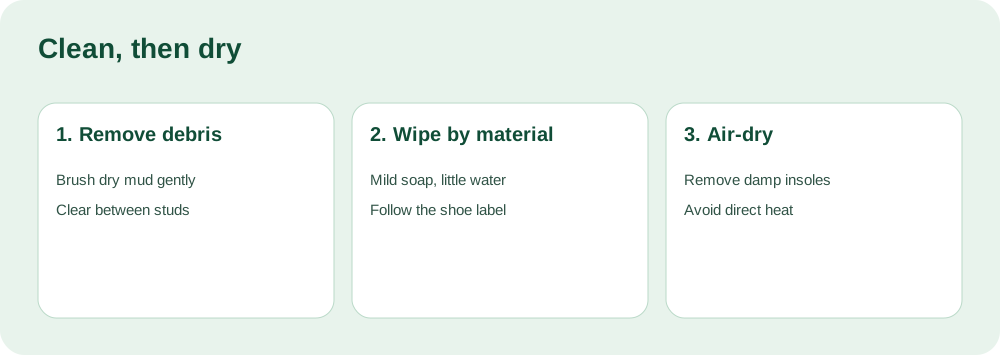
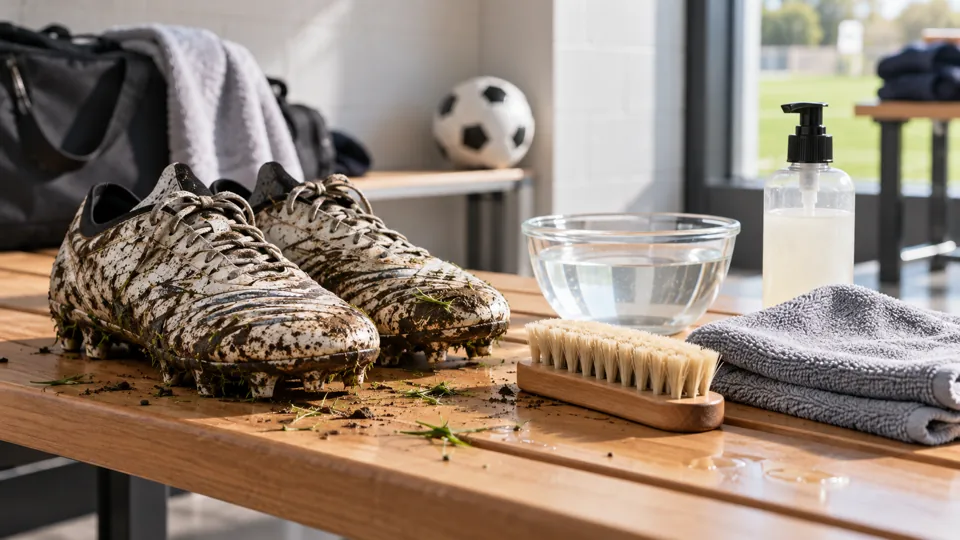
Begin with the care instructions for your exact pair. A coated synthetic upper, knit collar, leather panel and glued decorative finish can react differently to water or scrubbing. Put down a towel, remove loose dirt with a soft brush, and clear debris trapped between the studs with a blunt tool only where you can avoid cutting the sole. adidas’s cleaning guide begins by removing excess dirt after play. Do not grind sand into the upper while wiping.
Take out removable insoles and laces when the product instructions allow. Shake loose particles out of the shoe. If mud is wet and smearing, remove the large clumps gently and let the remainder loosen rather than scrubbing aggressively. The outsole can usually take more brushing than a delicate upper, but avoid scraping studs, edges or decorative finishes with a sharp metal object. Examine wear as you clean: a separating sole or cracked stud is a reason to stop using the pair until it is assessed.
HAND CLEAN
Use a mild solution, not a machine cycle
- Prepare: Mix a small amount of mild detergent with water and dampen a soft brush or cloth. Avoid bleach and harsh cleaners unless the maker explicitly directs their use.
- Outsole: Work the brush around studs and channels, then wipe away loosened dirt. Keep inspecting for trapped grit rather than forcing a tool into a narrow gap.
- Upper: Use a damp cloth and light pressure. Blot or wipe stains; do not soak the boot or scrub printed, knit or leather areas as if they were hard plastic.
- Residue: Remove soap with a clean damp cloth. Avoid pouring water directly into the shoe.
- Loose parts: Wash removable laces separately if their care instructions allow. Treat insoles according to their own label.
Nike’s boot-care guide also favors hand washing and mild cleaning over a washing machine or dryer. That is general guidance; a specific manufacturer instruction for your model takes priority. Do not use a “magic” stain remover merely because it is sold for sneakers. Try an approved cleaner on a hidden area if the upper colour or finish is uncertain.
For smooth synthetic panels, a damp cloth is often the first sensible tool. For textured or knit areas, use less water and lighter pressure. Natural leather can have different conditioner or drying requirements; consult the maker rather than applying household oil. A white upper may not return to its original colour, and repeated hard scrubbing can cause more damage than a remaining stain.
DRY
Airflow matters more than speed
After cleaning, wipe off surface moisture and leave the pair open in a ventilated room. Remove damp insoles if they are designed to come out. Loosen the laces and, if permitted by the maker, place clean paper inside briefly to absorb moisture; replace it if saturated. Keep the boots away from radiators, hair dryers, tumble dryers and prolonged direct sun. Nike warns that heat can damage upper materials and the plate.
Do not close damp cleats in a gear bag or sealed box. Wait until the inside, insole and outsole are dry before storage. Drying time depends on how wet the shoes became and on room conditions, so a fixed hour count would be unreliable. If the pair still smells after it is dry, remove the insoles and follow the separate soccer-shoe odor guide; stronger perfume is not a substitute for drying.
PRACTICAL DECISION
Adapt the cleaning sequence to the material and damage
First separate ordinary dirt from damage. A little dried grass or mud calls for gentle brushing; a loose sole edge, split upper or missing stud needs inspection before another match. Check the care label or maker's product instructions when the upper is leather, knit, coated synthetic or contains glued decorative elements. One aggressive cleaner can affect these materials differently, so start with a small, inconspicuous area and a mild solution if cleaning is allowed.
For a muddy pair, remove loose clumps outdoors, take out removable insoles and loosen the laces. Wipe the outsole and upper with a damp cloth or soft brush rather than soaking the entire boot. Keep grit out of eyelets and sole seams. Clean the insoles separately only as their instructions permit. Avoid hard scrubbing on a thin coating or printed finish; the goal is to remove soil, not abrade the material.
Dry at room temperature with airflow, away from direct heat. If paper is used to hold shape or absorb moisture, replace it when damp. Before storing, check that the inside and insole are dry and look again for a lifting edge or worn stud. A clean boot is easier to inspect, but cleaning does not repair structural damage or make a worn sole safe for play.
Clean the laces and insoles only if the manufacturer's instructions allow it; they can hold moisture after the upper looks dry. If the boot has removable studs, inspect the threads and fastening as directed by the maker after cleaning. Do not use a sharp tool to dig dried mud from a plate seam. Before the next match, flex the shoe gently and look for a widening gap at the sole edge. Cleaning is also a chance to catch a problem before it becomes a match-day failure.
For frequent use, make the routine short enough to repeat: remove loose dirt, wipe, open the shoe to dry, inspect and store. A complicated treatment after every game is less useful than consistent gentle care.
AFTERCARE
Check the pair before the next match
Look over the sole, studs, laces and upper once the shoes are clean. Replace a torn lace before it fails during play. A loose outsole, broken stud or damaged heel deserves more attention than a cosmetic scuff. Store the dry pair in a breathable place and clean off heavy mud after future matches rather than letting it harden for weeks. Adidas also recommends avoiding pavement wear in cleats because hard ground can wear the studs unnecessarily.
These steps describe ordinary post-match care, not a way to restore structural damage or make a worn outsole safe. If you are comparing a replacement pair, use How to Choose Soccer Cleats to match its sole to your field. bootswave can confirm one-pair options and prices through the form below or WhatsApp; send the model, size, surface and delivery country. The pictured shoes are editorial examples, not a stock promise.
FAQ
Frequently Asked Questions
Can I put soccer cleats in the washing machine?
Hand cleaning is the safer general method. Nike advises against machine washing and drying because the upper and plate can be damaged; follow your exact model’s care instructions.
How do I dry cleats quickly?
Use airflow at room temperature, remove removable insoles if permitted, and avoid heaters or dryers. Wait until the inside is fully dry before storage.
Can I use bleach on white cleats?
Do not assume so. Bleach and harsh cleaners can affect materials and colour; check the manufacturer’s instructions for the exact upper.
SUMMARY
Gentle hand cleaning plus complete drying
Remove debris, wipe with mild soap appropriate to the material, and let the pair air-dry fully before wearing or storing it.
For persistent odor after cleaning, see How to Get Smell Out of Soccer Shoes.
PRODUCT QUESTION
Ask About One Item or a Team Order
OTHER ARTICLES