
INDOOR FOOTWEAR
Why Are My Indoor Soccer Shoes Slippery?
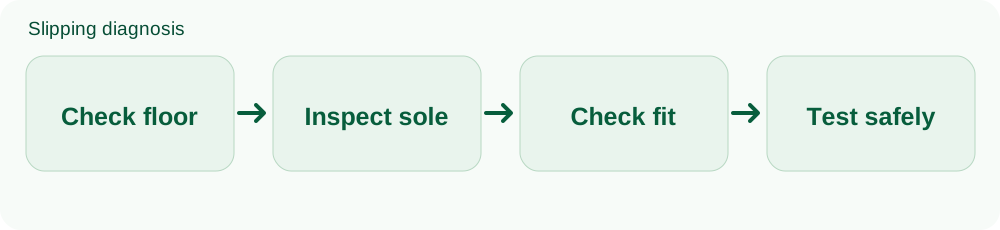
If your indoor soccer shoes slip, first stop and check whether the floor is dusty or wet, the rubber outsole is dirty or worn, and the shoe actually fits. Clean the sole as its maker directs and tell staff about a slick court. Do not assume longer studs or a new pair will solve every surface problem.
By bootswave Editorial ·
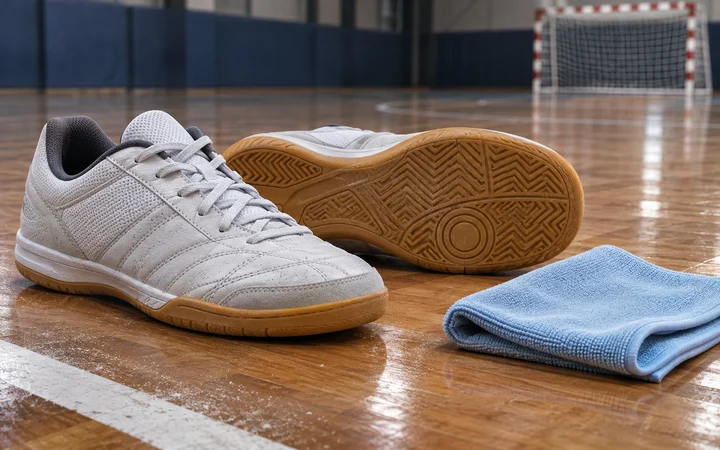
Separate a floor problem from a shoe problem
Slipping at one spot on a court does not prove the shoes are defective. A floor can be dusty, damp, freshly treated, or worn unevenly. Stop play if you cannot control a turn. Tell the venue staff exactly where and when it happens. Do not wipe a wet patch with your shoe and then sprint across it; a facility should assess its own playing surface and cleaning procedure.
Compare conditions carefully. If several players slip in the same area with different shoes, the court deserves attention. If only you slip across the whole clean floor, look more closely at your outsole and fit. If your shoes worked last week but suddenly slide, ask whether the venue changed flooring or maintenance practices, and inspect the sole for new contamination. These are diagnostic clues, not a substitute for a facility inspection.
Confirm that you are on a hardcourt floor. Some buildings called “indoor soccer” use artificial turf instead. adidas describes its indoor shoe category for flat indoor surfaces and grip patterns. A flat futsal sole and a nubbed turf sole behave differently; the correct choice follows the actual surface and the venue policy. Our indoor versus turf comparison handles that category choice.
Check dust, moisture, and residue on the outsole
Fine dust can coat rubber tread and reduce its direct contact with the floor. Look at the outsole under good light. If the grooves are filled or the surface feels greasy, follow the shoe maker’s cleaning instructions. A soft damp cloth can remove ordinary surface dust from many rubber soles; allow the shoe to dry completely before play. Avoid solvents, abrasive scrubbing, or unknown “grip” chemicals that may damage rubber or leave residue on a shared court.
Do not make the sole wetter to chase grip. Water can make a slick floor worse, and some venues prohibit liquids or sticky substances on the court. If a player uses a towel, it should be clean and used in an area the facility permits. The goal is to remove contamination, not to add another coating. If the venue requires non-marking soles, verify the exact model still meets that requirement after any treatment.
Inspect both shoes rather than only the one you notice sliding. Uneven wear may show up on one side because of a particular movement pattern. Smooth, hardened, damaged, or separated rubber cannot be restored by repeatedly wiping it. If a sole has a loose edge or exposed hard component, stop using the pair until it is repaired or replaced. A repair shop can advise whether the construction is repairable; a visibly failing outsole is not a safe test case.
Check fit and movement before blaming traction
Your foot can slide inside the shoe even when the outsole grips the court. That feels like the shoe is slipping, but the fix is different. Wear your usual match socks, lace the shoe securely without numbness, and walk through gentle stops. Does the heel lift? Does the foot move sideways inside the upper? Are your toes pushed into the front on a short stop? A loose heel or excess volume can make direction changes uncertain.
If the shoe is new, compare its size and shape with the pair that worked before. A different upper or lacing design can change lockdown even when both boxes say the same size. If the shoe is old, stretched uppers or worn laces may be part of the problem. Our fit guide offers a movement-based check, but an indoor model’s own size chart and return terms take priority.
A simple comparison can narrow the cause: on a clean permitted area, gently walk and turn in the same shoes after cleaning the sole. If the sensation changes, residue may have contributed. If the shoe still shifts around your foot, focus on fit. Do not run a maximum-speed test while you are unsure of traction. Stop and ask staff if the floor still feels unsafe.
What to do if the floor or shoe remains slippery
Ask the venue whether the court is dry, maintained, and ready for play. Staff can assess contamination, not just tell you to buy a different pair. Michigan State’s hardcourt rules require gym or indoor soccer shoes and prohibit cleats, while Tulane’s indoor rules require non-marking soles and prohibit rubber cleats. These are examples of venue-specific policies. They show why using outdoor studs as a shortcut can violate rules and fail to address a hardcourt problem.
If the floor is sound, the sole is clean, and the fit is secure but grip remains poor, the tread design may not suit that surface or the outsole may be worn out. Compare an allowed flat indoor model with the maker’s surface recommendation. Ask about a return or exchange while the current pair is still within the seller’s policy. If you play on both hardcourt and covered turf, a separate outsole for each may be more practical than forcing one shoe onto both.
For an individual replacement, send bootswave the floor type, your current shoe size, the problem you noticed, and destination country through our contact page or WhatsApp. We can confirm available models and price by inquiry. We cannot diagnose a venue’s floor from a product photo or promise that a new outsole will remove every slip.
Common questions
Can I use outdoor cleats to stop slipping indoors?
On a hardcourt floor, usually no. Many venues prohibit cleats, and studs do not work there as they do in field material. Check your venue’s rule.
Should I wet the soles for grip?
Do not add water or sticky products without the venue’s permission. Remove dust according to the shoe maker’s directions and ensure the sole is dry before play.
How do I know if the outsole is worn out?
Look for smooth or damaged tread, hardened rubber, separation or exposed hard parts. If cleaning and a safe fit check do not help, compare an allowed new model.
The practical answer
Pause, inspect the floor, clean and inspect the rubber outsole, and check whether your foot moves inside the shoe. Ask staff about any unsafe court condition. Replace a worn or unsuitable shoe only after you know which cause you are solving.
Sources and scope
- adidas indoor soccer shoes category guidance
- Michigan State hardcourt soccer rules
- Tulane indoor soccer rules
This guide combines published venue rules and editorial decision steps. It is not a hands-on test of a particular bootswave product. Product instructions and venue rules for your exact model take priority.
Ask about a product
You can ask about one pair or one jersey. Tell us the style, size, delivery country and your question; we can confirm options and price. Message bootswave on WhatsApp or use this form.
Published: · Updated:
