INDOOR FOOTWEAR
Can You Wear Soccer Cleats Indoors? Check the Floor and Rules
On a hard indoor court, usually no: molded soccer cleats are built for fields, and many gyms prohibit them. Wear a permitted flat, non-marking indoor shoe instead. An indoor facility with synthetic turf may allow turf shoes or some cleats, so check that venue’s written rules and the exact surface before buying.
By bootswave Editorial ·
“Indoors” describes a building, not one playing surface
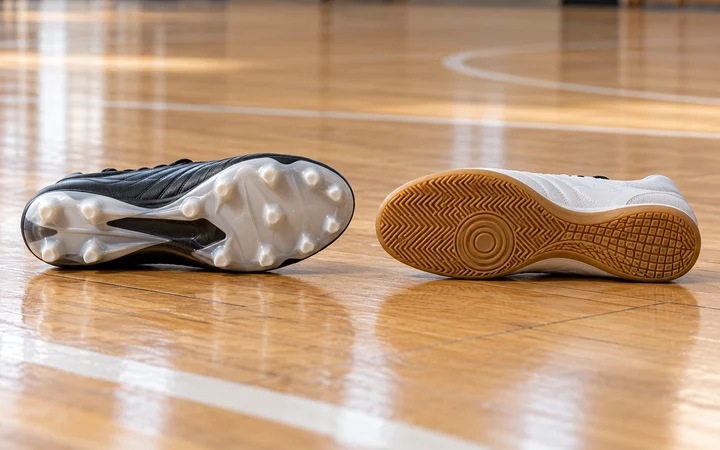
The first question is what lies under your feet. Futsal and hardcourt soccer are commonly played on a smooth gym floor. Other indoor soccer venues use short synthetic turf, often with boards. A shoe that works on one may be wrong or prohibited on the other. Ask the organizer whether the field is a hard court, short turf, or another synthetic surface. A photograph of the arena can help, but the venue's footwear policy settles what is allowed.
On a hard court, a flat, non-marking rubber sole is the usual starting point. Molded FG or AG studs have a different contact pattern and can mark or damage a floor; they may also feel unstable when you stop. Michigan State University’s hardcourt soccer rules require gym or indoor soccer shoes and prohibit cleats. Tulane’s indoor rules also prohibit rubber cleats. Those are examples of actual venue policies, not a universal rule for every indoor league.
Some covered turf facilities permit small-nub turf shoes, and some specify exactly which molded soles they accept. All American Indoor Sports, for instance, permits flat indoor shoes and certain short-nub turf shoes while excluding molded and screw-in cleats. The permitted footwear depends on that facility's own field and rules. Never infer that “inside” automatically means “futsal shoes only” or “all cleats are fine.”
Hard court: why a flat indoor sole makes sense
A flat indoor sole presents a broad rubber contact area to a smooth surface. Its tread is designed to grip that floor without relying on studs penetrating grass or turf. You still need to check whether the shoe is marked non-marking and allowed by the facility; some ordinary sneakers may have unsuitable tread or leave marks. The floor may also be dusty or damp, so no shoe can promise perfect traction in every condition.
An outdoor FG or AG cleat has raised studs intended to interact with field material. On polished wood or similar indoor flooring, those studs cannot perform the same job. They can concentrate contact and change how the foot feels when you stop or pivot. Do not try to solve a slipping problem by wearing longer studs on a hard court. Ask the staff about the floor condition and use the footwear category they permit.
Fit remains separate from the outsole. Try the indoor shoe with the socks you play in. Your heel should stay seated during a gentle stop and turn; the forefoot should not pinch; toes should not jam the front when you brake. A permitted shoe that causes numbness or repeated heel lift is still a poor fit. Our general soccer-shoe fit guide gives a useful movement check, but follow the indoor model's own size chart.
Indoor turf: why “cleats” is too broad a word
Covered turf ranges from short, hard carpet-like surfaces to deeper artificial fields. A TF turf shoe has many small rubber nubs and may be appropriate where the operator permits it. AG and multi-ground models have different stud systems; whether they are allowed depends on the specific field and its rules. An FG label by itself does not prove indoor-turf suitability. Ask for the written footwear policy rather than relying on a teammate's old experience of the venue.
Match the exact outsole to the surface and the model maker's instructions. Some facilities ban metal studs, detachable studs, or all molded cleats. Others allow certain designs. The reason for a ban may include the field material, safety, or maintenance; you do not need to guess which reason applies. When rules are unclear, send a photo of the sole to the venue before the first session. If the policy says turf shoes, purchase a turf shoe instead of interpreting an AG cleat as equivalent.
Our indoor shoes versus turf shoes comparison helps with that adjacent choice. This guide answers the narrower permission question for studded cleats. If you play both on hardcourt and synthetic turf, one shoe may not serve both well. A second pair can be more sensible than forcing one outsole onto two different surfaces, but decide only after checking both venues.
A five-minute pregame check
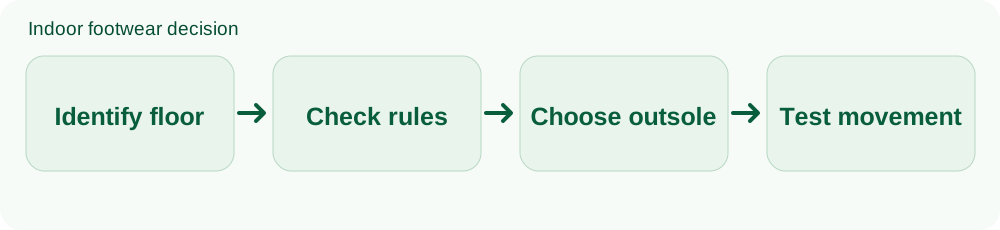
- Ask which field is booked. An indoor sports center may have more than one surface.
- Read the footwear rule. Look for “non-marking,” “turf,” “molded,” “metal,” and any stud-length limits.
- Inspect your actual sole. A brand can sell the same upper in indoor, turf, FG, and AG versions.
- Check the shoe for wear. Damaged studs, exposed edges, or a loose sole need attention even if the original model is permitted.
- Walk and turn gently. Stop if the shoe slides or catches unexpectedly; ask staff about the surface before continuing.
A parent choosing for a child should confirm the venue policy before buying a colorful pair advertised as “indoor.” The word may refer to a sports hall or indoor turf, and product listings are not always precise. A coach ordering team footwear should share the venue's rule with families, especially if players split time between a gym and a covered turf center.
If you need one pair, send bootswave the facility surface, your size, delivery country, and a photo or wording of the footwear rule through our contact page or WhatsApp. We can confirm available options and price by inquiry. We cannot override your venue's decision about a specific outsole.
Common questions
Can I wear FG cleats on a gym floor?
Usually no. Many hardcourt venues ban cleats, and FG studs are intended for firm natural grass. Check the facility's exact policy and use a permitted flat indoor shoe.
Can I wear AG cleats on indoor turf?
Possibly, but only if the venue and the model maker allow that exact outsole on the actual surface. “Indoor turf” does not describe one standard field.
Are turf shoes the same as indoor shoes?
No. Turf shoes have small nubs for suitable synthetic fields; hardcourt indoor shoes have a flatter sole for smooth floors. Some facilities accept both on a particular surface, others do not.
The practical answer
Check the floor and the venue rule first. Use a permitted flat indoor shoe for hardcourt play. For covered turf, compare the actual field with the specific shoe's outsole and the organizer's policy. Fit and condition are the final checks before playing.
Sources and scope
- Michigan State University hardcourt soccer rules
- Tulane Campus Recreation indoor soccer rules
- All American Indoor Sports footwear rules
This guide combines published venue rules and editorial decision steps. It is not a hands-on test of a particular bootswave product. Product instructions and venue rules for your exact model take priority.
Ask about a product
You can ask about one pair or one jersey. Tell us the style, size, delivery country and your question; we can confirm options and price. Message bootswave on WhatsApp or use this form.
Published: · Updated:
