
SECONDHAND CLEAT CHECK
Used Soccer Cleats: What to Check Before You Buy
Used soccer cleats can be a sensible purchase if the exact pair still fits securely, has an intact upper and outsole, and is suitable for your field. Inspect them in person when possible. Pass on a pair with separated seams, damaged studs or a heel that slips.
By bootswave Editorial ·
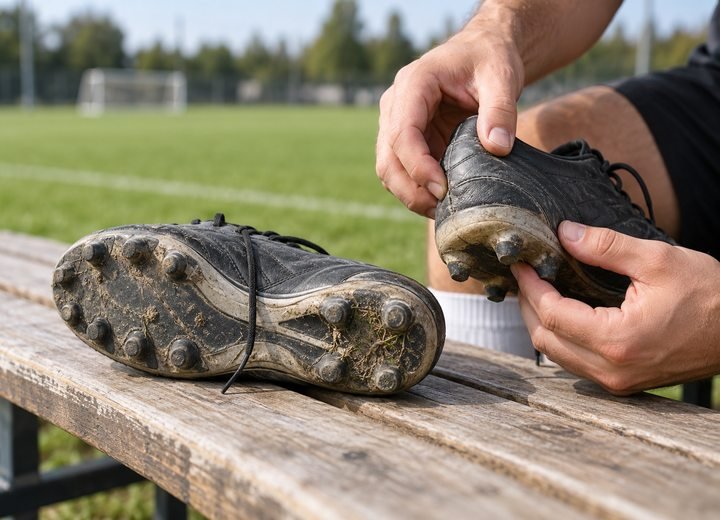
Start with the outsole, not the asking price
Turn over both shoes. Look for missing, cracked or sharply worn studs and compare the wear between left and right. Bend the forefoot gently: the sole should flex as intended, without opening a gap where it joins the upper. A shoe that looks clean on top can still be worn out underneath.
Ask where the pair was used. The field matters: a studded natural-grass boot and a short-lug turf shoe serve different surfaces. Check the maker’s label or model page when you can, and ask your venue what it allows. Our surface guide explains the categories.
Check the upper and inside
Examine the toe box, side panels, heel counter and lace holes for splitting, tears or repairs that are already coming loose. Remove the insole if it is removable and look for dampness, damage or a strong odor. A replaceable insole may help with ordinary wear, but it cannot repair a broken outsole or collapsed heel.
Compare the pair with clear seller photos of the actual shoes, especially the outsole, toe and heel. Stock photos tell you nothing about the pair you will receive. Ask about returns before paying if you cannot inspect it in person.

Do the five-minute try-on
- Wear your usual soccer socks and lace both shoes as you would for training.
- Stand, walk, stop and change direction gently on a safe surface.
- Check that the heel stays in place, toes are not curled and the sides do not pinch.
- Check that the two shoes feel similar. Uneven wear can make one feel different.
Nike’s fit guidance says heel movement and toe pinching are signs to reconsider size or shape. Do not rely on a previously worn upper “stretching back” into a better fit.
When to pass on the pair
Skip cleats with loose outsole bonding, missing or sharp studs, a broken heel counter, persistent wetness, or a size that feels wrong. If the seller cannot show the actual outsole, wait for a pair you can inspect. Even a low price is poor value if you cannot safely use the shoes on your field.
Request the photos that expose real wear
Ask for clear, current photos of both shoes: top, sides, heels, toe tips, inside lining and the entire outsole. A clean side view is useful for identifying the model but can conceal a peeling sole edge or flattened studs. Ask the seller to photograph any defect in normal light and to show the product label or model code. If the pair has been cleaned just for sale, the photos still need to show the actual condition after cleaning.
Compare left and right. Asymmetric heel wear, one loose sole edge or a split around one toe can be easy to miss in a single-shoe listing. Clarify whether insoles and original laces are included. An incomplete or blurry listing is a reason to ask more questions before paying; it is not evidence that the shoe is counterfeit or unsafe by itself.
Inspect the soleplate and every stud
Look for cracks at the front flex point, around stud bases and where the sole joins the upper. Gently flex the boot by hand to see whether a gap opens; do not force it beyond normal movement. Check that molded studs are present and similarly worn across both shoes. If studs are removable, confirm the correct parts are present and secure according to the manufacturer's instructions. A missing or sharply damaged stud is not a cosmetic defect you should ignore.
Find the outsole's intended surface. A used FG pair is not automatically a good deal for an artificial-grass season, regardless of price. Check your venue rules and the maker's model guidance before buying. IFAB Law 4 also requires players not to use dangerous equipment; the referee and competition rules still govern match use. The bottom of the shoe matters more than how attractive the upper looks in a listing.
Check the parts that touch your foot
Press around the heel counter and inspect the inner heel lining for holes or collapsed padding. Look at the eyelets, lace path, tongue and seams. A worn insole can hide how the shoe actually feels; ask whether it has been replaced. Check for persistent dampness or strong odor, which can point to storage or cleaning problems. None of these observations alone determines remaining life, but together they tell you whether a try-on is worth arranging.
Do not assume a pre-shaped upper will reshape to your foot. A secondhand boot may already be molded around someone else's heel and forefoot. If it pinches, lets your heel lift or creates rubbing in a short indoor try-on, skip it. A low price does not make a poor fit useful for matches.
A safe try-on and a clear stop rule
- Wear your normal match socks and check both shoes while standing.
- Walk, jog gently and make a few controlled stops on a surface where the footwear is allowed.
- Check toe clearance, heel hold and side-to-side movement.
- Take the shoes off and look for unexpected rubbing or pressure marks.
- Stop if you see separation, feel instability or cannot verify the intended playing surface.
Five minutes will not prove durability for a season, but it can reveal an immediate mismatch. If buying remotely, ask for a return option before relying on photos alone. Do not take an uncertain pair straight into a competitive match. If the seller cannot provide sufficient evidence and there is no return route, passing on the pair is a reasonable decision.
Decide whether the saving is real
Compare the total amount you will pay, including shipping, replacement laces or insoles if needed, and the risk of no return, with a suitable new pair. Do not use a made-up percentage of the retail price as a rule. The value depends on condition, exact model, fit and how often you play. A lightly used pair that matches your field and fits securely may be sensible; a worn pair with unknown outsole use may cost more in frustration than it saves.
Keep screenshots of the listing and the seller's condition statements. If the exact model or authenticity matters, compare its code with the manufacturer's product record and ask for a purchase receipt when available. The useful buying question is whether this particular pair is suitable and verifiable—not whether used cleats are generally “good” or “bad.”
Common questions
Are worn studs always unsafe?
Wear varies. Reject missing, cracked or sharp studs and ask the referee or organizer if the exact pair is acceptable.
Can I buy used cleats without trying them on?
Only if you can verify measurements, see photos of the actual pair and accept the seller’s return terms. A fit check in person is more reliable.
Sources and scope
- Nike: How to measure your foot and assess fit
- adidas: How to clean soccer cleats
- IFAB Law 4: The Players’ Equipment
The checks are editorial guidance, not a hands-on test of a specific bootswave model. Confirm the exact product and local field rules before play.
Ask about a product
You can ask about one pair. Tell us the model, size, playing surface and delivery country; we can confirm available options and price. Message bootswave on WhatsApp or use this form.
Published: · Updated:
