INDOOR FOOTWEAR GUIDE
Are Sambas Soccer Shoes? OG vs Indoor Explained
Some Sambas are made for indoor soccer; Samba OG is primarily sold as a lifestyle shoe. Read the exact model name and stated surface, then check the sole, court policy and fit. A shared silhouette is not proof that two versions are interchangeable for play.
By bootswave Editorial ·
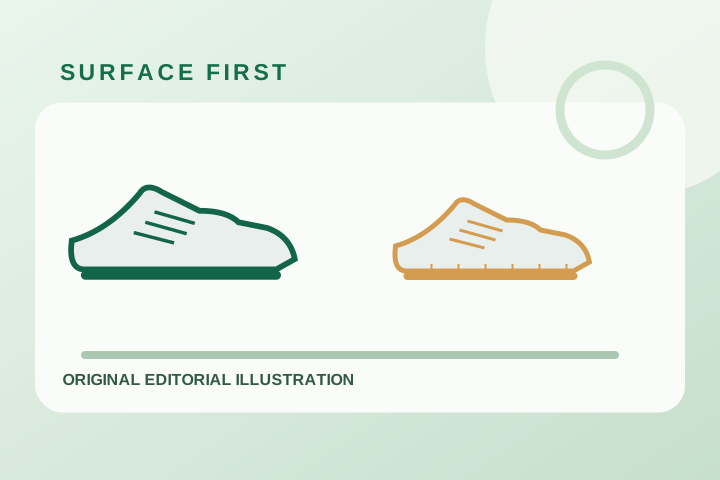
Quick Reference
- Samba is a family name, not one outsole
- Samba OG is listed by adidas as lifestyle footwear
- Samba Indoor is listed for indoor soccer
- A flat indoor sole is not a grass stud plate
- Check the exact product code and venue rules
- Test grip and side-to-side hold before a match
Overview
The Answer Depends on Which Samba You Own

Yes, a Samba can be a soccer shoe—but the name alone does not tell you whether your pair is built for play. adidas lists Samba OG under Lifestyle and Street, while its Samba Indoor product page explicitly says the rubber outsole is for indoor surfaces. Those are product classifications, not a promise that every Samba-shaped sneaker performs the same way.
The original Samba has soccer heritage. Heritage explains the look; the current product description tells you the intended use. Check the name on the box or product page, not the three stripes, toe shape or gum color. This guide helps you decide whether a particular Samba fits an indoor game. It is separate from our indoor versus turf footwear comparison, which explains surface categories across brands.
02 / Model check
Compare the Product Label, Not Just the Silhouette

Begin with the product name and the manufacturer's surface field. An online marketplace title can be incomplete; if it says only “Samba,” find the model code on the shoe label and compare it with the maker's listing. A secondhand pair may have a worn or replaced outsole, so inspect the actual shoe too.
| Question | Samba OG | Samba Indoor |
|---|---|---|
| Current adidas category | Lifestyle / street listing | Soccer / indoor listing |
| Best starting assumption | Casual wear; ask before using for sport | Consider for a suitable indoor court |
| Still verify | Floor permission, grip and lateral hold | Floor permission, grip, fit and outsole condition |
| Natural grass | Not a grass cleat | Not a grass cleat |
These categories come from the current linked adidas listings, which can change by model or market. The table deliberately does not assign a universal grip rating: outsole compound, floor finish, dust and wear all affect real contact.
03 / Court check
Use a Five-Point Check Before Playing Indoors

- Confirm the floor. Ask whether the venue permits that pair and whether it requires a non-marking sole. Indoor hardwood, polished sport flooring and rough outdoor concrete are different settings.
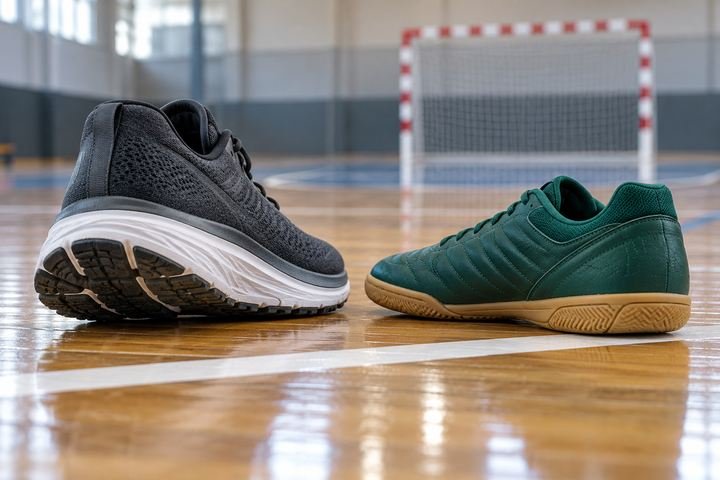
- Inspect the outsole. Look for a flat rubber contact surface, embedded grit, worn smooth areas or damage. A familiar gum color by itself does not establish suitability.
- Try match socks. Your heel should stay seated and your foot should not roll over the edge when you move sideways.
- Warm up gradually. Walk, stop, turn and make a few low-speed cuts. Stop if the shoe slides repeatedly or the upper cannot hold your foot.
- Recheck during play. Dust and moisture can change the floor contact; a shoe that felt acceptable at home may behave differently on that court.
This is a practical decision check, not a laboratory traction test. For another common substitution question, see running shoes for indoor soccer.
04 / Surface limits
Do Not Treat Indoor Sambas as Grass or Turf Cleats

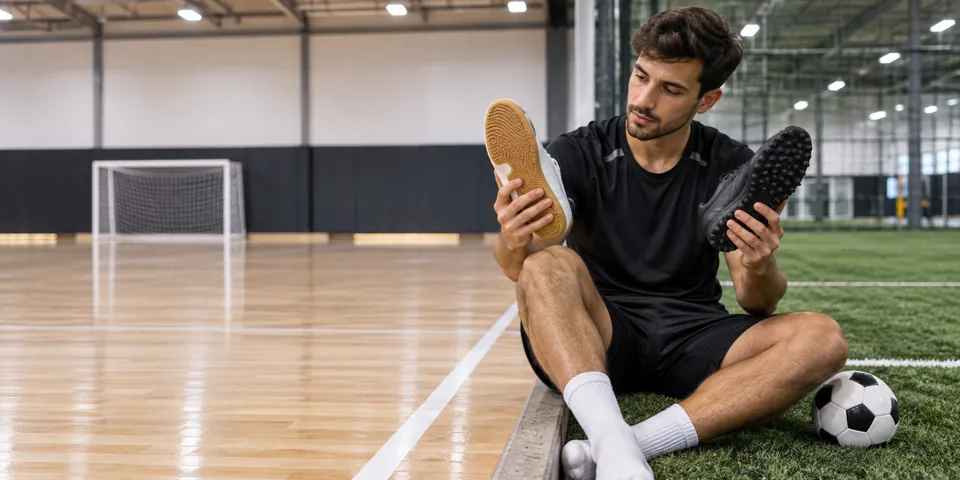
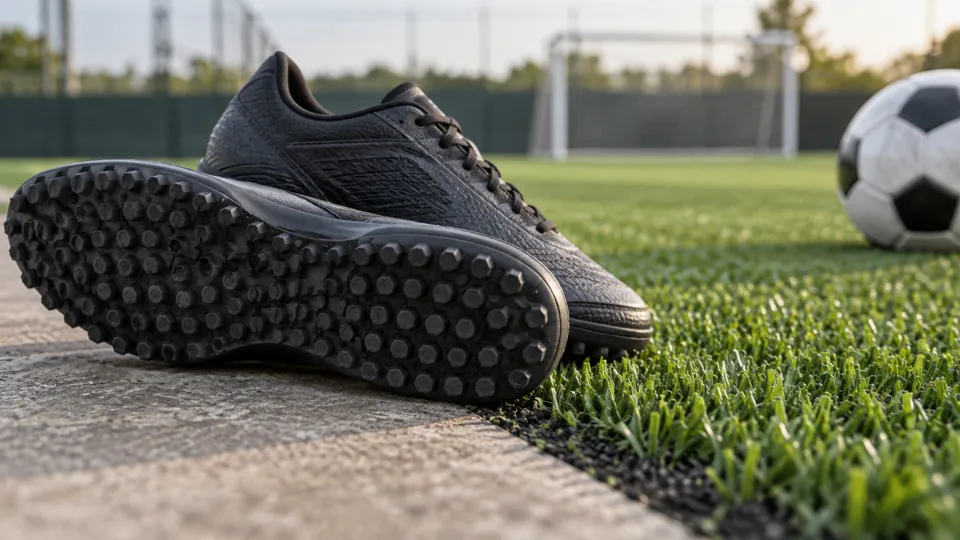
An indoor Samba's low-profile rubber outsole is meant for flat indoor surfaces according to adidas. Natural grass footwear uses a different outsole with studs; artificial turf and artificial grass also have their own surface-specific patterns and venue rules. A flat indoor shoe may lose traction on damp grass, while a grass stud plate can be inappropriate or prohibited on a hard court.
Short-pile turf is another case. Small turf lugs are designed for that surface; a smooth indoor sole does not become a TF shoe because it has rubber underneath. See what turf shoes are before substituting. If you play both indoors and outdoors, check each venue and choose footwear for the actual surface rather than forcing one pair into every setting.
05 / Decision
Choose by Model, Surface and Foot Hold

If you already own Samba OG, do not assume its soccer origin makes it your match shoe. For a casual low-speed kickabout, first confirm the surface and permissions, then test traction and support; switch shoes when those checks fail. For an organized indoor game, a current indoor-specific model is the clearer starting point.
If you are shopping, compare the exact model code and intended surface before price or styling. Ask whether the return policy permits a clean indoor try-on, and do not infer stock or sizing from an older product page. If you want other indoor options, message bootswave with your floor type, usual size and fit concern via our soccer shoe collection. We can discuss one pair or a team request through the site form or WhatsApp; this article does not claim bootswave sells Sambas.
BUYING CHECK
When the listing only says “Samba”
Ask for the exact product name and model code from the shoe label or box, then compare them with adidas's own listing. A seller's description, a familiar toe shape or a gum-colored sole cannot tell you whether that specific pair is a current indoor-soccer model. If the code leads to Samba OG, treat the maker's lifestyle classification as the starting point. If it leads to Samba Indoor, check its stated surface use, size and outsole condition.
For a used pair, request underside photos of both shoes. Look for worn-smooth rubber, trapped grit, separation at the sole edge and uneven wear that could affect grip. Ask whether the venue requires a clean or non-marking sole. A clean indoor floor, rough outdoor court and wet grass impose different demands; a single “soccer heritage” label does not resolve any of them.
If you cannot verify the model or the venue rule, do not buy it as your match shoe on faith. Choose a product clearly described for your actual surface, try lateral movements in match socks and keep the return terms in mind. The question is answered by the exact pair and place of play, not by the Samba name alone.
FAQ
Frequently Asked Questions

Are Samba OG shoes made for soccer today?
They have soccer heritage, but adidas currently lists Samba OG as lifestyle/street footwear. Check your exact model and venue before using it for play.
Are Samba Indoor shoes soccer shoes?
Yes. adidas lists Samba Indoor for indoor soccer and describes a rubber outsole for indoor surfaces. Check fit, outsole condition and your court's rules.
Can I wear Sambas on grass?
Do not treat a flat Samba sole as a grass-cleat plate. Grass conditions and traction needs differ; choose footwear approved for that field.
Is a gum sole automatically non-marking?
No. Check the manufacturer's description and the venue's rule. Sole color alone does not prove a shoe will avoid marks or provide enough grip.
Are Samba Indoor shoes the same as turf shoes?
No. Indoor shoes use a low-profile court outsole; turf shoes use many small lugs for short artificial turf. Match the shoe to the surface.
Summary
Read the Model Label Before You Play

Samba history is not an outsole specification. Samba OG is marketed as a lifestyle shoe; Samba Indoor is marketed for indoor soccer. Check your exact pair, court rules, condition and lateral stability, and use a surface-specific shoe for grass or turf.
Sources and Further Reading
- adidas: Samba OG lifestyle/street listing
- adidas: Samba Indoor Soccer Shoes product details
- adidas: Indoor Soccer Shoes surface guide
adidas product categories were checked for this guide in October 2026; recheck the exact SKU because product lines and descriptions can change.
Product question
Ask About Soccer Gear

Need a different indoor soccer shoe? Send the court surface, your size and any width concern. We can discuss current options and pricing for one pair or a team order; ask about the actual product before buying. Open WhatsApp.
Keep reading