COLD-WEATHER SOCCER
What Do Soccer Players Wear in Cold Weather?
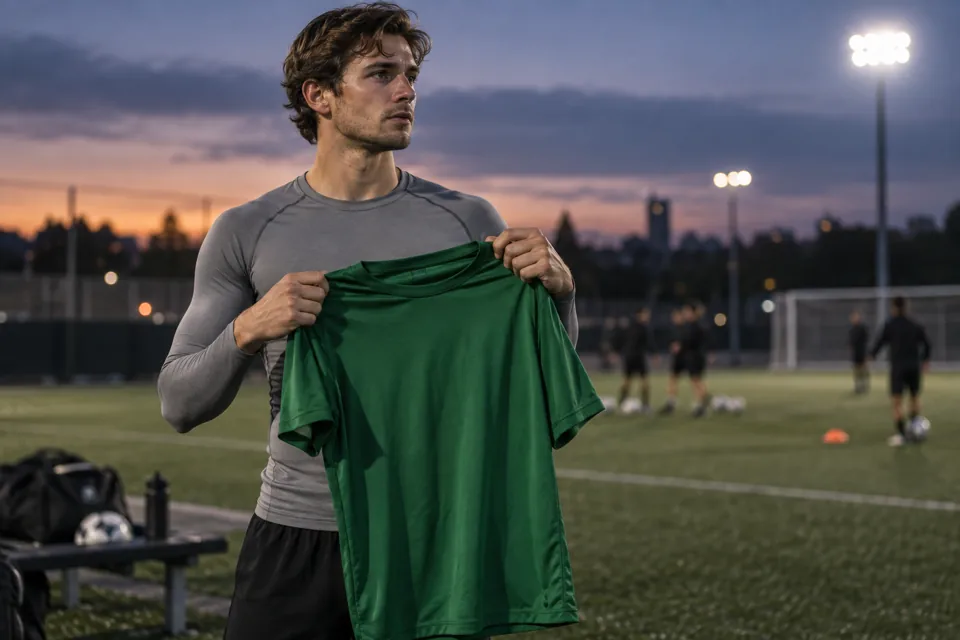
Wear your required jersey, shorts, socks, shinguards and field-appropriate footwear, adding a thin moisture-managing layer under the kit when conditions call for it. Use approved soft gloves and an extra warm, dry layer for the bench. Wind, rain, playing time and local rules matter more than a single temperature number.
Published: September 21, 2026 · Updated: November 1, 2026

Quick Reference
- Start with required match equipment
- Add a dry base layer when needed
- Match exposed sleeves and tights to kit rules
- Keep gloves and sideline layers non-dangerous
- Replace wet clothing promptly
- Stop play for cold-stress symptoms
PLAYING LAYERS
Keep the playing kit simple and adjustable
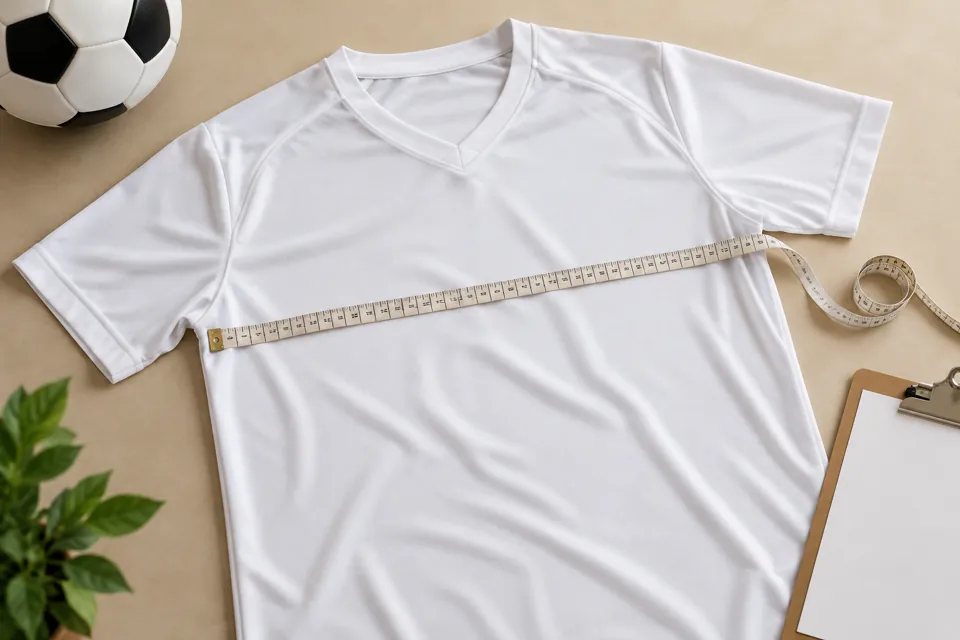
For a match, the base remains the uniform and approved footwear. IFAB Law 4 lists a sleeved shirt, shorts, socks, shinguards and footwear as compulsory. Under a jersey, a thin long-sleeve base top can add coverage without changing the outer kit. Under shorts, tights may add warmth. Choose a fabric you can move and sweat in, and check whether the fit creates bunching under the uniform.
Moisture management matters in cold weather because a damp layer can chill you when effort drops. The CDC's cold-climate layering guidance describes an inner layer that moves moisture, an insulating layer and protection from wind and water. That general outdoor guidance is not a soccer uniform rule; translate it to a match by keeping the mobile base layer under the kit and a warmer outer garment for pauses. A cotton shirt that stays wet after repeated sprints may be less comfortable than a suitable synthetic or wool-based layer.
Do not put on every layer at once. Warm up in a removable jacket if allowed, remove it before kickoff if it is not permitted for play, and keep it accessible for halftime. If you begin sweating heavily under multiple layers, adjust before your next long pause. Training attire may be more flexible than competition kit, but the team's and facility's rules still apply. The base-layer guide explains fabric and fit in detail.
RULES
Check underlayer colors and permitted accessories
IFAB Law 4 gives specific color rules: visible undershirt sleeves must be a single color matching the main shirt sleeve, or exactly repeat the sleeve's colors and pattern. Undershorts or tights must match the main or lower shorts color, with teammates wearing the same color. This is easy to miss when everyone brings a different black or white base layer. Ask the team manager before buying, particularly for tournament play.
The same law permits non-dangerous soft, lightweight protective items such as gloves and certain headgear. It sets conditions for head covers, including color and no protruding parts. A thick scarf, loose hood or dangling cord should not be assumed acceptable merely because it is warm. Local competition rules and a referee's safety decision can impose practical limits. If unsure, show the item before kickoff. Those are equipment checks, not a claim that every league uses identical enforcement.
Keep sock and shinguard placement correct after adding tights. Socks still cover the guards. Do not add a second thick sock if it makes your cleat painfully tight or numbs your toes. Check field conditions too: rain, frost and frozen ground can change the safe playing decision and surface suitability. Choose footwear for the actual field, not for the cold-air temperature alone.
SIDELINE
Plan for the bench, goalkeeper and wet conditions
The coldest part of a match may be waiting. Bring a dry jacket or warm top, spare gloves and a towel or dry base item in a bag protected from rain. Put the outer layer back on promptly when you leave active play, then remove it as needed before you return. A goalkeeper may have longer low-movement periods than an outfield player; IFAB Law 4 specifically allows goalkeepers to wear tracksuit bottoms. Competition details still matter.
Wind and rain can matter as much as the thermometer. CDC notes that hypothermia can occur at cool temperatures if a person becomes wet and chilled. Keep dry substitutes accessible and change saturated clothing rather than relying on one wet layer for the whole session. A light water-resistant outer layer can be useful before and after play, but its suitability during a match depends on the rules and whether it is safe.
For youth teams, ask who decides whether conditions are suitable and where players can warm up. U.S. Soccer's extreme-weather resource hub points organizers to cold-weather risk and response guidance. A parent or player should not treat clothing as permission to play through unsafe wind chill, frozen surfaces or suspected cold illness.
PRACTICAL DECISION
Plan separately for play, the bench and travel home
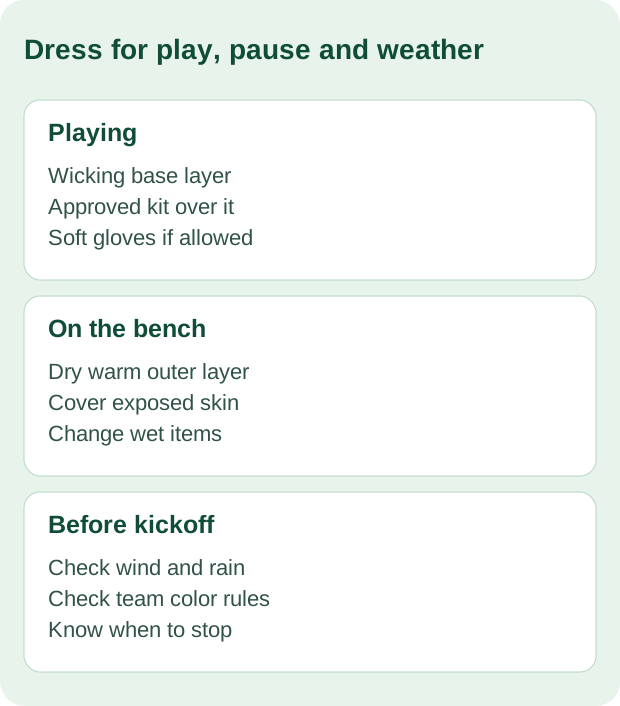
A player generates heat while moving but can cool quickly when waiting to enter the match. Set out a kit for three phases: permitted match clothing, a warm outer layer for the bench, and dry clothes for afterward. Test the match layer during a warm-up rather than wearing every item from the start. If the player sweats heavily beneath too many layers, damp fabric may become uncomfortable later. Adjust for wind, rain and the actual time spent inactive.
Check competition rules before the first cold match. IFAB Law 4 sets colors for visible undershirts and undershorts or tights, and permits certain non-dangerous protective items. Your league may specify additional kit colors. A goalkeeper may have different movement and ground-contact needs; gloves, sleeves and padding should be tested with the full kit rather than chosen in isolation.
For children, pack a dry spare layer and a bag for wet clothing. If hands become too cold to handle the ball safely or a player shows signs of significant cold stress, stop play and seek appropriate help; clothing choices cannot make every condition suitable for a match. The practical goal is a kit that stays legal, allows movement and can be adjusted as conditions change.
STOP SIGNS
Know when clothing is no longer enough
Shivering can be an early warning that someone needs a warmer, drier setting. Confusion, fumbling hands, slurred speech, unusual drowsiness or exhaustion are more concerning signs listed by the CDC's hypothermia guidance. Numb, unusually pale or waxy skin can indicate frostbite. Stop activity, move the person to shelter, replace wet clothing with dry layers and seek medical help promptly when symptoms suggest cold injury. Follow local emergency procedures; this article cannot diagnose anyone.
Before the next session, review what failed: was the base shirt wet, were gloves missing, was the player sitting still too long, or was the weather simply beyond what clothing could reasonably solve? Adjust the kit or the plan, and ask the organizer about postponement thresholds. Extra layers can help comfort, but they cannot make every cold-weather match safe.
For one base layer or other football apparel item, contact bootswave through the form below or WhatsApp with the intended use, size, kit color and delivery country. We can confirm options and pricing; we cannot certify that a garment meets a particular competition's rules without its details.
FAQ
Frequently Asked Questions
Can soccer players wear a long-sleeve shirt under a jersey?
Yes when permitted, but visible undershirt sleeves must follow IFAB Law 4 color rules and any competition requirements.
Can you wear gloves during a soccer match?
IFAB permits non-dangerous soft, lightweight protective equipment such as gloves. Check local rules and the referee's safety judgment.
Is one heavy layer better than several thin layers?
Not always. A suitable base layer under the kit plus a removable dry outer layer for breaks is easier to adjust as effort and wetness change.
When is it too cold to play soccer?
There is no single universal number here. Organizers should use their cold-weather policies, weather conditions and participant risk; stop for suspected cold-stress symptoms.
SUMMARY
Dress for both movement and pauses
Use a suitable base layer under approved kit, add safe accessories and keep a dry warm layer ready for breaks.
Read the base-layer guide for garment choice and check your competition rules before match day.
PRODUCT QUESTION
Ask About One Pair or a Team Order
OTHER ARTICLES