SOCCER APPAREL GUIDE
Soccer Jersey Size Chart
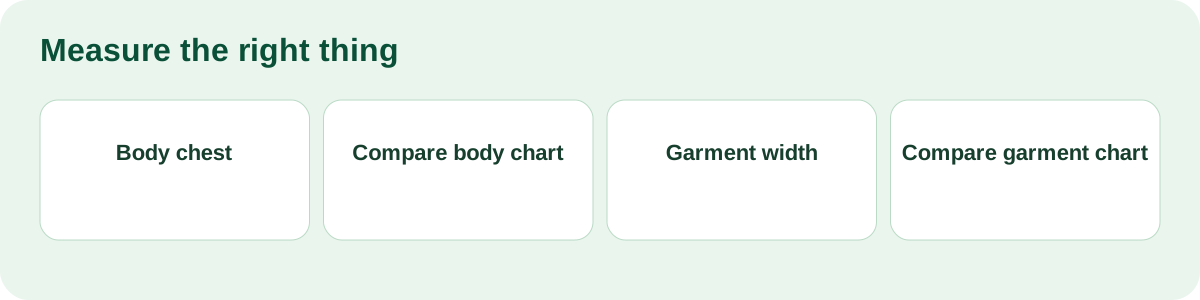
A reliable soccer jersey size chart belongs to the exact jersey style being ordered. First identify whether the chart shows body measurements or finished garment measurements. Then compare it with a correctly measured player or a jersey that already fits the intended use. This guide helps players, parents, coaches, clubs, retailers, and teamwear buyers review sizing with a clear, repeatable method.
Published: September 20, 2026 · Updated: November 1, 2026
Overview
How Soccer Jersey Sizing Works
A size label is only a shortcut. The product-specific chart explains what that label means for one jersey pattern, cut, and measurement method.
Body measurement charts use figures taken around the player. Finished garment charts describe the jersey itself after it is laid flat or measured around the garment. A flat chest width, for example, is taken straight across a laid-flat jersey at the supplier's stated chest point. It is not automatically the same as a chest circumference. A supplier may explain how a circumference is calculated, but a buyer should follow that exact method rather than making an assumption.
Soccer jerseys can use youth, adult, unisex, or other product-specific cuts. The available choice must be checked against the approved product range and chart for the selected style. Fabric, pattern, intended use, base layers, manufacturing tolerance, and preferred fit can all affect how a jersey feels or sits. No single chart applies to every soccer jersey style.
| Chart Type | What It Measures | How to Use It |
|---|---|---|
| Body measurement chart | Player measurement around the body | Measure the player at stated points |
| Flat garment chart | Jersey laid flat | Compare with a fitting jersey |
| Garment circumference chart | Finished jersey around a point | Use supplier-defined method |
| Youth chart | Youth product range | Check separately from adult sizes |
| Adult chart | Adult product range | Confirm cut and preferred fit |
| Product-specific chart | One approved style | Use as the final reference |
Before Reading a Jersey Size Chart
- Confirm the jersey style and intended fit
- Check whether measurements are flat or around the body
- Confirm the measurement units
- Check whether a base layer will be worn
- Review youth and adult options separately
- Use an approved sample when possible
Main Content
How to Use a Soccer Jersey Size Chart
Identify the Correct Jersey Style First
A chart only works when it belongs to the exact product being ordered. Two jerseys can both carry the same size label and still have different measurements because their pattern, sleeve construction, collar, fabric, grading, and intended fit differ. A close match jersey and a regular training jersey may use separate cuts. Even a revised version of the same program may need its own current chart.
Start with the product name or approved style code. Then make sure the chart, sample, and order record refer to that same version. This protects a team from collecting measurements against one garment and ordering another. It also gives a retailer or distributor a clear document to share with customers.
| Product Detail | Why It Matters | Buyer Action |
|---|---|---|
| Jersey style | Defines the pattern | Record the exact style |
| Sleeve type | Changes garment proportions | Use its matching chart |
| Collar style | Can affect neckline and length reference | Check chart notes |
| Fabric type | May affect drape and construction | Confirm product version |
| Youth or adult cut | Uses a different range | Review separately |
| Product size chart | Is the final reference | Request approved copy |
Confirm the Product Before Sizing
- Confirm jersey style name and version
- Confirm fabric type and available size range
- Confirm youth, adult, or product-specific cut
- Confirm the approved chart and units
- Keep the same reference on the team roster
Body Measurements vs Finished Garment Measurements
Body measurements are taken on the player. A chest circumference is measured around the chest with a flexible tape, following the supplier's stated point. Finished garment measurements are taken on the jersey. A flat chest width is usually taken horizontally across a laid-flat garment, but the precise seam points must come from the approved chart.
These measurements cannot be compared directly unless the supplier has defined the conversion. A flat width is not a body circumference; a body circumference is not automatically a finished garment circumference. The same caution applies to shoulder, sleeve, hem, and length points. Keep the chart label with each recorded value.
| Measurement Type | How It Is Taken | Best Use | Reminder |
|---|---|---|---|
| Chest circumference | Around the player | Body chart | Do not compare with flat width |
| Flat chest width | Across laid-flat jersey | Garment chart | Follow stated seam points |
| Jersey length | Top point to hem | Finished garment chart | Check start point |
| Shoulder width | Supplier-defined shoulder points | When chart includes it | Do not invent a point |
| Sleeve length | Supplier-defined sleeve points | When chart includes it | Compare like for like |
| Hem width | Across garment hem | When chart includes it | Keep garment flat |
Avoid These Measurement Errors
- Do not compare flat width directly to body circumference
- Do not assume every supplier uses the same points
- Do not mix inches and centimeters
- Do not pull fabric while measuring
- Do not reuse a chart from another style
- Do not use age as the only sizing method
How to Measure a Soccer Jersey That Already Fits
A jersey that already fits the intended purpose can be a useful comparison tool. It should be clean, laid flat, and measured without stretching. The goal is to record the same points that appear on the approved finished-garment chart. If the chart does not list shoulder, sleeve, or hem width, there is no need to add those figures.
| Measurement Point | How to Measure | Chart Label to Match |
|---|---|---|
| Chest width | Straight across at approved chest point | Flat chest width |
| Body length | Approved top point to hem | Body length |
| Shoulder width | Between chart-defined shoulder points | Shoulder width |
| Sleeve length | From chart-defined sleeve point | Sleeve length |
| Hem width | Straight across hem | Hem width |
Measure a Finished Jersey
- Lay the jersey flat on a smooth surface.
- Smooth natural wrinkles without stretching fabric.
- Align side seams and sleeves.
- Measure only at approved chart points.
- Record each value and unit clearly.
- Compare it with the exact product chart.
- Repeat a measurement when uncertain.
This process does not guarantee that another product will fit the same way. It simply creates a relevant comparison for the selected style and chart.
How to Measure the Player
Some product programs use a body-measurement chart. In that case, measure the player rather than a finished garment. Stand naturally, keep the tape level and comfortable, and do not tighten it. Record the unit used by the supplier. Chest circumference, waist reference, height reference, shoulder reference, preferred length, and expected base layer may all be useful only when the approved chart calls for them.
Body data should be compared only with a chart clearly labelled as a body-measurement chart. A familiar retail size, height, weight, and age can help a coach begin a conversation, but none should replace the stated measurement method.
| Player Measurement | How to Take It | Important Note |
|---|---|---|
| Chest circumference | Around chest at supplier point | Keep tape comfortable |
| Waist reference | At chart-defined waist point | Use only when requested |
| Height reference | Record standing height | Supporting reference only |
| Shoulder reference | Use supplier method | Do not estimate |
| Preferred length | Discuss intended coverage | Not a chart conversion |
| Base layer | Record expected layer | Can affect preference |
Player Measurement Checklist
- Stand naturally with arms relaxed
- Use a flexible measuring tape
- Record units clearly
- Measure twice
- Use the larger reading when two differ
- Compare only with the correct chart
How to Read Youth Soccer Jersey Sizes
Youth players grow at different rates. Age, height, weight, and a familiar retail size can be useful supporting references, but they are not final sizing methods. A youth soccer jersey size should be selected from the approved youth chart for the exact style after chest and body length are reviewed. If an expected delivery date is relevant, a team may also discuss growth and intended fit before approval.
No generic youth measurements belong in this guide because they must come from your approved product specification. Use the structure below only after the exact youth range and measurement method are confirmed.
| Youth Size | [Approved Chest Measurement] | [Approved Body Length] | [Fit Notes] |
|---|---|---|---|
| Youth XS | [Insert approved data] | [Insert approved data] | [Insert approved notes] |
| Youth S | [Insert approved data] | [Insert approved data] | [Insert approved notes] |
| Youth M | [Insert approved data] | [Insert approved data] | [Insert approved notes] |
| Youth L | [Insert approved data] | [Insert approved data] | [Insert approved notes] |
| Youth XL | [Insert approved data] | [Insert approved data] | [Insert approved notes] |
Youth Team Sizing Checks
- Do not select by age alone
- Measure chest and body length
- Consider expected growth before delivery
- Confirm intended fit and base layers
- Review the exact youth chart
- Approve a sample when possible
How to Read Adult Soccer Jersey Sizes
Adult soccer jersey sizes should also come from the product-specific chart and the team's intended fit. Some players may prefer a closer athletic presentation, while others need a regular teamwear fit or room for a base layer. Those preferences do not turn one chart into another; they are details to agree before roster approval.
Use the approved adult size run only for the product version being ordered. The following chart is intentionally a structure, not a universal conversion table.
| Adult Size | [Approved Chest Measurement] | [Approved Body Length] | [Fit Notes] |
|---|---|---|---|
| Adult S | [Insert approved data] | [Insert approved data] | [Insert approved notes] |
| Adult M | [Insert approved data] | [Insert approved data] | [Insert approved notes] |
| Adult L | [Insert approved data] | [Insert approved data] | [Insert approved notes] |
| Adult XL | [Insert approved data] | [Insert approved data] | [Insert approved notes] |
| Adult 2XL | [Insert approved data] | [Insert approved data] | [Insert approved notes] |
| Adult 3XL | [Insert approved data] | [Insert approved data] | [Insert approved notes] |
- Check chest and jersey length
- Record preferred fit and base-layer use
- Confirm product cut and size availability
- Use an approved sample for a team order
Youth XL and Adult Small Are Not Always the Same
Adjacent youth and adult labels can overlap in some areas, but they are not automatic equivalents. Body length, shoulder shape, sleeve proportion, garment cut, and the approved chart may differ. A buyer should compare actual values from the relevant youth and adult product charts instead of assuming that Youth XL converts directly to Adult Small.
| Comparison Point | Youth XL | Adult Small | What to Confirm |
|---|---|---|---|
| Chest measurement | [Approved chart value] | [Approved chart value] | Measurement method |
| Body length | [Approved chart value] | [Approved chart value] | Top and hem points |
| Shoulder shape | [Approved product detail] | [Approved product detail] | Cut and pattern |
| Sleeve length | [Approved chart value] | [Approved chart value] | Measurement points |
| Product cut | [Approved product detail] | [Approved product detail] | Exact chart version |
A sample or measured reference garment is the clearest way to resolve uncertainty. Keep the final choice on the roster with the chart version used.


Consider Fit Preference and Base Layers
Intended use affects the sizing discussion. A close athletic fit, regular team fit, relaxed training fit, cold-weather base-layer fit, youth growth allowance, and a specialist role can each lead a player to compare the approved chart differently. Agree on the intended use before collecting a team order.
| Fit Preference | Intended Use | Sizing Check |
|---|---|---|
| Close athletic fit | Match presentation | Review garment measurements |
| Regular team fit | General teamwear | Use one agreed method |
| Relaxed training fit | Training and travel | Check preferred room |
| Base-layer fit | Cold weather | Record intended layer |
| Youth growth allowance | Youth program | Confirm with guardian and chart |
| Special-role fit | Individual needs | Check exact product style |
Fit Preference Questions
- Is the jersey for matches, training, or travel?
- Will a base layer be worn?
- Is a close or regular fit preferred?
- Does the player need extra body length?
- Is the jersey for a growing youth player?
- Has the team approved one consistent approach?
Team Order Sizing Workflow
Clubs, academies, schools, retailers, distributors, and private-label buyers should use one controlled roster and one approved size chart. The order record should keep jersey size, shorts size, player name, player number, quantity, and approval status separate. This avoids a common error: treating a player's jersey and shorts as the same size or losing a later decoration change inside a free-form list.
Customization makes size changes more difficult after production starts because names, numbers, and decoration are tied to the specific garment. Confirm style, size chart version, measurement method, and final roster before production approval. For teamwear categories, buyers can review Soccer Apparel, Soccer Jerseys, Soccer Shorts, Soccer Pants, Soccer Jackets, and Winter Soccer Apparel as separate product pages.
| Team Order Checkpoint | Purpose | Example Record |
|---|---|---|
| Product style | Matches chart to jersey | Approved style name |
| Size chart version | Creates one reference | Chart date or code |
| Measurement method | Prevents mix-ups | Body or garment |
| Player jersey size | Records top separately | Approved label |
| Player shorts size | Records bottoms separately | Approved label |
| Name and number | Controls decoration | Spelling approval |
| Quantity | Controls order total | One or more garments |
| Approval status | Confirms review | Approved / pending |
Team Jersey Sizing Workflow
- Confirm the exact jersey style.
- Share the approved size chart.
- Confirm body or garment measurement method.
- Measure players or compare approved samples.
- Record jersey and shorts sizes separately.
- Confirm names and numbers.
- Review the final roster.
- Approve information before production.

Common Soccer Jersey Sizing Mistakes
Most sizing problems come from a process gap, not a single measurement. Using the wrong chart, confusing a flat garment measurement with a body measurement, selecting by age alone, ignoring a base layer, or collecting team sizes without a controlled roster can make a clear decision difficult.
| Mistake | Why It Causes Problems | Better Action |
|---|---|---|
| Using another style's chart | Patterns can differ | Use exact product chart |
| Mixing measurement types | Values are unlike | Label every record |
| Using age only | Growth differs | Measure and compare |
| Ignoring body length | Chest alone is incomplete | Review both points |
| Ignoring base layers | Changes fit preference | Record intended use |
| Mixing units | Creates conversion errors | Use one stated unit |
| Skipping sample approval | Removes a practical check | Review sample when possible |
| Missing roster approval | Customization can be wrong | Approve final record |
Keep a Clear Size Decision Record
For a club or B2B teamwear project, the size decision should be traceable after the first fitting conversation. A simple record can identify the product style, chart version, measurement type, unit, player or customer reference, selected size, reviewer, and approval date. It does not need to include unnecessary personal data. Its purpose is to ensure that every person uses the same approved reference when a roster is checked, an order is placed, or a reorder is discussed.
Keep measurement notes separate from decoration information. The player name and number should be checked against the final roster, while jersey and shorts sizes should stay in their own columns. If a buyer changes from a body chart to a finished-garment comparison, record that change and repeat the review rather than combining unlike results. When a size is uncertain, mark it as pending and resolve it before custom decoration is approved.
This record also helps when a retailer, distributor, school, or academy must explain the choice to several people. It creates a practical handoff between the person measuring, the person gathering the roster, and the person approving the order. It is not a promise that a future product will measure the same; each new style still needs its own current size chart.
| Record Item | Why Keep It | Example |
|---|---|---|
| Product style | Connects sizing to one garment | Approved jersey version |
| Chart version | Identifies the reference used | Supplier chart date |
| Measurement type | Prevents unlike comparisons | Body or finished garment |
| Unit | Prevents conversion confusion | cm or inches |
| Approval status | Shows whether action is complete | Approved or pending |

FAQ
Soccer Jersey Size Chart FAQ
How do I use a soccer jersey size chart?
Start with the chart for the exact jersey style. Confirm whether it shows body or finished-garment measurements, then compare like with like. Record units and the chart version used.
Should I measure my body or a jersey that already fits?
Use the method stated by the approved chart. A body chart needs player measurements; a finished-garment chart can be compared with a jersey that already fits the intended use.
What is flat chest width on a soccer jersey?
It is a garment measurement taken straight across a jersey laid flat at the supplier's specified chest point. It is not automatically a body chest circumference.
How do I measure soccer jersey length?
Lay the jersey flat and measure from the exact top point to the hem stated on the chart. Different suppliers may define that starting point differently.
Are youth soccer jersey sizes the same as adult sizes?
No. Youth and adult ranges may differ in length, shoulder shape, sleeves, cut, and grading. Compare approved charts rather than relying on a label conversion.
Is Youth XL the same as Adult Small?
Not necessarily. Compare the exact product charts for chest, length, shoulder, sleeve, and cut. Treat the labels as separate ranges until the approved data shows otherwise.
Should soccer jersey sizing include a base layer?
Base layers can affect a player's preferred fit. Record intended layering before the team confirms sizes, then use the product-specific chart and sample where available.
Can I choose a soccer jersey size by age?
Age is only a supporting reference for youth players. Chest and body length, the exact youth chart, product style, and intended fit should guide the decision.
What should a team manager collect before ordering jerseys?
Collect the approved style, chart version, measurement method, jersey size, shorts size, name, number, quantity, and an approval status for every player.
What should B2B buyers confirm before approving custom soccer jersey sizes?
Confirm product style, chart type, units, size range, sample reference, roster, decoration details, and final approval. Do this before production because later customized changes can be difficult.
| Question | First Check | Practical Next Step |
|---|---|---|
| Which chart? | Exact product version | Request approved chart |
| Which method? | Body or garment | Measure like with like |
| Youth or adult? | Product range | Review separate chart |
| Base layer? | Intended use | Record fit preference |
| Team order? | Controlled roster | Approve before customization |
Summary
Measure First, Then Choose the Size
Accurate soccer jersey sizing starts with the correct chart for the exact product. Identify whether it uses body or finished-garment measurements, then measure chest and length with the stated method. Keep youth and adult charts separate, agree on intended fit and base layers, and use an approved sample where possible.
For custom teamwear, one final roster prevents later confusion around jersey size, shorts size, player names, and numbers. The goal is a clear decision process, not a universal conversion rule.
- Use the chart for the exact jersey style
- Confirm body or garment measurement method
- Measure chest and body length carefully
- Do not rely on age alone
- Compare youth and adult charts separately
- Consider base layers and fit preference
- Approve one final team roster before production
Project inquiry
Discuss Your Soccer Jersey Project
For clubs, retailers, distributors, and private-label buyers sourcing soccer jerseys and teamwear, share your style, size range, and project requirements.
Keep reading
Related Soccer Apparel Guides

Soccer Jerseys
Review soccer jersey options before comparing styles and size charts.
Explore jerseys →Soccer Shorts
Keep shorts sizes separate from jersey sizes on every team roster.
Explore shorts →Soccer Pants
Review training and travel pants as a separate teamwear category.
Explore pants →Soccer Jackets
Consider jackets separately when planning layers and teamwear sizes.
Explore jackets →Winter Soccer Apparel
Plan cold-weather layers alongside the main jersey size selection.
Explore winter apparel →Soccer Apparel
Browse soccer apparel categories for your next teamwear project.
Browse apparel →