SOCCER JERSEY GUIDE
What Do Soccer Jersey Numbers Mean? A Player's Guide
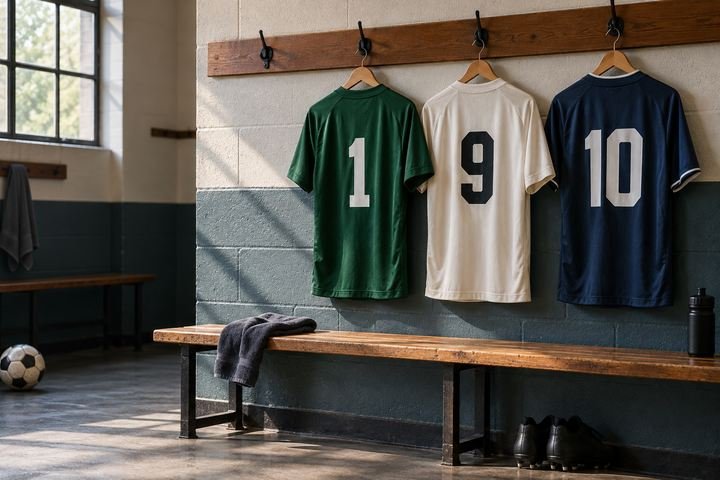
A number on a soccer jersey identifies a player. Some numbers also carry familiar positional associations—1 for a goalkeeper, 9 for a central striker, 10 for a creative attacker—but those associations are traditions, not a universal rule about where the wearer must play.
By bootswave Editorial ·
Quick Reference
- A shirt number identifies the player on the team sheet
- 1, 9 and 10 have familiar traditional associations
- A modern squad number does not prove a player's position
- Formation labels such as a number 6 describe a role, not always a shirt
- Check your league's number and print rules before ordering
- Pick a readable, available number that the player likes
Overview
The Number Identifies the Player First

The quickest answer is that a jersey number tells teammates, officials and spectators which player they are looking at. The number may suggest a position because of soccer tradition, but it does not assign a position by itself. A forward wearing 23 is still a forward; a goalkeeper wearing a number other than 1 is still the goalkeeper.
That distinction matters when you watch a match or select a number for your own kit. A team sheet and the player's actual movement tell you more than the numeral alone. The IFAB equipment law recognizes a player's number among normally permitted shirt markings while leaving additional number and display restrictions to competition rules. It does not supply a universal 1-to-11 position code.
This guide explains the most familiar associations and their limits. It does not catalog famous players' favorite numbers or tell you what a particular club's current squad list is. Those change, while the distinction between identifier and tradition remains useful.
02 / Traditional map
What the Familiar Numbers Usually Suggest

In older starting-eleven numbering systems, the low numbers were linked to places in a formation. Today's casual language still borrows from that pattern. This table is a reading aid, not a rule that every club or formation follows.
| Number or group | Common association | What to check instead of assuming |
|---|---|---|
| 1 | Goalkeeper | Today's named goalkeeper and match sheet |
| 2–3 | Outside defenders in many traditions | Actual fullback or wingback positions |
| 4–5 | Central defense or central midfield, depending on tradition | Team's formation and regional usage |
| 6 | Often a holding midfielder in modern coaching language | The role, which may be worn by another shirt number |
| 7 and 11 | Wide attackers or wingers | Where the players line up and move |
| 8 | Central or box-to-box midfielder | Whether the player actually plays that role |
| 9 | Central striker or target forward | Which player leads the front line |
| 10 | Creative attacking midfielder or second forward | Who creates chances in that system |
For example, someone can be described as a “number 6” because they protect the defense and start attacks, even while wearing 14. The Premier League's explanation of the number-six role traces that language to older numbered starting lineups. Treat this table as a vocabulary guide, not a test of whether a modern player is in the correct shirt.
03 / Modern squads
Why Shirt Numbers and Positions No Longer Line Up Neatly

A player may keep a squad number across seasons while a coach changes the team's shape or the player's position. A transfer, a youth-team promotion, an available number, or a personal preference may also explain the choice. The number is a stable label on the shirt; the tactical role can change from match to match and even during a match.
That is why calling someone “the number 10” can mean two different things. It might refer literally to the shirt with 10 printed on it, or it might describe the player linking midfield to attack. If you are explaining a game to a new fan, say “wears 10” for the shirt and “plays as a 10” for the role. It removes a surprising amount of confusion.
History also produces exceptions. FIFA notes that some famous number associations arose through circumstance rather than a planned positional assignment. A recognizable numeral can become culturally meaningful after a player makes it famous. It still does not guarantee that the next wearer has the same style.
04 / Your team
How to Pick a Jersey Number for Yourself or a Child

Start with the team's administrator or coach. Ask which numbers are free, whether the league restricts the range, how numbers are registered and whether names are permitted. Some competitions want matching numbering across a season; others are more flexible. Do this before paying to print a shirt.
- Choose two or three numbers the player genuinely likes; a traditional position number is optional.
- Confirm availability and registration with the team.
- Check that the numeral contrasts with the shirt color and stays legible from a distance.
- Confirm the size, spelling and number before decoration becomes permanent.
- For a child, avoid treating a preferred number as a promise of a fixed position.
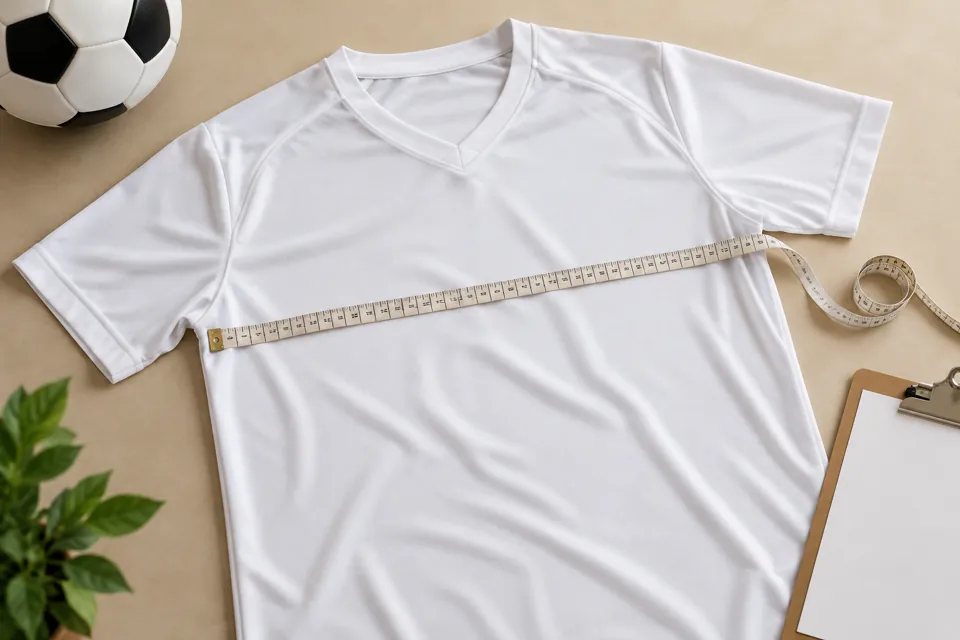
A player can select a family number or a favorite athlete's number without needing to imitate that athlete's role. If the team is ordering jerseys together, make one verified name-and-number list before printing. For sizing questions, use the soccer jersey size guide; number choice does not change garment fit.
05 / Watching games
Read the Formation, Not Just the Back of the Shirt

If you want to understand a player's job, check the starting lineup and then watch where they stand when their team has and loses the ball. A player wearing 7 may defend as a wingback; a player wearing 10 may start wide. One screenshot of a formation is a clue, not the whole match.
The goalkeeper is usually easy to identify because of a distinct uniform, which IFAB Law 4 requires to distinguish them from other players and match officials. For the rest, follow actions: who stays central, who presses, who receives between the lines, and who covers a flank. This observation works whether or not the team uses a familiar 1-to-11 numbering scheme.
Numbers are useful for recognizing players. Roles are useful for understanding play. Once you keep those separate, the same match becomes easier to follow. If you are assembling a full uniform, the soccer kit checklist covers the pieces beyond the shirt number.
READ THE GAME
Read a number with the team sheet, not in isolation
In a traditional eleven-player lineup, low numbers often suggest familiar roles, but modern squad numbers usually stay with a player across different formations and matches. A number 10 can play wide, a number 7 can defend deeper, and a substitute may inherit a number without adopting an older role. Check the lineup, starting position and what the player actually does after kickoff before interpreting the shirt.
For a youth team ordering jerseys, confirm league rules about number size, placement, duplicates and goalkeeper color before printing. Let players choose favorite numbers only after those requirements are clear. If a number becomes unavailable, an adjacent number is not a tactical disadvantage; the team can still assign the same role on the field.
FAQ
Frequently Asked Questions

Does number 10 always mean attacking midfielder?
No. It has a strong creative-attacker association, but a wearer can play another position. Check the lineup and the player's role in that match.
Is number 9 always the striker?
No. Nine traditionally suggests a central striker, but squad numbers and tactical roles do not always match.
Does a goalkeeper have to wear number 1?
Not as a universal rule in IFAB Law 4. Confirm the competition's numbering requirements and identify the goalkeeper by the official team sheet and distinct kit.
What is the difference between wearing 6 and playing as a 6?
Wearing 6 describes the printed shirt. Playing as a 6 describes a holding-midfield role in common coaching language, whatever number is on the shirt.
Can a youth player choose any jersey number?
That depends on team availability and league rules. Ask the coach or administrator before ordering a printed jersey.
Summary
Numbers Name Players; Roles Explain Play

Use 1, 9 and 10 as familiar historical clues, not rigid position rules. Read the lineup and actual play to understand a role. For your own shirt, check league requirements, confirm availability and choose a legible number the player wants to wear.
Sources and Further Reading
- IFAB Law 4: The Players' Equipment
- Premier League: The No 6 position explained
- FIFA: Why iconic shirt numbers gain meaning
Traditional number-to-position associations vary by era, country and formation. Competition-specific printing rules should be checked with the organizer.
Product question
Ask About Soccer Gear

Need a plain or numbered jersey for yourself or a team? Share the size, preferred number and whether names are needed. We can confirm current garment options and price; league eligibility remains your organizer's decision. Open WhatsApp.
Keep reading