SOCCER JERSEY MATERIALS
What Are Soccer Jerseys Made Of? Fabric and Construction
Most current soccer jerseys are made mainly from polyester. The exact shirt may use a smooth interlock knit, open mesh sections, a patterned knit or an added stretch fiber. The fiber label answers what the yarn is; it does not tell you by itself how cool, soft, durable or easy to decorate the finished jersey will feel.
Published: September 28, 2026 · Updated: November 1, 2026
Quick Reference
- Polyester is common, not universal
- Fiber and knit are different questions
- Mesh placement changes airflow
- Stretch content varies by model
- Print and seams affect care
- Read the exact garment label
FIBER
The fiber label tells you the base material
Polyester dominates many modern match and training tops because it can be made into lightweight, quick-drying knitted fabric. This is visible in real product specifications: a current Nike Stadium soccer jersey lists 100% polyester and ventilated mesh paneling; an adidas Tiro 26 League jersey lists recycled polyester and interlock construction. These are examples of specific products, not proof that every jersey has the same fabric or cut.
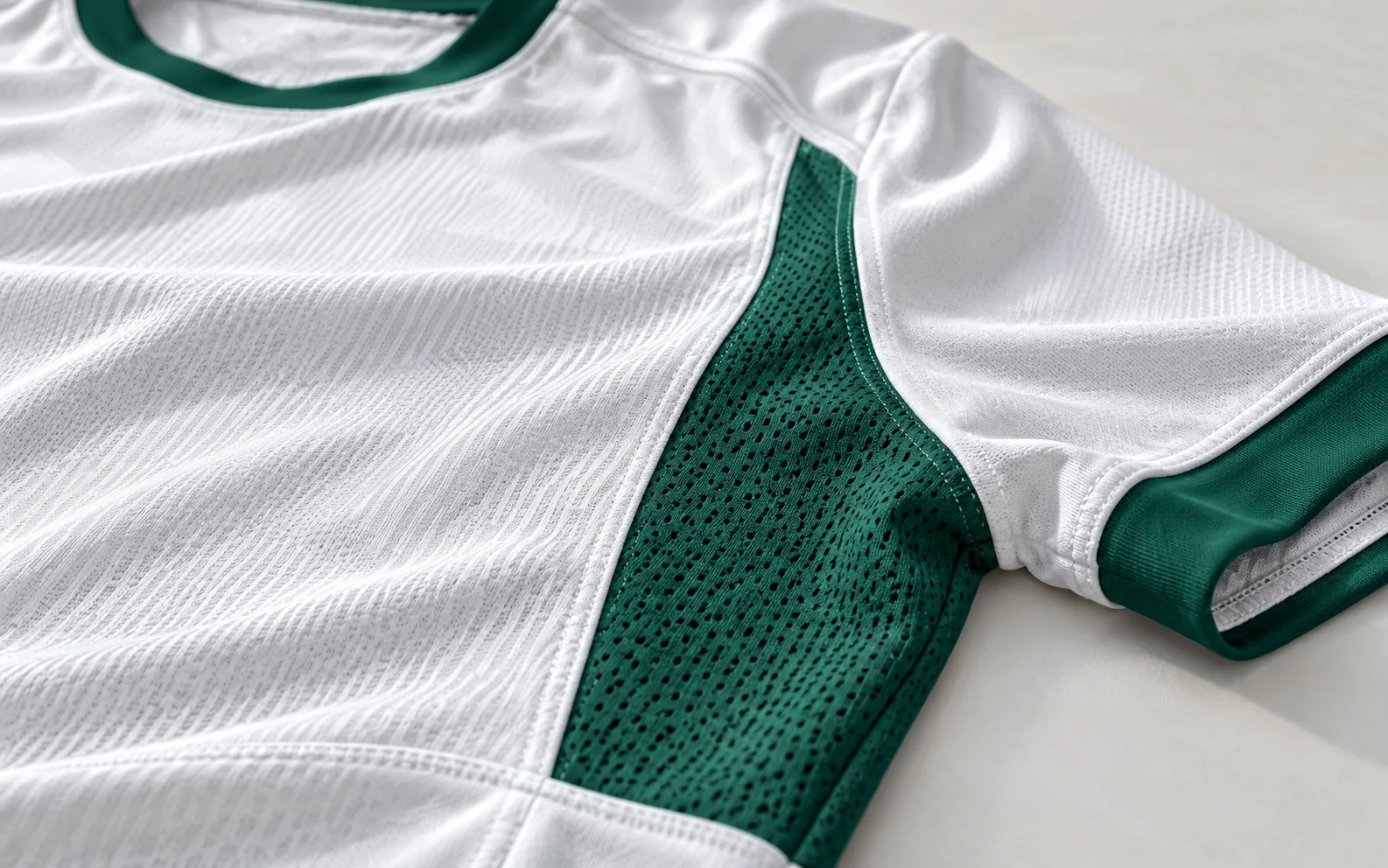
Recycled polyester describes the source of the polymer, not a separate fit or a guaranteed feel. A shirt may also contain elastane or use a different fiber in a collar, cuff or panel. Read the sewn-in label and the product's material breakdown for those parts. The photograph above is an illustrative generic jersey; its visible texture is not a lab identification of fiber content.
Do not equate "100% polyester" with one level of quality. Two polyester tops can differ in yarn thickness, knit density, finish, panel layout and sewing. Those are observable product features. If a listing gives only the fiber but no clear photos, care details or fabric description, ask for the exact model's specifications before buying.
FABRIC STRUCTURE
Interlock, mesh and patterned knits feel different
Fiber is the ingredient; knit structure is how loops of that yarn form the cloth. A smooth interlock can give a stable surface for a team shirt. Mesh uses more open areas to increase local airflow, but a very open panel may show a base layer underneath. Jacquard makes a pattern through the knit rather than adding it as a later surface print. The same shirt can combine structures in different panels.
The adidas Condivo 22 product description identifies a polyester interlock body and ventilating mesh side panels. This supports the practical point that placement matters: a shirt can have a smooth main panel and more open sections where airflow is useful. It does not prove a quantified cooling advantage for every wearer or climate.
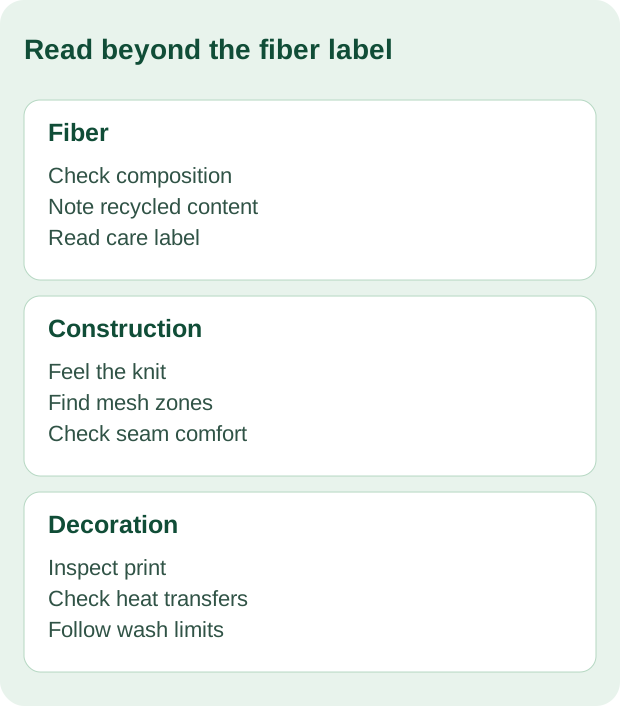
To judge a jersey in person, hold it to light, examine the side and back panels, and rub the inside gently against your forearm. Look at the seams where different knits meet. Ask whether a mesh zone sits under a bag strap or a printed number, where friction or coverage may matter more than airflow. The diagram below gives a compact inspection order rather than a made-up fabric score.
CONSTRUCTION
Seams and decoration change the finished shirt
Collar shape, sleeve opening, seam placement, hem finish and any lining influence how the jersey wears even when the main fabric stays the same. Try raising both arms and rotating your shoulders. If a seam rubs or the hem rides up excessively, a different cut may matter more than a different polyester marketing name. Our jersey fit guide deals with that sizing decision separately.
Numbers, names and crests may be sublimated into a suitable fabric, heat-applied or embroidered, depending on the product. These methods do not behave identically during wear or laundering. A raised transfer can have a different hand feel from a print within the fabric; embroidery adds stitched material. Inspect the exact garment and follow its care label, especially when it has heat transfers or glued details. Do not assume a team's logo method from a category photo.
For a customized team kit, ask how the decoration will be applied to the chosen fabric and whether a sample can be checked for color, feel and wash instructions. For one personal jersey, the same questions help you avoid ordering a fabric or print you do not want. The washing guide covers care after purchase.
PRACTICAL DECISION
Read the whole construction, not just “100% polyester”
Two jerseys can both list polyester yet feel different because the yarn, knit, panel placement, seams and finish differ. Compare the front and back panels in the light. A mesh insert may increase openness in one area; a denser knit may feel smoother or less transparent in another. Hold the shirt against your body and move your arms to see whether the cut or seams restrict movement. The fiber label identifies what the threads are made from; it does not describe the full wearing experience.
Inspect decoration separately. A heat-applied name, woven badge, embroidered crest and printed sponsor may each change the feel and care instructions. Ask whether customization is applied before shipping, whether it can be returned and how to wash the finished garment. If a seller claims a particular fabric is recycled or has a performance rating, look for product-specific documentation rather than inferring it from a generic polyester label.
For a team order, request a sample of the actual fabric and decoration if possible. Check transparency, stretch, seam comfort and color consistency under ordinary light. Compare sizes from a garment chart, not just the letter on the tag. These checks explain why a jersey's composition line is useful but insufficient for judging quality, comfort or price.
Look for product-specific evidence when a listing claims “breathable,” “quick-drying” or “durable.” The words alone do not tell you the test method or how the shirt will feel on your body. You can still make a useful comparison: examine panel openness, feel the fabric, stretch it gently in both directions and check that seams recover without distortion. These are shopping observations, not laboratory measurements. If a team plans a large order, test one finished sample through its permitted wash cycle before approving the full run.
BUYING CHECK
Compare the exact jersey rather than the fiber alone
Start with its material label, then compare the knit, panel map, fit description and care instructions. For training in warm conditions, a light fabric and thoughtfully placed ventilation may be relevant; for a casual fan shirt, desired cut and decoration may matter more. No single fiber percentage guarantees comfort for every player. Check the garment you will actually receive, not an unrelated stock photo or another season's model.
If shopping online, request a clear front, back and close-up photo plus the material breakdown and whether the posted size chart is for the body or finished garment. The exact model name and season matter when comparing listings. Manufacturer lines can change construction between releases, so a review of an older shirt is a clue, not a substitute for today's specification.
bootswave can answer questions about one jersey through the form below or WhatsApp. Send the design, size and delivery country; we can confirm available options and price. This guide explains material choices, not a claim that any illustrated shirt is in stock.
FAQ
Frequently Asked Questions
Are all soccer jerseys 100% polyester?
No. Many modern models are, but blends, trims and panels vary. Read the exact product specification and sewn-in label.
Is recycled polyester a different fit?
Recycled describes material sourcing, not the pattern or size. Compare the garment cut and measurements separately.
Is mesh better than interlock?
They solve different needs. Mesh offers more open local ventilation; interlock gives a smoother, more stable surface. Placement and the full garment matter.
Does fabric alone tell me whether a jersey will last?
No. Sewing, decoration, abrasion, laundering and care all matter. Check the exact garment and follow its label.
SUMMARY
Read the label, then inspect the construction
Polyester is a common soccer-jersey fiber, but knit, mesh, seams, fit and decoration determine the actual garment.
Use the size-chart guide when choosing a size rather than treating fiber content as a fit promise.
PRODUCT QUESTION
Ask About One Pair or a Team Order
OTHER ARTICLES