SOCCER JERSEY CARE
How to Wash Soccer Jerseys Without Damaging Prints
Read the sewn-in care label first. For many modern printed soccer jerseys, turn the shirt inside out, wash it with similar colors on the label-approved cool cycle and dry it the way that exact garment specifies. Avoid heat, bleach or ironing directly over a name, number or crest unless the product instructions explicitly allow the treatment.
Published: September 21, 2026 · Updated: November 1, 2026
Quick Reference
- The garment label outranks general advice
- Inspect names, numbers and stains first
- Turn decorated shirts inside out
- Use the permitted water temperature
- Keep abrasive items out of the load
- Follow the exact drying and ironing symbols
BEFORE WASHING
Read the label and identify the decoration
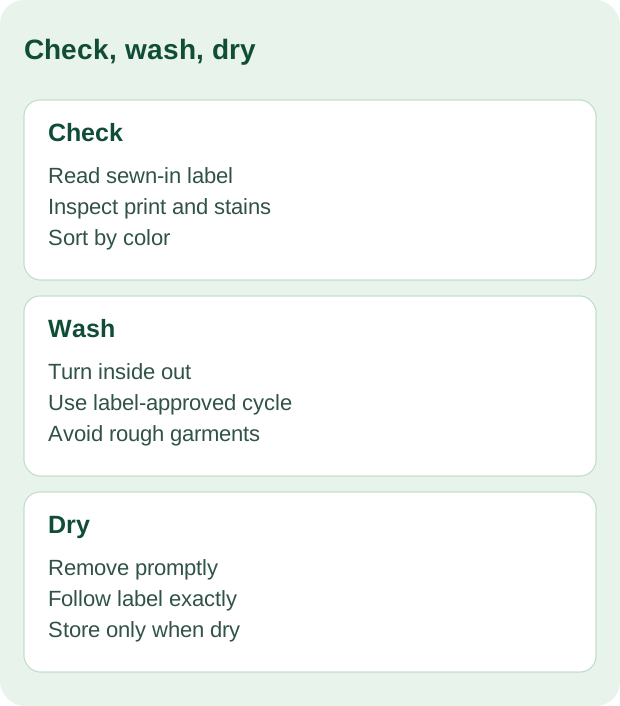
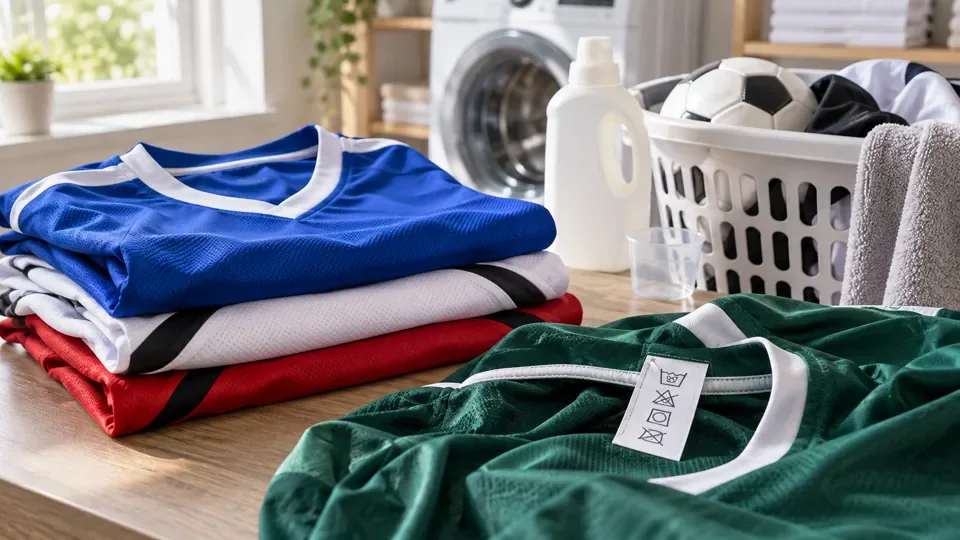
Check the care tag on the exact jersey, then inspect the front, back, sleeves and inside for stains or lifting decoration. A shirt with heat-applied names and numbers can need different handling from a plain training top or a sublimated team shirt. The adidas Spain 26 jersey's care panel, for example, says machine wash cold, wash inside out, avoid fabric softener and do not tumble dry. Those are instructions for that product, not a universal rule for every shirt.
Empty pockets if the kit includes shorts, remove detachable accessories and keep hook-and-loop fasteners or zippers away from the jersey. Sort light and dark colors, especially for a first wash. If you have an unfamiliar transfer or a signed shirt, check the seller's directions before washing; do not assume a generic household stain recipe is safe for special inks, adhesives or autographs.
If the shirt is wet with sweat, do not leave it balled in a sealed bag for days. Hang it to dry temporarily if laundry must wait, then wash it according to its label. This article focuses on routine washing without unnecessary print damage.
STAINS AND LOAD
Treat a spot gently and protect the surface
For fresh mud, let heavy clumps dry enough to brush off gently before they spread through the wash. For a localized food or grass mark, blot rather than scrub aggressively across a crest or printed number. Test any stain product on a hidden area and check the care tag and detergent instructions first. Never use bleach simply because the shirt has a white section; colored panels and decoration can react differently.
Turn the jersey inside out before washing. This reduces direct rubbing on a raised name, number or crest. If the label permits machine washing, place the shirt with similarly colored, soft garments; a mesh laundry bag can separate it from zippers and rough fabrics. Avoid cramming the machine so tightly that garments cannot rinse. Use an appropriate measured amount of mild detergent rather than adding more to force out sweat or dirt; excess detergent can be hard to rinse from performance fabric.
A Nike Team apparel care page also advises turning garments inside out, using cold water and line drying for best results. That supports a low-friction routine for some teamwear, while the sewn-in instructions remain the deciding source for your particular jersey. Do not extrapolate its “no dryer” rule to every sports shirt: individual garments can carry different drying allowances.
WASH AND DRY
Choose the exact permitted cycle and remove promptly
Set the water temperature and wash cycle that the label allows. Cold or cool washing is common for decorated polyester jerseys, but do not override a stricter hand-wash instruction or a different model's care symbols. A gentle cycle can limit agitation when the print is fragile; if the label specifies another cycle, follow that specification. Fabric softener may be prohibited by some performance-jersey makers, so check before adding it. Do not combine a new dark shirt with white socks just to save a load.
Take the shirt out when the cycle ends. Smooth it gently into shape. If the label says line dry, hang or lay it in a ventilated place away from strong direct heat and keep the printed areas from folding onto themselves while damp. If a specific label permits low tumble drying, that permission applies to that garment; other jerseys may forbid any dryer. Never decide from the fiber alone. A polyester shirt with heat transfers may have decoration that sets the stricter limit.
Iron only when the care label permits it. Keep direct heat away from raised prints and crests, and use any required protective cloth or inside-out instruction. The adidas product example permits a cool iron with a cloth between the iron and garment, while forbidding tumble drying. That contrast shows why “all jerseys are polyester” is insufficient care advice. If the print is already peeling, high heat and pressing at home can worsen it; ask the seller or decorator for repair guidance.
PRACTICAL DECISION
Treat three common jersey problems separately
Fresh mud: let heavy dirt dry enough to lift off without rubbing it deeper into the knit. Check the care label, then gently pre-treat the remaining spot with a product permitted for that fabric. Test on an unobtrusive area if the color or decoration is uncertain. Do not scrub across a heat-applied number or badge.
Sweat and odor: avoid leaving the shirt folded in a wet kit bag. Wash as the care label allows and remove it promptly when the cycle ends. Extra detergent is not a substitute for following the correct wash and rinse instructions; residue can remain in the fabric. Dry the shirt fully before storage.
Peeling print: do not try to fix a lifting number by using a hotter general wash or dryer. Turn the jersey inside out when the label permits, avoid direct heat on the decoration and ask the seller or decorator about its repair method. A printed player's jersey may have different care limits from a plain training top, even when both use polyester. The garment label and decoration instructions take priority over any universal “cold wash” rule.
COMMON ERRORS
Avoid the damage a wash routine can create
The most preventable errors are washing with abrasive hardware, hot drying without label permission, bleaching a colored or decorated shirt, and rubbing a stain directly over a transfer. None of these steps is required for normal cleaning. Inspect the print again when the shirt is dry, especially at number corners and crest edges. If a decoration starts lifting after a wash done to the label, record the shirt model, label and process before contacting the seller. A photograph helps describe the issue; it does not establish a cause by itself.
For a team, agree on one simple care note only after checking the exact garment supplied to every player. Different jersey batches or decoration methods may have different instructions. Wash a sample before issuing an unsupported blanket statement such as “always tumble dry low.” If the team changes shirt supplier, revise that note. The jersey materials guide explains why fiber, knit and print construction differ.
If you want to buy one jersey or ask how a bootswave option is decorated, use the form below or WhatsApp. Send the exact model or video, size and delivery country; we can confirm available options, price and the care information for the item offered.
FAQ
Frequently Asked Questions
Should I turn a soccer jersey inside out before washing?
For many printed jerseys, yes; it reduces direct rubbing on names and numbers. Follow the exact garment label if it says otherwise.
Can a soccer jersey go in the dryer?
Only if its own care label allows it. Some jerseys forbid tumble drying, while other sports shirts permit a low setting.
Can I use fabric softener on a soccer jersey?
Check the label. Some performance jerseys, including the cited adidas example, specifically say not to use fabric softener.
How do I wash a jersey with a printed name and number?
Check the label and print guidance, turn it inside out if allowed, avoid abrasive items, use the permitted cycle and dry it as instructed.
SUMMARY
Let the exact label decide
Inspect the decoration, wash inside out when permitted, use the label-approved cycle and follow its drying instructions.
To understand why different shirts need different care, read the jersey materials guide.
PRODUCT QUESTION
Ask About One Pair or a Team Order
OTHER ARTICLES