
CLEAT FIT AND COMFORT
Soccer Cleat Insoles: When to Replace Them and How to Check Fit
Replace a soccer cleat insole when it is worn, damaged or no longer sits flat, but do not assume a new insert will cure a shoe that is the wrong shape. Remove the original footbed if it is designed to come out, match the replacement to the shoe, and repeat a full fit check before playing.
By bootswave Editorial ·
First decide whether the insole is actually the problem
A cleat insole, also called a sockliner or footbed, is the removable layer between your sock and the shoe's internal platform. It can affect feel underfoot and how much room remains above the foot. It cannot change the external shape of the upper, the length of the outsole or the studs. If the side of your forefoot is painfully compressed, the upper or last may be wrong. If the heel lifts because the shoe is too long, a thicker insert may hide the symptom while making the toes feel cramped.
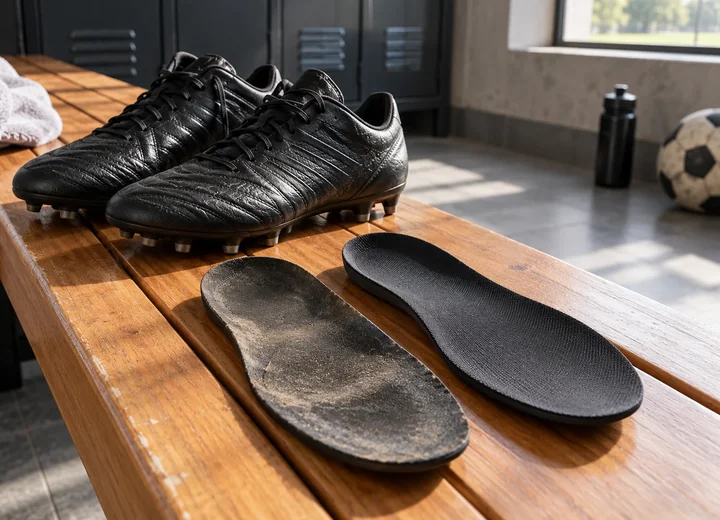
Take the original insole out only if the model is designed for removal. Look for a permanent curl, a flattened heel zone, a torn top fabric, a crease that rubs your foot or a footbed that slides out of position. A damp smell alone can reflect poor drying rather than a need to buy an insert. If the shoe itself has split seams, damaged studs or a worn lining, replacing the insole is unlikely to restore the whole cleat.
Try the cleat with its existing footbed and your match socks. Note exactly where you feel pressure and when it appears: standing, walking, braking or after a full session. A written observation helps separate a removable-footbed problem from a shoe fit problem. Our cleat fit guide explains the toe, forefoot, midfoot and heel checks.
Choose the replacement by volume, not by a support slogan
Cleats are often close-fitting. Even a few extra layers underfoot can raise the foot into the upper and change lace tension, toe clearance or heel hold. Compare the new insole's thickness with the original at the heel, arch and forefoot. A tall, rigid arch shape can press uncomfortably into a foot that does not match it. A very soft insert can feel pleasant in the hand yet make the foot unstable inside a snug boot. There is no single profile that is best for every player.
| What you notice | Check before buying an insert | Likely direction |
|---|---|---|
| Original sockliner is torn or flattened | Can it be removed without damage? | Try a similarly shaped, low-volume replacement |
| Top of foot is already tight | Compare old and proposed thickness | A thicker insert may worsen pressure |
| Heel slips in an otherwise comfortable shoe | Check length, lacing and heel shape | Resolve shoe fit before using an insert as a shim |
| Persistent localized pain | Check both shoes and the activity pattern | Seek qualified clinical advice if it persists |
CURREX's cleat-specific insole instructions tell users to remove the existing insole, place it on the new one and trim at the toe as directed. That is a product-specific fitting method, not proof that an aftermarket insole improves performance or treats pain. Check the instructions for the particular insert you buy.
Fit a new insole without stacking footbeds
- Check removability. Lift the original footbed gently at the heel. If it is glued in or part of the shoe construction, do not tear it out; ask the maker whether a replacement is supported.
- Compare outlines. Put the original footbed over the new one and align the heels. Compare toe shape, widest forefoot point and arch position. A printed size range is not enough.
- Trim only where instructed. If the manufacturer allows trimming, take small amounts from the toe end, following its guide. Do not cut the heel cup or arch shape unless the product instructions specifically say to.
- Place it flat. A curled edge, ridge or loose heel can create a new friction point. Do not leave two full insoles stacked in a low-volume cleat unless both manufacturers explicitly approve that use.
- Retest in match socks. Lace both cleats normally, stand, walk and make controlled stops and turns. The heel should remain seated and the toes should not jam forward.
Keep the original footbeds during the indoor trial so you can compare the same shoe before and after. Do not take a newly modified pair straight into a match. A short practice session reveals whether a pressure point grows with movement. If the insert creates numbness, rubbing or obvious heel lift, stop and refit it or revert to the original setup.

What an insole can change—and what it cannot
A replacement can change underfoot texture, cushioning and the volume available inside the shoe. It may make a worn removable liner feel more comfortable. It does not create a wider toe box or make an incorrect playing-surface outsole safe. Do not use arch shape as a substitute for checking the actual fit. If your problem appears only in one cleat, compare the shoe, sock and original insole on both feet before buying two new inserts.
Players sometimes ask whether an insert will prevent injuries or increase speed. A product page may advertise those outcomes, but a shopper's short try-on cannot establish them. Focus on observable results: whether the replacement lies flat, whether pressure decreases without new rubbing and whether the foot remains secure during movement. If you need an orthotic for a diagnosed condition, ask the prescribing clinician whether it fits the narrow cleat you use. Do not cut a prescribed device to match a shoe without that advice.
Remember that thicker socks also alter volume. Test with the exact match socks you plan to wear and repeat the comparison after lacing both shoes. A normal break-in period may soften a correctly sized upper, but it is not a reason to play through sharp pressure created by a new footbed.
Buying online: ask for measurements you can use
Check the insert's size range, shape, thickness profile, trimming policy and return terms. Compare the outline with your current removable footbed, not just the number printed on your cleat. Two shoes with the same size label can have different internal shapes. If a retailer offers several arch profiles, follow its fitting procedure; do not choose the highest one assuming more support is automatically better.
For youth players, reassess the shoe itself as feet grow. An insert in a shoe that has become short or narrow is not a growth allowance. Have the player stand and move in both shoes, then inspect toes and heel hold. For adults, a change in comfort after switching to a different cleat model may reflect the new model's shape rather than deterioration in the insole.
Ask whether the seller will allow an indoor try-on with the insert installed. Once it is trimmed or used outdoors, returns may be restricted. If replacement footbeds from the original cleat maker are available, compare those first because they may preserve the intended shoe volume more closely. That is a practical starting point, not a guarantee of comfort.
Common questions
Should I put a new insole over the old one?
Usually no. A full extra layer can crowd the cleat. Follow the insert and shoe manufacturers' instructions, and remove the original if designed to be removable.
Will a new insole fix cleats that are too big?
It may change feel, but it does not correct shoe length or heel shape. If the foot slides or the toes hit the front, reassess the shoe fit.
When should I stop trying an insert?
Stop if it creates numbness, persistent pain, a curled edge or unstable movement. Seek professional assessment for pain that does not settle.
The practical answer
Replace a worn removable footbed with one that fits the cleat's outline and volume. Retest with match socks before field use. If the core problem is the shoe's size, shape or outsole, choose a suitable cleat rather than asking an insole to solve a different problem.
Sources and scope
This guide combines published manufacturer guidance and editorial decision steps. It is not a hands-on test of a particular bootswave product. Product instructions and venue rules for your exact model take priority.
Ask about a product
You can ask about one pair or one jersey. Tell us the style, size, delivery country and your question; we can confirm options and price. Message bootswave on WhatsApp or use this form.
Published: · Updated:
