JERSEY CHOICE
Long-Sleeve vs Short-Sleeve Soccer Jerseys: What Matters?
Choose long sleeves for arm coverage and short sleeves when you prefer an open forearm. Neither cut is automatically warmer, cooler or better for playing. Compare the actual fabric, try it with your match layers, and check team and competition rules.
By bootswave Editorial ·
Make the choice from the next match, not the label
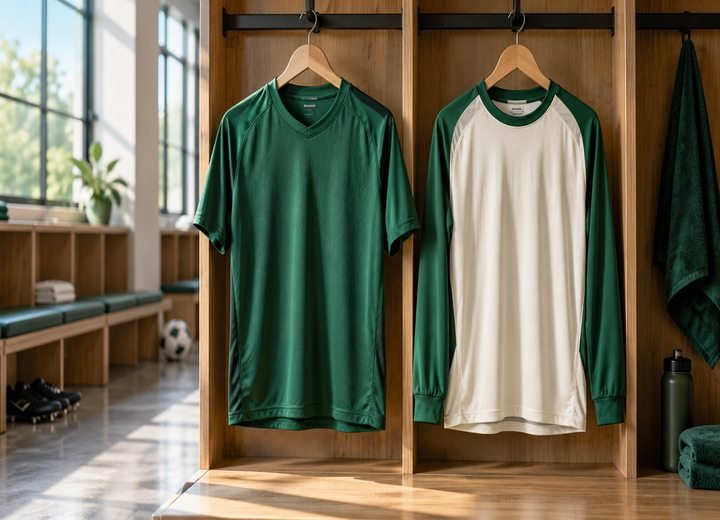
A short-sleeve jersey leaves the forearm uncovered. A long-sleeve jersey covers it. That clear difference can matter in wind, sun or when you slide, but sleeve length alone does not establish insulation, breathability or durability. A thin long-sleeve knit and a heavier short-sleeve knit can feel very different. Check the fabric, ventilation panels and care label on the exact shirts you are comparing.
| Your main concern | Short sleeves | Long sleeves |
|---|---|---|
| Warm conditions | Leaves forearms open; you may prefer that feel | More fabric on arms; test whether the material feels comfortable |
| Cool conditions | Can be paired with a suitable undershirt | Adds sleeve coverage, but may still need a base layer |
| Sun exposure | Exposed arms need another sun-protection choice | Covers arms, though fabric weave and wetness affect protection |
| Team kit | Check approved colors, trim and numbers | Check the same, plus whether sleeve graphics or cuffs comply |
The table is a decision aid, not a performance test. A shirt sold as “long sleeve” may be a training top rather than your team’s match jersey. Check the intended use and actual garment details before ordering.
Consider two ordinary match days. On a warm afternoon, a player who dislikes fabric at the wrists may choose short sleeves, while another player may accept a light long sleeve for arm coverage. On a cold evening, either jersey may need a suitable undershirt or sideline jacket. Try both options with the same socks, shorts and layers; the useful comparison is the whole outfit in the expected conditions. If your team supplies only one approved shirt, solve temperature with permitted layers instead of substituting a visually different match jersey.
Test movement with the complete kit

- Put on your normal playing layers. A base layer changes how the chest, shoulder and sleeve feel. Use the shorts and any keeper protection you would actually wear.
- Raise both arms and rotate your shoulders. Reach forward, across the body and overhead. A long sleeve should not pull the torso tight or ride sharply up the arm; a short sleeve should not dig into the upper arm.
- Check the wrist and hand. On a long-sleeve shirt, the cuff should stay comfortable when you flex the wrist or put on goalkeeper gloves. Excess fabric can bunch at the cuff.
- Check the size chart. Compare body measurements with the exact model, because two cuts with the same printed size may have different shoulders and sleeve lengths.
Our soccer jersey size chart guide explains how to use measurements. Do not buy a larger long-sleeve shirt simply to gain sleeve length if the chest and shoulders then become too loose.
Cold weather: sleeves are only one layer
Long sleeves may feel preferable when the air is cool, but a thin match jersey is not the same thing as a thermal layer. Consider temperature, wind, rain, time on the bench and the effort of play. A player who is warm while running may cool quickly while waiting to enter. Our cold-weather soccer gear guide separates match clothing from sideline layers.
If you prefer short sleeves, a permitted undershirt can cover the arms. If you prefer long sleeves, you may still need another layer under the jersey. Try the combined kit before match day: the extra layer should not limit a throw-in, sprinting arm swing or goalkeeper reach. Stop using a combination that causes chafing, bunching or restricted movement.
Sun coverage: do not treat any sleeve as a UPF rating
Long sleeves cover more skin, but coverage is not an automatic UV-protection claim for every jersey. The CDC’s sun-safety guidance says tightly woven clothing gives better protection and that wet fabric may protect less. A lightweight, open-knit jersey may therefore differ from a garment with a stated UPF rating. If sun protection is a major reason for buying, check the actual garment information and protect exposed areas as appropriate.
Short sleeves can be a comfortable choice in heat; they simply leave more skin exposed. Sleeve choice should be part of a larger sun plan, not a promise that one shirt alone solves the issue.
Match rules and team appearance
IFAB Law 4 requires a shirt with sleeves but does not specify one standard sleeve length for every player. It also says visible undershirt sleeves must be a single color matching the shirt sleeve’s main color, or a pattern and colors exactly replicating that sleeve. Competition regulations can add kit requirements. Ask the team or organizer before mixing a long-sleeve layer with a short-sleeve match shirt.
For a team order, compare the two styles in the same design: placement of badge, sponsor, number and sleeve markings may differ. If only one cut is approved for your squad, the rule settles the choice. For an individual training shirt, you can prioritize your own fit and conditions while still following the venue’s clothing requirements.
Common questions
Is a long-sleeve soccer jersey always warmer?
No. Fabric weight, weave, airflow, wetness and base layers affect comfort. Compare the exact garments in the conditions you expect.
Can I wear long sleeves under a short-sleeve jersey?
IFAB permits undershirts subject to its visible-sleeve color rule; your competition may add requirements. Check the complete kit before the match.
Should I size up for long sleeves?
Not automatically. Measure chest and shoulders, then check the model’s sleeve length and try the shirt with your normal layers.
Sources and limits
Fit and comfort advice is a repeatable try-on method, not a bootswave wear test. Check the exact product and local competition rules.
Ask about one jersey or a team set
Tell us the style, size, color and delivery country. We can confirm available sleeve options and a price for one shirt or a team order. Message bootswave on WhatsApp.
Published: · Updated:
