KIDS’ FOOTWEAR
Kids’ Soccer Cleats for Wide Feet: Fit Without Sizing Too Long
If a child’s cleat squeezes the sides of the forefoot but leaves enough room in front of the toes, try a different width or shoe shape before moving up a full size. Measure both feet in playing socks, check the wider foot, and test heel hold while the child stops and turns. Extra length can solve the wrong problem.
By bootswave Editorial ·

Decide whether the problem is width or length
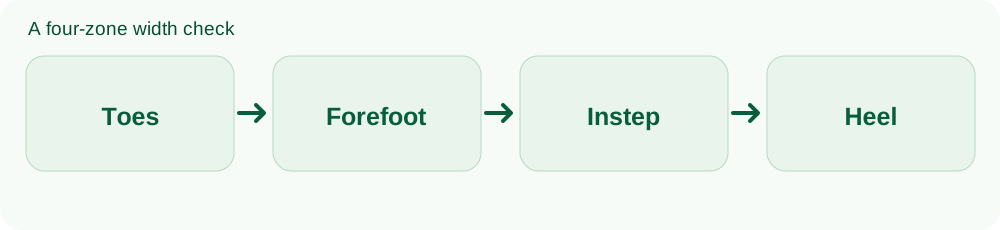
Have the child stand in their match socks and name exactly where the shoe feels tight. A toe that hits the front suggests a length problem. Pressure on both sides of the forefoot while the toes still have room suggests a width or toe-box-shape problem. Pressure over the laces may come from the instep, not the width of the sole. Heel rubbing can mean the rear of the shoe moves too much, even if the front feels tight. These are different fitting problems, so one size change cannot reliably fix all four.
The Australian Podiatry Association recommends measuring children’s feet for both length and width and checking that toes can move naturally. Its advice concerns footwear generally, so treat it as a fit principle rather than a soccer-cleat performance test. SOCCER.COM’s printable kids’ chart likewise has a separate width check. If you print a chart, confirm it is at actual scale before using the marks.
Measure both feet before choosing a model
Measure late in the day when possible, with the socks the child actually wears to play. Stand the child on a firm surface with weight evenly distributed. Note the length from heel to longest toe and the widest part of each forefoot. Record both feet rather than averaging them: the larger or wider foot should not be forced into the smaller foot’s size. If using a manufacturer chart, follow that chart’s exact instructions; brands do not all use identical measurements or width labels.
A paper outline can help you compare the foot’s shape with a shoe’s removable insole, if the insole is designed to come out. It is only a rough check because the upper, lining and lacing also affect usable space. Do not treat a ruler reading as a guarantee of comfort. A wide forefoot with a narrow heel may require a different last shape from a foot that is wide all the way back. When ordering online, ask for the specific model’s width description and return terms rather than assuming a brand is always wide.
The Association warns that pressing the front of a shoe with a thumb can make some children curl their toes, giving a false impression of room. Ask the child to stand, move their toes naturally, and tell you where pressure appears. Our soccer cleat size guide explains why a familiar everyday-shoe size is only a starting point.
Try a wider shape before adding length
If the front has enough space but the sides feel compressed, first try another model in the same length. The toe box, forefoot volume, collar and lacing geometry all vary. A manufacturer’s clearly labeled wide version is worth considering where available, but the label alone cannot confirm the exact child’s fit. Some uppers soften with wear, yet you should not expect a painful or visibly bulging upper to become comfortable just because it is new.
Moving up a full size may reduce side pressure by putting a wider part of the shoe farther forward, but it can also leave too much empty length. Watch the child brake and change direction gently. If the heel lifts or the foot slides toward the toes, that larger size is a poor trade. Tight laces may hide heel movement briefly without changing the mismatch. The correct next move is usually a different width or shape, not an ever-longer shoe.
Check pressure over the top of the foot separately. Loosening the lower laces may relieve an instep pinch, but a design that still presses at rest may lack enough vertical volume. Do not remove a structural insole or cut the shoe to create space without the maker’s instructions. If a child repeatedly reports numbness, pain or rubbing, stop the try-on. A qualified shoe fitter or health professional can help with persistent fit concerns.
Test the actual playing movement
Ask the child to walk, jog a few steps, stop, side-step and tap a ball on a safe surface permitted by the seller’s return policy. The foot should remain centered while the heel stays seated. The toes should not fold under or strike the front on every stop. Ask where they feel contact after movement, since a shoe that seems fine while seated can press into the outside of the foot during a turn.
Look for a narrow pressure line, red mark or unusual bulge after a brief try-on. A visible side bulge alone does not prove injury, but it is a reason to compare another shape. A child may describe pressure vaguely as “weird” or “tight”; have them point to the area rather than guessing. A shoe that pinches immediately is unlikely to become the right purchase through enthusiasm for its color.
Do not run a high-speed cutting test inside a shop. If home try-on is allowed, keep the sole clean and retain tags until the child can make a careful decision. After purchase, revisit the fit every few weeks during growth periods. A sudden complaint can reflect growth, worn socks or a lacing change, not necessarily a defective shoe.
Match the outsole after the fit check
Width does not make an unsuitable sole safe for a field. Ask the coach or venue whether the child plays on firm natural grass, longer artificial grass, short turf or a hard indoor court. Under Armour’s kids’ guide separates field cleats from flat indoor shoes; the surface decision should come before color or marketing tier. A wide-fitting FG cleat does not replace a turf sole on a venue that requires turf footwear.
If two models fit equally well, compare the soles for the actual schedule. Children moving between grass and turf may need a second pair or a manufacturer-rated multi-ground design where the venue permits it. Do not infer suitability only from the word “soccer” in a listing. Photograph the outsole and ask the seller to confirm the model’s intended surface. Our parent buying guide covers the full surface and budget decision; this page concentrates on width.
Questions to send before buying online
Tell the seller the child’s foot length and width measurements, approximate age only as context, sock thickness and playing surface. Request a photo of the exact model’s outsole and a current size chart. Ask whether the shoe comes in a wider fit, whether the listed size is youth or adult sizing, and whether clean indoor try-on is returnable. If one foot is significantly larger, mention both measurements.
Bootswave accepts inquiries for a single pair as well as team orders. Use our contact page or WhatsApp to share a model photo, desired size and delivery country. We can check current options, price and availability; we cannot establish the child’s fit from a photo alone. The product image above illustrates a cleat shape and is not a claim that the pictured shoe is available in a youth wide size.
Common questions
Should I buy one size larger for a wide foot?
Only if length is also short. If the toes have room already, try a different width or shape first and check heel hold during movement.
Will tight kids’ cleats stretch enough?
Some materials soften, but do not rely on break-in to fix pain, numbness or strong side pressure. Choose a shoe that fits comfortably at purchase.
Can a size chart tell me which brand is widest?
No. It gives a starting size; the model’s last, upper and lacing change fit. Compare the exact shoes and use the return policy.
The practical answer
Measure both feet, locate the pressure, compare a wider shape at the correct length, and watch the heel when the child stops. Then confirm the outsole against the field. A child should be able to play without pinched sides or a sliding foot; neither a bigger number on the box nor a “wide” label is a substitute for that check.
Sources and scope
- Australian Podiatry Association: school shoes and fit
- Australian Podiatry Association: buying kids’ shoes
- SOCCER.COM: kids’ shoe sizing chart
- Under Armour: kids’ soccer cleat buying guide
This guide combines published manufacturer guidance and editorial decision steps. It is not a hands-on test of a particular bootswave product. Product instructions and venue rules for your exact model take priority.
Ask about a product
You can ask about one pair or one jersey. Tell us the style, size, delivery country and your question; we can confirm options and price. Message bootswave on WhatsApp or use this form.
Published: · Updated:
