JERSEY CUSTOMIZATION
How to Iron On Soccer Jersey Numbers Without Damaging the Shirt
To apply a number, confirm that the transfer is compatible with the exact jersey fabric, then follow that transfer maker’s time, temperature, pressure, and peel instructions. Test one sample, align the number away from seams, and let it cool as directed. A household iron is not a reliable substitute when the material requires controlled pressure.
By bootswave Editorial ·
Identify the exact jersey and transfer first
An iron-on number is a heat-applied decoration, but that label covers several products with different application requirements. Read the garment’s fiber label, wash label, and any warning about direct heat. Then obtain the transfer maker’s current instructions for the specific number material, including fabric compatibility, press temperature, time, pressure, and whether to peel warm or cold. Do not copy settings from a different transfer simply because both are white numbers.
Stahls lists different settings for several transfer families. That difference is the point: there is no universal “soccer jersey temperature.” A heat press with verified settings is usually preferable to a household iron for a uniform result. If the maker expressly allows an iron, follow its iron-specific method; if it calls for a press, do not improvise.
A polyester performance jersey can be sensitive to excessive heat or pressure. Stahls’ performance-wear handbook stresses checking fabric and application instructions. Dark or sublimated polyester can also show dye migration through light decoration; its dye migration handbook explains that mechanism. This is a risk to test, not a claim that every shirt will bleed.
Prepare a flat, readable layout
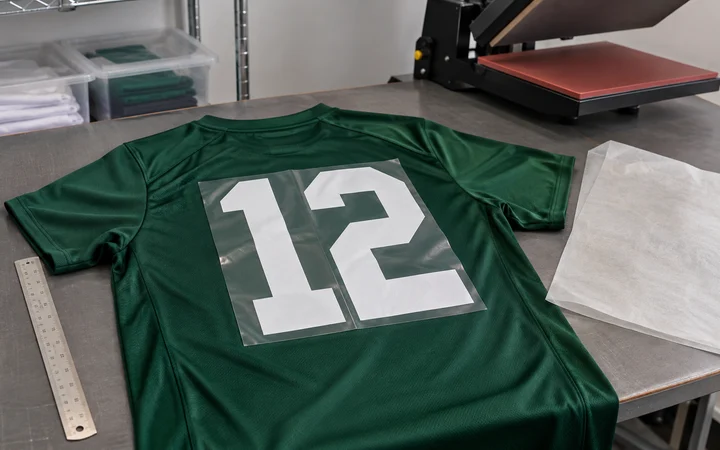
Wash or pre-treat the jersey only if the garment and transfer instructions recommend it, and make sure the shirt is clean and fully dry. Lay it flat without stretching. Identify the true center of the back, not just the middle of one folded edge. Check whether a player name, collar detail, sponsor, yoke, or ventilation panel limits the printable area. Put the number on a full-size paper mock-up first if placement is uncertain.
Measure the intended height and width. A single “1” and a pair such as “88” need different spacing even when digit height stays the same. For organized play, check your competition’s uniform rule before fixing the layout. Our number size guide distinguishes binding competition measurements from decorator starting points. A visually balanced number is still wrong if the league requires another size or placement.
Position the transfer according to its carrier or backing instructions, checking that the digits are upright and evenly spaced. Keep heat and pressure away from thick seams where the platen cannot sit evenly. If the design crosses a seam or a textured panel, ask the transfer supplier whether a pad, pillow, or alternative placement is needed. Protect existing crests, badges and printed marks as instructed; pressing over them can damage the shirt.
Apply one test number before a team run
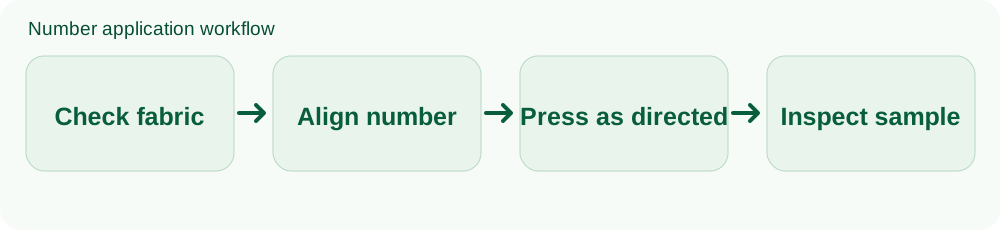
Use a compatible test garment or spare jersey in the same fabric and color. Confirm that the press reaches the required temperature and that pressure is appropriate for the selected transfer. The method may call for pre-pressing to remove moisture, a protective sheet, a specific dwell time, and a hot, warm, or cold peel. Follow the exact product sheet in order. Do not apply repeated heat “just in case”; that can damage both shirt and print.
After the specified peel, inspect the whole edge of each digit. Look for lifting, incomplete adhesion, scorching, shine marks, distorted fabric, or color showing through. Check the back as well as the front of the shirt. A number can look correct from a distance while one corner has failed. If the test fails, stop and diagnose fabric compatibility, pressure, temperature verification, placement or the transfer itself. Do not press a full team batch while the first sample is uncertain.
Let the sample settle according to the transfer maker’s instructions before washing or wearing it. Wash it according to both the garment label and the decoration directions, then check the number again. One wash is a screening step, not a lifetime durability guarantee. Record the exact jersey model, fabric, transfer product, settings, and approved position so a later replacement shirt can be made consistently.
Diagnose a failed test before changing settings
When a corner lifts, the cause is not automatically "more heat." First compare the result with the transfer supplier's troubleshooting guide. Check whether the press contacted that corner evenly, whether a seam or collar raised the shirt, whether the transfer and jersey fabrics were compatible, and whether the carrier was peeled at the specified stage. Then verify the equipment rather than guessing from its dial. Alter one controlled variable at a time on another spare sample so you know which change affected the result.
If the material shows a shiny rectangle, puckering, or discoloration, stop increasing heat or pressure. Those signs can indicate fabric damage or dye movement. A darker sublimated jersey may need a transfer specifically designed to block migration, but the supplier must confirm compatibility with the exact substrate. A successful sample also needs readable placement after the shirt is worn, not only while it lies flat. Photograph the approved sample and keep the transfer's product code for future replacement jerseys.
Common mistakes and safer fixes
Using a household iron with no pressure control: some materials may not bond uniformly. Use the method specified by the transfer maker. Pressing through seams or thick collars: uneven contact can leave unbonded edges. Adjust the position or use the supplier’s approved support method. Guessing the peel temperature: a hot-peel carrier and cold-peel carrier are not interchangeable. Read the product label.
Ignoring dye migration: a white number on a dark polyester jersey can discolor if the material and process are unsuitable. Test the exact combination. Printing before checking size: personalized shirts may have limited returns. Confirm the garment fit first. Copying another team’s artwork: names, numbers and logos should be approved, legible, and permitted for the intended competition.
If the jersey is valuable, licensed, or difficult to replace, a professional decorator can be worth the cost of avoiding a ruined shirt. Ask for a sample and written transfer specification rather than a promise that “it will be fine.” For a single jersey or team set, bootswave can discuss available customization options and price through our contact page or WhatsApp. Send the exact shirt style, fabric label, number design, size, quantity and delivery country.
Common questions
What temperature should I use for soccer jersey numbers?
There is no universal setting. Use the current instructions for the exact transfer and fabric, and verify the press rather than copying a value from another product.
Can I use a household iron?
Only if the transfer maker says that product can be applied with an iron. Many jersey decorations need controlled heat and pressure from a press.
Why did a white number change color?
One possible cause is dye migration from a dark or sublimated polyester shirt. Confirm the cause with the decorator and test a compatible material before repeating the job.
The practical answer
Confirm fabric compatibility, follow the transfer maker’s exact application sequence, align a full-size layout, and approve a test shirt. A controlled sample is more valuable than a guessed temperature or a faster team run.
Sources and scope
- Stahls custom transfer application instructions
- Stahls performance wear handbook
- Stahls dye migration handbook
This guide combines published manufacturer guidance and editorial decision steps. It is not a hands-on test of a particular bootswave product. Product instructions and venue rules for your exact model take priority.
Ask about a product
You can ask about one pair or one jersey. Tell us the style, size, delivery country and your question; we can confirm options and price. Message bootswave on WhatsApp or use this form.
Published: · Updated:
