
JERSEY CARE
How to Get Stains Out of a Soccer Jersey Without Damaging Print
Treat the stain before the next full wash, but read the jersey care label first. Blot loose residue, test a mild detergent on an inconspicuous area, work from the back of the fabric when possible, rinse gently and wash according to the label. Keep heat, scrubbing and strong chemicals away from printed names, numbers and badges.
By bootswave Editorial ·
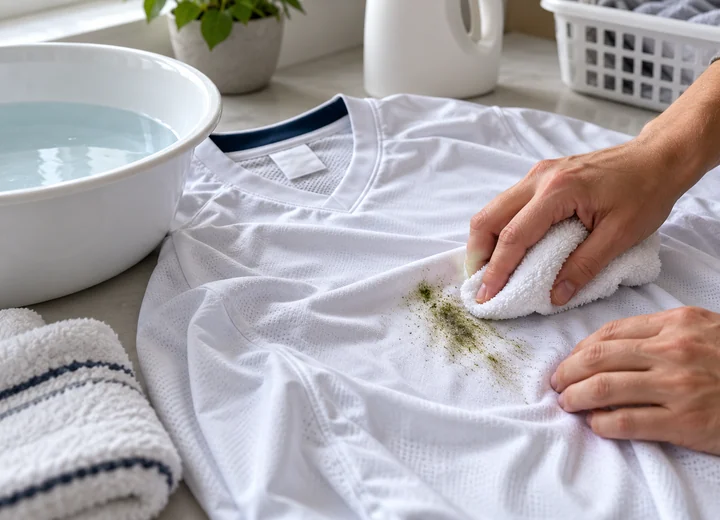
First protect the shirt, not the stain-remover routine
Soccer jerseys often combine synthetic fabric with screen prints, heat-applied numbers, sponsor graphics, badges or delicate trim. The fabric may survive a treatment that damages a printed panel. Read the sewn care label and any instructions on the seller's product page before using a chemical or heat. If it is a valuable vintage shirt, has a loose print, or has no reliable care information, avoid aggressive home experiments and seek a specialist cleaner who understands decorated sportswear.
Begin by photographing the stain in daylight. Note whether it is grass, dried mud, sweat residue, food, dye transfer or an unknown mark. The correct treatment depends on that information. Clorox's soccer jersey stain guide emphasizes checking construction and label details before bleach. That is especially important because a shirt marked “100% polyester” may still have non-polyester trim or decorated areas. Do not translate a generic fabric percentage into permission to bleach the whole shirt.
For an everyday modern shirt, a cautious first response is cool water, a small amount of mild liquid laundry detergent and a soft cloth. Do not rub printed letters or use a stiff brush on the fabric. A commercial stain product may help, but follow its own directions and test it away from visible graphics first. Our regular jersey washing guide
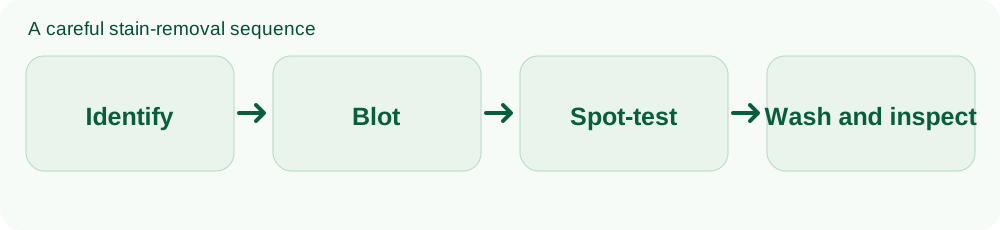
Use this label-first routine for a fresh mark
- Remove loose material. Lift solid residue with a spoon edge or clean cloth. Avoid pushing it deeper into the knit. Do not rub a wet mark across a larger area.
- Blot from the outside inward. Place a clean towel beneath the stained area. Dab gently with cool water so pigment transfers to the towel rather than spreading. Replace the towel if it becomes dirty.
- Spot-test detergent. Try a diluted, mild laundry detergent on an inconspicuous part of the same fabric. Follow the detergent and jersey labels. If color bleeds or the finish changes, stop.
- Work carefully from the back. Where construction allows, flush the mark from the reverse side with cool water. Keep direct treatment off heat-applied badges, numbers and sponsor film.
- Rinse and inspect. Do not let a product sit longer than its instructions allow. Rinse fully, then check whether the mark changed before starting the machine wash.
- Wash and air-dry. Turn the shirt inside out if the label permits machine washing. Use the specified cycle and water temperature, then air-dry. Heat may make a remaining mark harder to address and may damage print.
Nike's team apparel wash instructions recommend cold water and warn against chlorine bleach for those products. That guidance is a useful caution, but your exact shirt's label takes priority. Do not assume one brand's instructions cover every fabric, era or printing method.
Match the response to the stain
| Mark | First move | What to avoid |
|---|---|---|
| Fresh grass | Blot, then test mild detergent on the fabric | Hard brushing across a printed number |
| Dried mud | Let it dry, lift loose soil, then rinse | Grinding wet dirt into the knit |
| Sweat residue | Rinse after play and wash by label | Leaving a damp jersey balled up |
| Food or oily mark | Blot excess and use a label-compatible detergent | Hot dryer before checking the result |
| Unknown dye transfer | Stop and test a small area or ask a specialist | Mixing multiple cleaners |
Grass and mud are not the same stain. Mud contains particles you can sometimes lift once dry; grass pigment can remain even after visible dirt is gone. An oily food mark may resist water alone. None of these descriptions guarantees removal. A fabric's dye, the time since the stain and the print construction can change the result. If you are unsure whether the mark is on the fabric or the printed surface, examine it under good light before applying anything.
Separate colored shirts and white shirts, and avoid washing a stained jersey with new garments that may bleed dye. If a white jersey has colored panels, treat it as a mixed-color garment. A general “whites” bleach instruction does not override its label or decorations. Never combine chlorine bleach with other cleaners. If a care product's directions conflict with the shirt label, choose the gentler option or seek professional help.
Printed names, numbers and patches need different handling
A stain on bare polyester is different from a mark sitting on a heat-transferred number. Heat-applied graphics can peel, crack or discolor when rubbed, soaked in unsuitable chemicals or exposed to heat. Do not scrape a printed area to remove a spot. If the mark is on the print itself, use only the print maker's care guidance or ask a professional. An unbranded test on the fabric does not prove a chemical is safe for the decoration.
Turn the shirt inside out for a normal wash when the care label permits it. This reduces direct friction on the face of a printed number, though it cannot reverse damage already present. Zip or fasten other garments that might snag the jersey. Avoid ironing over a print or placing it in a hot dryer solely to speed up drying. If you need help with existing peeling, stop stain treatment; that is a print-repair question, not a dirt-removal question.
For an expensive match-worn or signed shirt, ask whether cleaning is worth the risk. A tiny mark may be part of its history, while a failed treatment can permanently change fabric or autograph ink. Document condition and consult a textile conservator or specialized cleaner before using household products. That is a different standard from washing a weekly practice shirt.
What to do when the first wash does not remove it
Air-dry the shirt and check the mark in natural light. If it remains, do not immediately repeat stronger chemicals. Recheck the care label, identify whether the remaining color is dirt, dye, oil or damage to the fabric itself, and try only a compatible product following its directions. A discolored fiber or damaged print will not disappear simply because you wash longer. Keep track of what you have applied so a professional cleaner can judge the next step.
If the stain was present when the jersey arrived new, photograph it before washing and contact the seller. Washing may affect a return claim. If the shirt is a team item, ask the kit manager whether a replacement exists before taking a high-risk treatment to a printed number. For ordinary practice wear, accept that some marks may remain. A faint stain does not automatically affect a jersey's use in training.
Prevention is simpler than removal: take a sweaty jersey out of the bag after play, let it dry, and wash it according to its label soon afterward. Keep it away from loose pens, dark denim and colored paper when stored. Our storage guide
Common questions
Can I use bleach on a white soccer jersey?
Do not assume so. Check the exact care label, colored trim and printing. Many decorated jerseys should not be treated with chlorine bleach.
Should I use hot water for grass stains?
Start with the garment's care label. A cool-water, gentle treatment is a cautious first step for many modern printed jerseys; do not use heat before checking whether the stain remains.
Can I scrub a stain on a printed number?
Avoid it. Scrubbing can abrade or lift the print. Follow the decoration maker's instructions or consult a specialist for a valuable shirt.
What if I do not know what caused the mark?
Photograph it, spot-test any mild treatment and avoid stacking chemicals. If the shirt is valuable, seek professional advice before trying stronger products.
The practical answer
Read the label, identify the mark, blot and test a gentle treatment, then wash and air-dry as directed. Protect the printed parts and stop if color or finish changes. A careful partial improvement is better than permanent damage to the jersey.
Sources and scope
This guide combines published manufacturer guidance and editorial decision steps. It is not a hands-on test of a particular bootswave product. Product instructions and venue rules for your exact model take priority.
Ask about a product
You can ask about one pair or one jersey. Tell us the style, size, delivery country and your question; we can confirm options and price. Message bootswave on WhatsApp or use this form.
Published: · Updated:
