
CROSS-SPORT CLEAT GUIDE
Can You Wear Soccer Cleats for American Football?
Sometimes, yes: a soccer cleat may be permitted for an American football game, especially recreational flag football, but permission and suitability are separate questions. Check your league and venue rules, inspect the outsole for the actual field, and test fit and movement for your position. Do not assume that being allowed to wear a shoe makes it the best football shoe for you.
By bootswave Editorial ·
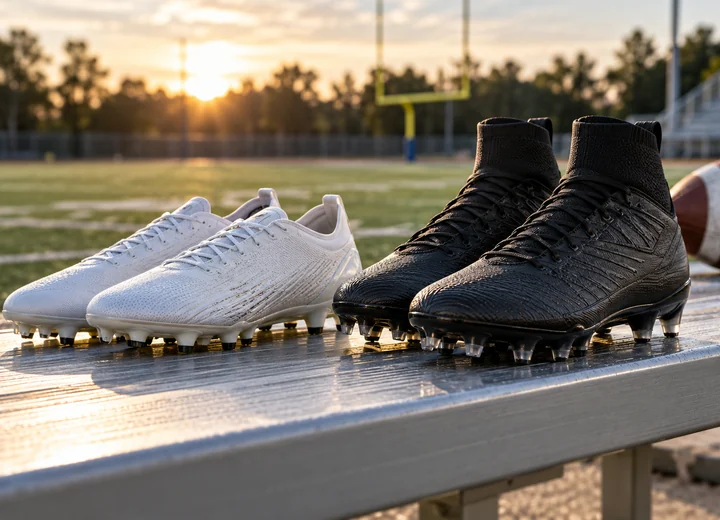
Separate permission from performance
The first question is whether the competition allows the exact cleat. The second is whether it grips, fits and supports your movements on that surface. Soccer cleats are built for soccer-specific running, cutting and ball contact; football cleats can differ in stud layout, upper build and position-specific support. Neither label guarantees a perfect fit for another sport. An official or coach can answer the rules question; your careful try-on and a controlled practice help answer the fit question.
Rules vary. The USA Football flag guidance says players must wear shoes, that a location may prohibit cleats, and that exposed metal cleats are never allowed under that program's rule. That document is one ruleset, not a promise about every school, youth league or tournament. The venue may also restrict studs to protect artificial turf. Read your event's current rulebook and ask if the surface policy is unclear.
| Situation | What to verify | Practical next step |
|---|---|---|
| Recreational flag football | League, facility and metal-stud rules | Bring permitted soccer cleats or turf shoes |
| School or youth tackle | School equipment rules and field surface | Ask coach before using an existing soccer pair |
| Artificial turf venue | Stud shape and field-specific restrictions | Choose an outsole the venue accepts |
| Soft or muddy natural grass | Stud length and traction needs | Do not assume short FG studs will be enough |
How the shoe designs may differ
Soccer cleats commonly keep the front of the sole free of the prominent toe stud often found on American football models. That absence helps make the soccer shoe suitable for soccer's kicking and close contact, but a football player's movement demands depend on position and surface. Under Armour's soccer-versus-football comparison describes typical differences in toe stud, weight and support. Treat those as category patterns; inspect the actual model rather than assuming every shoe follows one design.
A low-profile soccer cleat can feel quick and flexible. Some football players prefer a more structured upper, different stud layout or more traction during repeated explosive starts. A high collar does not by itself prevent ankle injury, and a heavier shoe is not automatically safer. Do not make a health claim from the silhouette. Ask how the shoe holds your heel and midfoot as you accelerate, brake and cut. If the shoe is unstable or causes pressure, replace it even if the rulebook permits it.
Compare the specific football role. A player mostly running routes may have different preferences from a player in repeated line contact. But position labels on retail boxes are not evidence that a shoe will fit your foot. Try the allowed shoe on the actual surface during practice, and prioritize a secure, comfortable fit. Our shoe-design comparison explains the typical construction differences in more detail.
The surface can change the answer
Grass, artificial grass and short synthetic turf are not interchangeable. A molded soccer FG sole may be intended for firm natural grass. An AG or MG designation depends on the maker and model, and a TF turf shoe has smaller rubber nubs for a different surface. A shoe can be acceptable under a league's footwear rule yet unsuitable for the field, and a facility can reject an outsole that a league generally accepts.
Ask the field operator how it describes the playing surface, whether metal or long studs are prohibited, and whether its turf warranty has footwear restrictions. Then check the shoe maker's listed surface for your exact model. If your games rotate between fields, do not assume one pair works on all of them. Our FG versus AG guide can help you identify a soccer outsole, but the football venue's rules still control admission.
On natural grass, inspect the studs for cracks, missing pieces and sharp edges. On hard ground, an aggressive stud may create uncomfortable pressure. On wet grass, a short stud pattern may slip. These are reasons to test the specific shoe and field, not promises that another pattern will eliminate falls. If you have only indoor shoes or running trainers, ask the venue what it permits before substituting them.
A five-minute check before committing to the pair
- Read the rule. Search the current league and facility documents for footwear, cleats, metal and field restrictions. Get a direct answer if the wording is vague.
- Identify the shoe. Look up the model and intended surface. Turn it over and check every stud for damage or prohibited material.
- Try both feet. Wear football socks and any brace or orthotic you normally use. Confirm toe clearance, forefoot comfort and heel hold. Do not rely on the size printed on your old soccer pair.
- Move at practice speed. Jog, accelerate, stop and change direction under supervision on the playing surface. Notice sliding, sole pressure and any upper movement.
- Plan an alternative. Bring a permitted second pair if you are uncertain about an official's ruling or the field conditions.
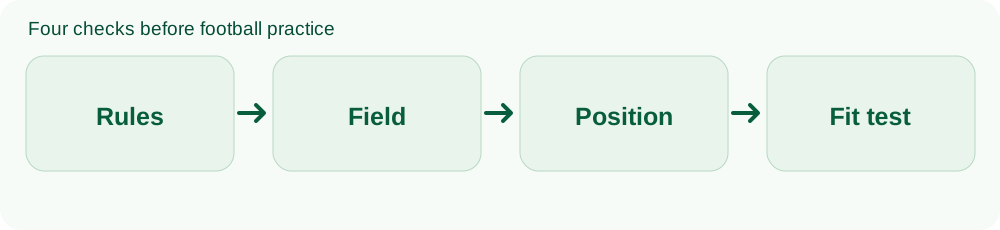
Do this before the first game. If the organizer rejects the sole at check-in, you need another pair. If the pair feels unstable at practice, you need a footwear change even if the official approves it. Keep any written footwear guidance from the league for later games, but remember that a new venue may apply a different field policy.
Flag football and tackle football are different decisions
Flag football often involves quick changes of direction without full tackle contact. Some programs may allow soccer cleats; others require turf shoes or forbid exposed studs at particular facilities. The USA Football flag document above establishes only the rules of that program. Check the specific organizer. If a low-profile soccer cleat fits well, suits the field and is approved, you may not need a second pair for occasional flag play.
Tackle football adds blocking, repeated contact and position-specific demands. A soccer shoe may be legal in a given league but still feel unsuitable for your role or field. Do not claim that a soccer cleat provides the same hold or traction as a football model just because both have molded studs. Try equipment with your coach's guidance and change if you experience slipping, heel movement or painful pressure.
For a growing child who plays both sports, do not buy oversized shoes hoping to cover two seasons. An insecure shoe affects movement in either sport. Fit each foot, check the current league rules for both sports, and budget for an appropriate alternative if one pair does not pass both checks. Soccer itself can have separate restrictions on football-style toe studs, so the reverse substitution deserves its own review.
When a single pair is sensible
One pair can be practical when both sports take place on compatible surfaces, both organizers allow the model, and the shoe fits securely in the activities you actually perform. Save the product's surface specification and check league guidance each season. If one sport is only a few casual sessions, borrowing a correctly fitting approved shoe may be more sensible than buying a second premium pair.
Buy a separate football pair when the position or field exposes a clear weakness: repeated slipping, pressure, poor heel hold or a rule that excludes your soccer outsole. Price alone does not fix those weaknesses. A basic compliant shoe that fits is preferable to an expensive shoe chosen for marketing language. If you develop persistent foot or ankle pain, stop using the pair and seek a qualified professional assessment; an article cannot diagnose the cause.
Common questions
Are soccer cleats legal for flag football?
They may be, but check your league and venue. Some places disallow cleats on particular surfaces or prohibit exposed metal.
Do football cleats work for soccer too?
Do not assume the reverse. Football cleats often include a front toe stud and may be rejected under soccer safety or competition rules. See our separate comparison.
Should a child wear soccer cleats for tackle football?
Only after the coach or league confirms permission, the field matches the sole, and the child passes a comfortable movement and fit check. A dedicated pair may be better for regular tackle play.
The practical answer
Soccer cleats can be an option for American football in some settings. Verify the current rules and field policy, then test the exact shoe for the player's fit and movements. If any of those checks fail, choose a football or venue-approved alternative.
Sources and scope
This guide combines published manufacturer guidance and editorial decision steps. It is not a hands-on test of a particular bootswave product. Product instructions and venue rules for your exact model take priority.
Ask about a product
You can ask about one pair or one jersey. Tell us the style, size, delivery country and your question; we can confirm options and price. Message bootswave on WhatsApp or use this form.
Published: · Updated:
