JERSEY FIT AND CARE
Can You Shrink a Soccer Jersey? Fabric, Print, and Fit Checks
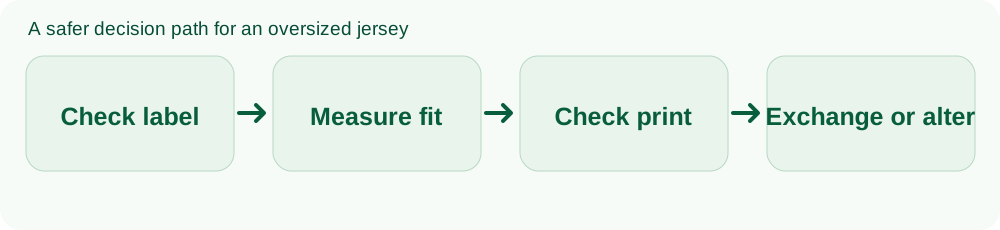
Most modern soccer jerseys cannot be shrunk predictably at home. Heat may change a garment a little, but it can also warp a printed name, loosen a sponsor graphic, or alter the fit unevenly. Read the care label and check the fabric before trying anything; an exchange or alteration is usually the safer way to fix an oversized jersey.
By bootswave Editorial ·
Why “shrink it in the dryer” is an unreliable plan
The word jersey describes a garment, not one fixed fiber. A modern match or fan shirt is commonly polyester or a polyester blend, while an older casual shirt may include cotton. The amount a garment might change with heat depends on its fiber, knit construction, prior finishing and decoration. A hotter wash cannot promise a specific new chest measurement or length. It can also affect one part more than another. That is why measuring the actual jersey is more useful than treating “one size down” as a wash setting.
Polyester performance shirts are generally designed to keep their shape through normal care. Excessive heat is therefore a poor sizing tool: the fabric may show little useful change while transfer graphics, badges or number edges deteriorate. The care advice on a current Nike team jersey product page specifically calls for a cold wash and low heat, and says to avoid high heat to preserve fit and finish. Follow the instructions for your own shirt, which may differ.
If the garment is a cotton fashion jersey, laundering may produce some change, particularly if it has not been preshrunk. Even then, the result is not a controlled alteration: body width, sleeve length and overall length need not change equally. A blended garment can behave differently from a pure cotton one. Check the label rather than guessing from how soft the shirt feels.
Measure the problem before changing the garment
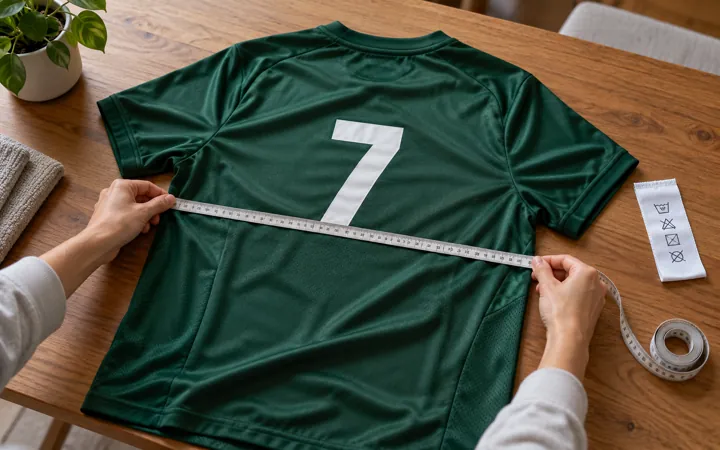
Lay your jersey flat without stretching it. Measure across the chest from underarm to underarm, the body length from the high shoulder to the hem, and the sleeve opening or width if that is the problem. Double the flat chest width only if you need to compare it with a size chart that lists circumference. Record the measurement method, because two brands can use different points. Then compare the same measurements with a shirt you like wearing.
Put the jersey on over the layer you actually wear for football. Raise your arms, turn, jog a few steps and sit down. A relaxed fan shirt can be wider than a playing shirt without being the wrong size. If the shoulders and length are right but the body is slightly loose, that is a different problem from a jersey that is long everywhere. Our soccer jersey fit guide explains why a size label alone does not settle the question.
| What feels wrong | What to check | Likely next step |
|---|---|---|
| Body is wide, shoulders fit | Flat chest width and side seams | Ask a tailor whether side-seam adjustment is feasible |
| Body and sleeves are long | Length against the next size down | Exchange if available |
| Only the hem is long | Distance from hem to any graphic | Ask about a hem alteration |
| Everything is loose | Size chart and return conditions | Try a smaller size rather than heat |
A tailor needs to see the actual shirt. Side panels, stripes, curved hems and graphics crossing a seam can make an apparently simple change impractical. Ask what will be cut or restitched before agreeing. An altered shirt may no longer qualify for return.
Read the label and identify the decoration
Start with the sewn care label, not a general online tip. It should identify fiber content and give wash, bleach, drying and ironing symbols. If the label is missing, ask the seller or manufacturer for the care instructions for that exact model. The printed name or sponsor may have its own care restrictions. A shirt with heat-applied numbers is particularly vulnerable to an attempt to use heat as a sizing method.
Inspect the surface in good light. Is the crest stitched, woven into the fabric, or applied as a patch? Are the numbers a smooth transfer sitting on top of the textile? Does a graphic run over a seam or close to a hem you might alter? These observations matter because the fix may damage the feature you value most. A jersey with peeling edges, cracked transfer or delicate vintage details deserves extra caution.
For ordinary cleaning, turning a decorated jersey inside out and following its cold-wash guidance is safer than trying to force a fit change. Our washing guide covers the normal care routine. Do not use that routine as evidence that washing can tailor the garment to your measurements.
What if the jersey has already changed size?
First determine whether the change is real. Compare flat measurements with a record made before washing, or with an identical unwashed garment when possible. A damp jersey can hang differently from a dry one, and a twisted seam can make one side seem shorter. Let it dry according to its label, lay it flat and measure again. Check whether the problem is overall size, one distorted panel, or a damaged decoration.
If the garment was washed contrary to its care label, do not repeat the same treatment hoping for a symmetrical result. If it was washed correctly and the difference is substantial, document the measurements and contact the seller. A clear photo of the label, the garment laid flat and the purchase details makes the conversation more useful. Do not claim a manufacturing defect from one subjective try-on; show what changed.
If you bought a shirt secondhand, its washing history may be unknown. A used jersey can already have altered dimensions even while its tag remains original. Ask for flat measurements before buying. For a collectible or signed shirt, preservation usually matters more than wearing fit, so professional advice may be preferable to any home experiment.
Choose the fix that matches your situation
- Still returnable: Check the seller's return terms, including whether personalized shirts are excluded. Compare the next size down using actual measurements before exchanging.
- Slightly loose, not returnable: Ask a tailor to assess the particular seams and print placement. Get the proposed finished measurements in writing.
- Team order not yet printed: Approve a sample or size set before names and numbers are applied. Record measurements for the whole team.
- Vintage or signed jersey: Preserve it. Consider wearing another shirt instead of exposing the original to heat or alteration.
If you are between sizes and buying online, use both the brand's chart and the seller's garment measurements when available. Compare the type of fit too: a replica fan jersey and a player-cut shirt may have different shapes even with the same letter size. Our jersey size-chart guide shows how to read that difference.
For a team, collect each player's preferred fit and compare a sample before printing. A single average “large” for everybody creates more trouble than a short measuring session. Print application can also change how easily the finished jersey can be exchanged. Ask the supplier about the stage at which sizes become final.
Common questions
Will hot water shrink a polyester soccer jersey?
It is not a reliable way to reach a target size. It can damage heat-applied details or change the garment unevenly. Follow the exact garment label.
Can a tailor make a jersey smaller?
Sometimes. It depends on seams, design panels, graphics and how much reduction you need. Ask for an assessment of the actual jersey.
Should I buy a size up and shrink it?
No. Buy according to the specific model's measurements and your preferred fit. Planned shrinking is too uncertain for a polyester performance shirt.
The practical answer
If a jersey feels too big, measure it, check its label and decoration, then compare exchange and alteration options. Do not turn routine washing into a sizing experiment. That approach protects the fit, print and the money you already spent.
Sources and scope
This guide combines published manufacturer guidance and editorial decision steps. It is not a hands-on test of a particular bootswave product. Product instructions and venue rules for your exact model take priority.
Ask about a product
You can ask about one pair or one jersey. Tell us the style, size, delivery country and your question; we can confirm options and price. Message bootswave on WhatsApp or use this form.
Published: · Updated:
