
CLEAT CARE
How to Dry Wet Soccer Cleats Without Damaging Them
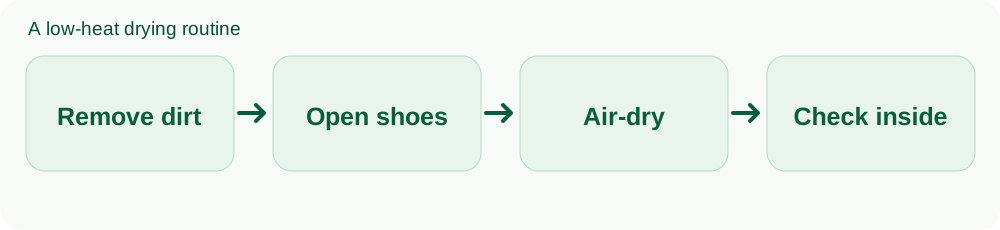
Remove loose mud, open the shoe, take out removable insoles, and let the cleats air-dry indoors at room temperature with good airflow. Avoid a hair dryer, radiator, tumble dryer, or strong direct sun. Do not store the pair until the lining and insole are dry.
By bootswave Editorial ·

Start at the door: remove dirt and trapped water
After a rainy match, knock or brush off loose mud before bringing the shoes into a living area. Do it gently, especially near glued joins, studs and delicate upper material. If mud has packed into the outsole, use a soft brush or blunt tool rather than levering against a stud. Wipe surface moisture with a towel. A soaked boot may need a more complete clean, but do not add more water just to make the surface look perfect before drying.
Undo the laces enough to open the tongue and let air reach the interior. Remove the insoles if they are designed to come out. Set them beside the shoes, not under them. Take the laces out if they are saturated or coated in mud. A closed, tightly laced shoe can feel dry outside while the sock liner stays damp. The aim is to create an open path for moisture to leave.
Nike’s football boot care guide recommends letting boots air-dry and notes that laces can be washed separately. It also advises against heat from hair dryers and tumble dryers. adidas similarly advises indoor room-temperature drying. Follow your exact shoe’s care label if it is more specific.
Choose airflow rather than heat
Place the pair indoors in a ventilated room, off the floor if that helps air move around it. Keep the opening wide and separate the shoes rather than stacking them. A fan set at room temperature can move air across the room, but point it gently and make sure it cannot knock the pair over or blow dirt into the lining. The purpose is steady evaporation, not baking the material.
Do not use a radiator, hot air vent, oven, tumble dryer or hair dryer to force a quick result. Heat can affect adhesives, synthetic layers, leather finish and shape. Both Nike and adidas caution against direct heat; their instructions are stronger evidence than a social-media trick for a specific material you cannot identify. Direct sunlight can also heat a dark upper unevenly. A shaded indoor location is the safer default.
If you use paper to draw moisture from the interior, stuff it lightly rather than stretching the upper. Replace saturated paper when you can. Nike mentions lightly stuffing boots with newspaper while they air-dry; modern unprinted paper or a clean absorbent cloth may avoid ink transfer on a pale lining. Keep the paper away from loose embellishments, and remove it once it is damp. Paper is an aid to airflow and absorption, not a substitute for leaving the shoes open to dry fully.
Check the removable parts one by one
An insole can stay wet after the outside of the boot feels ready. Press a clean dry tissue against its top and underside. Check the heel cup and toe area inside the shoe, where airflow is weaker. If the tissue picks up moisture or the lining feels cool and damp, give it more time. Reinsert the insole only when both it and the shoe are dry. Putting a damp insole back into a nearly dry boot reverses your progress.
Laces and socks deserve their own wash and drying. Wet laces tied back into a dry shoe bring moisture to the tongue. If a removable insole has an odor that remains after a proper dry, clean it only according to its material and manufacturer instructions. Do not pour fragrance, bleach or a strong disinfectant into a boot to mask moisture; that can damage materials and makes it harder to know whether the lining is truly dry.
When a shoe still smells stale after drying, inspect for lingering dirt, moisture under the insole or a contaminated bag. Our soccer shoe odor guide addresses the next step. If there is visible mold, damaged lining or persistent irritation to your skin, stop using the pair until the cause is resolved.
What if you need to play again tomorrow?
There is no safe universal number of hours for every cleat to dry. The upper material, amount of water, room humidity, airflow and insole thickness all change the result. Check the actual pair rather than trusting a fixed timer. A second dry pair may be the practical solution for players who train on consecutive wet days. A wet shoe can feel uncomfortable, let the foot move differently, and make the next session unpleasant.
If only the exterior was splashed, wipe it and open the shoe as usual. If the boot was soaked through, prioritize thorough drying over immediate use. You can remove a clean sock after a brief indoor try-on and see whether it picks up dampness, but a dry sock test is only a practical check, not a laboratory measurement. Do not force a boot onto a heater because you are late for practice. Ask the coach whether a suitable spare pair is available or whether the surface allows an alternative you already own.
A purpose-built shoe dryer is not automatically safe for all cleats. If considering one, read the dryer’s temperature and the boot maker’s care instructions first. A marketing claim that a device is “for sports shoes” does not override a manufacturer’s warning about heat. A room-temperature airflow device may be more conservative than a heated one, but assess it with the exact model. The user’s search-volume export contains a related query about a cleat dryer, yet that is not evidence any device is safe.
Clean and store only when the pair is ready
After drying, brush off remaining loose dirt. If a deeper clean is needed, follow the material-specific steps in our cleat cleaning guide, then allow another full drying cycle. Inspect for detached sole edges, cracked studs, frayed laces or damaged lining. Drying does not repair structural damage. A pair with a loose sole or missing stud needs repair assessment or replacement before the next match.
Keep the boots in a dry, ventilated place rather than sealing them into a damp kit bag. If you travel home with wet gear, remove it from the bag promptly. adidas recommends a cool, dry storage area and drying cleats after wet use. Check that the bag itself has dried; otherwise the clean pair can pick up moisture and odor again.
For a player shopping for another pair, our soccer shoe collection is an inquiry starting point. Individual purchases are welcome. Send the model, size and delivery country, and ask about availability and price. A new pair still needs the same post-match care, whatever the upper material.
Common questions
Can I dry soccer cleats with a hair dryer?
Avoid it. Nike and adidas advise air-drying away from direct heat, which can damage boot materials. Use room-temperature airflow instead.
Is it okay to leave cleats outside in the sun?
Shaded indoor airflow is the safer default. Strong sun can heat and dry parts unevenly; follow the exact manufacturer’s care guidance.
How do I know the cleats are fully dry?
Check the removable insole and the heel and toe lining with a clean dry tissue. If moisture transfers or the inside still feels damp, continue drying before storage or wear.
The practical answer
Remove mud, open the shoes, take out removable insoles and laces, and allow room-temperature indoor airflow. Check the inside before putting the pair back together. If tomorrow’s session arrives before they are dry, use a suitable dry spare rather than trying to cook the moisture out.
Sources and scope
- Nike: How to clean football boots
- adidas: How to clean football cleats
- adidas: Cleat storage and drying tips
This guide combines published manufacturer guidance and editorial decision steps. It is not a hands-on test of a particular bootswave product. Product instructions and venue rules for your exact model take priority.
Ask about a product
You can ask about one pair or one jersey. Tell us the style, size, delivery country and your question; we can confirm options and price. Message bootswave on WhatsApp or use this form.
Published: · Updated:
